inspiring change
 

2024


Cell phones and distraction

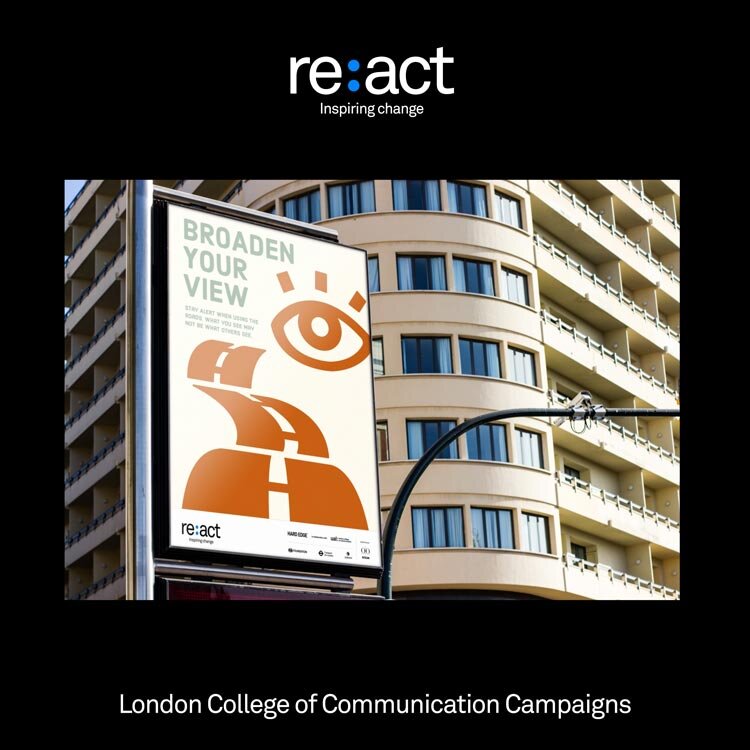
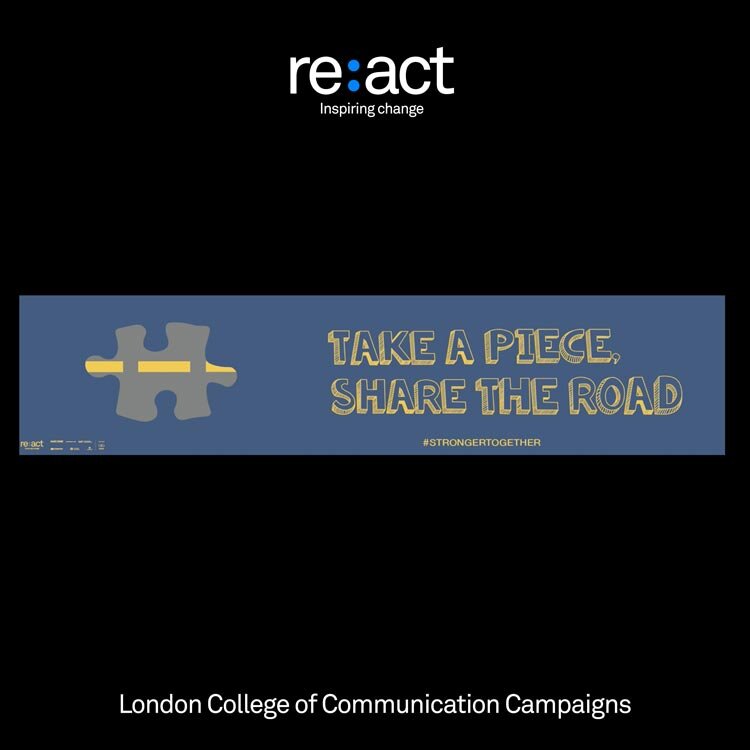
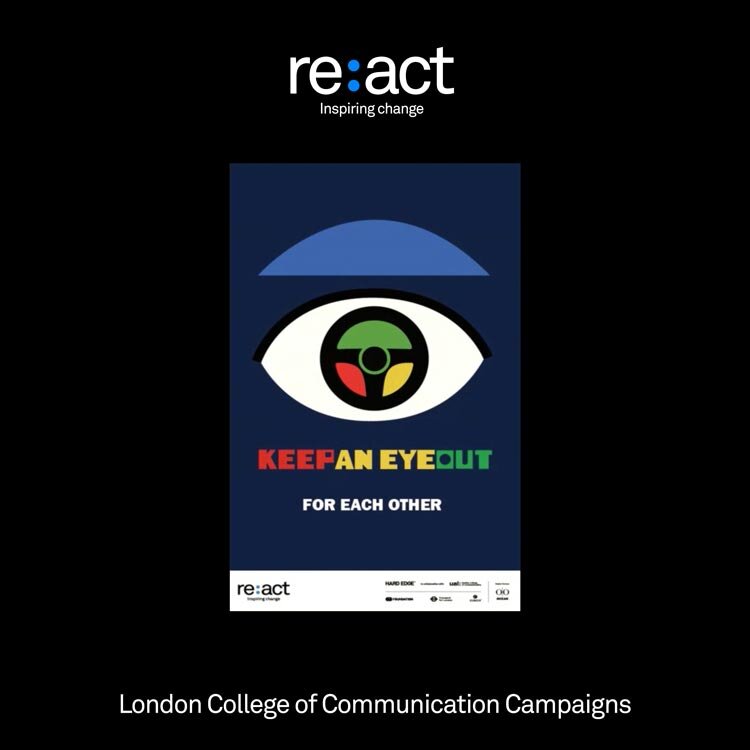
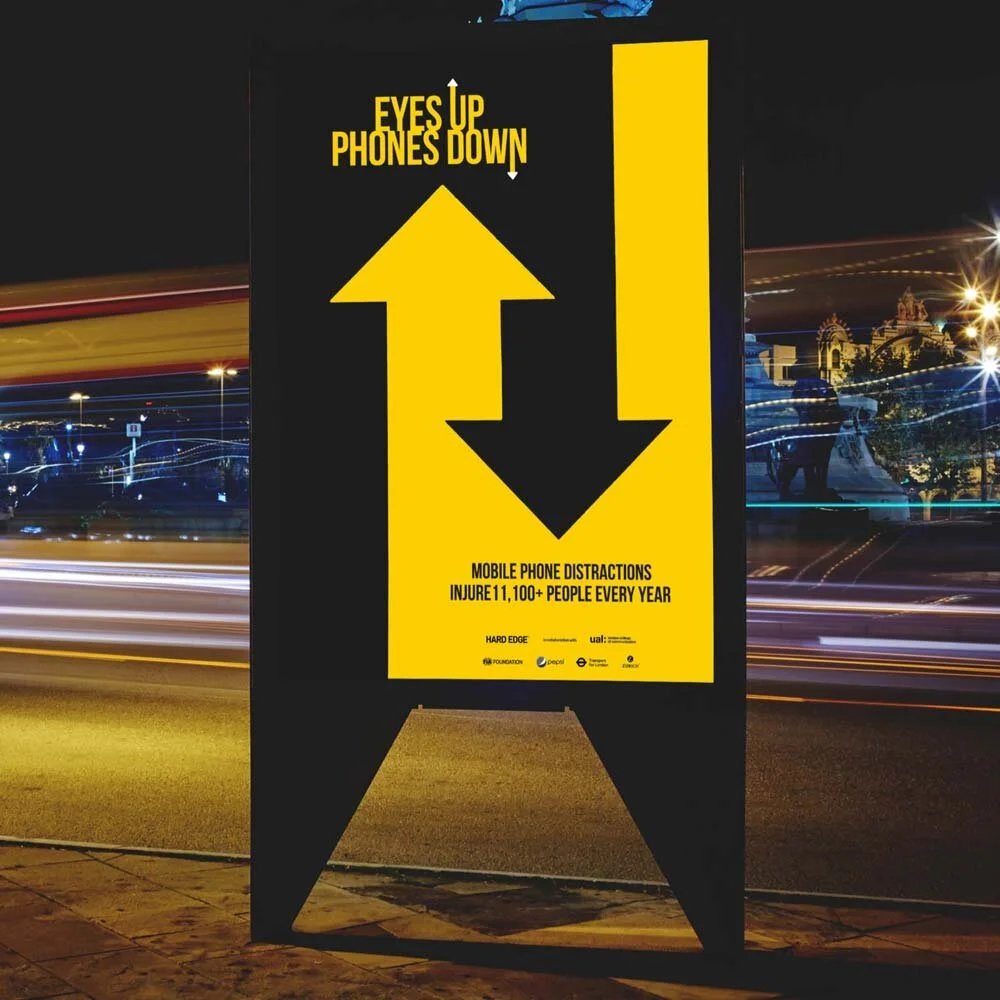
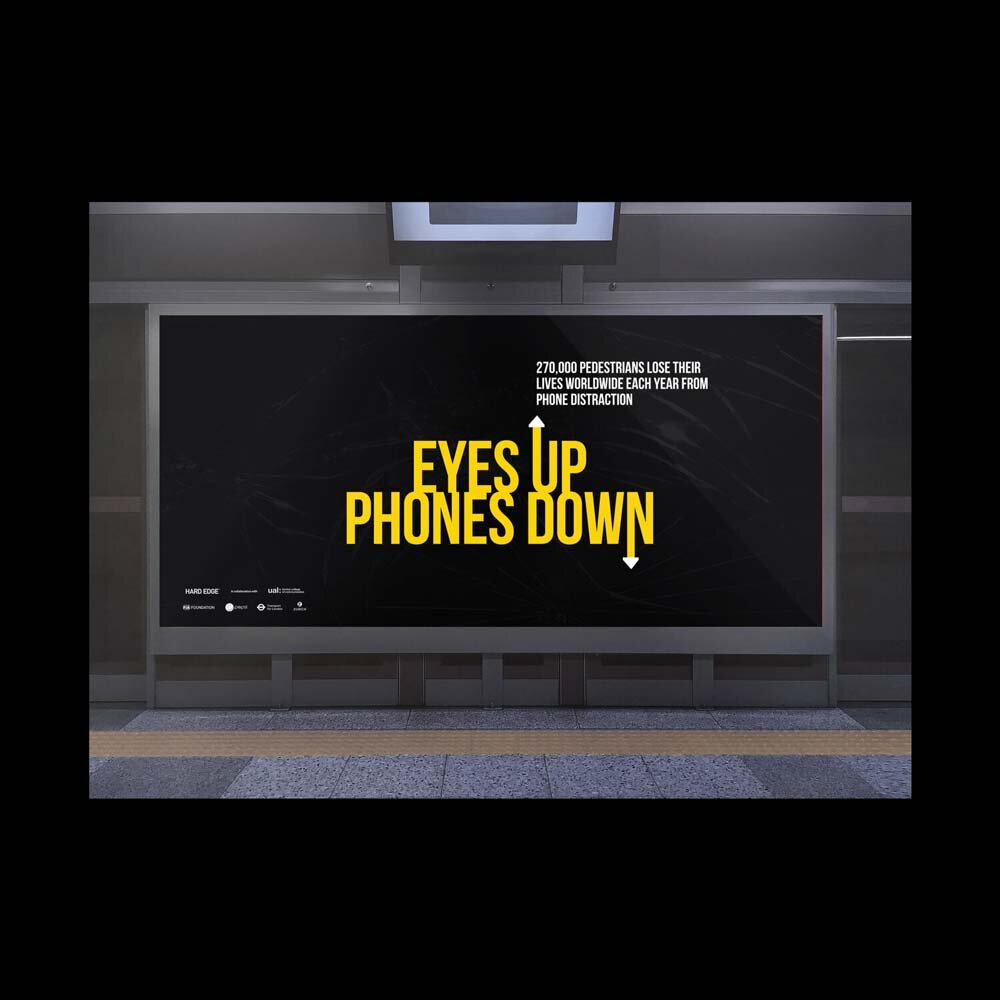
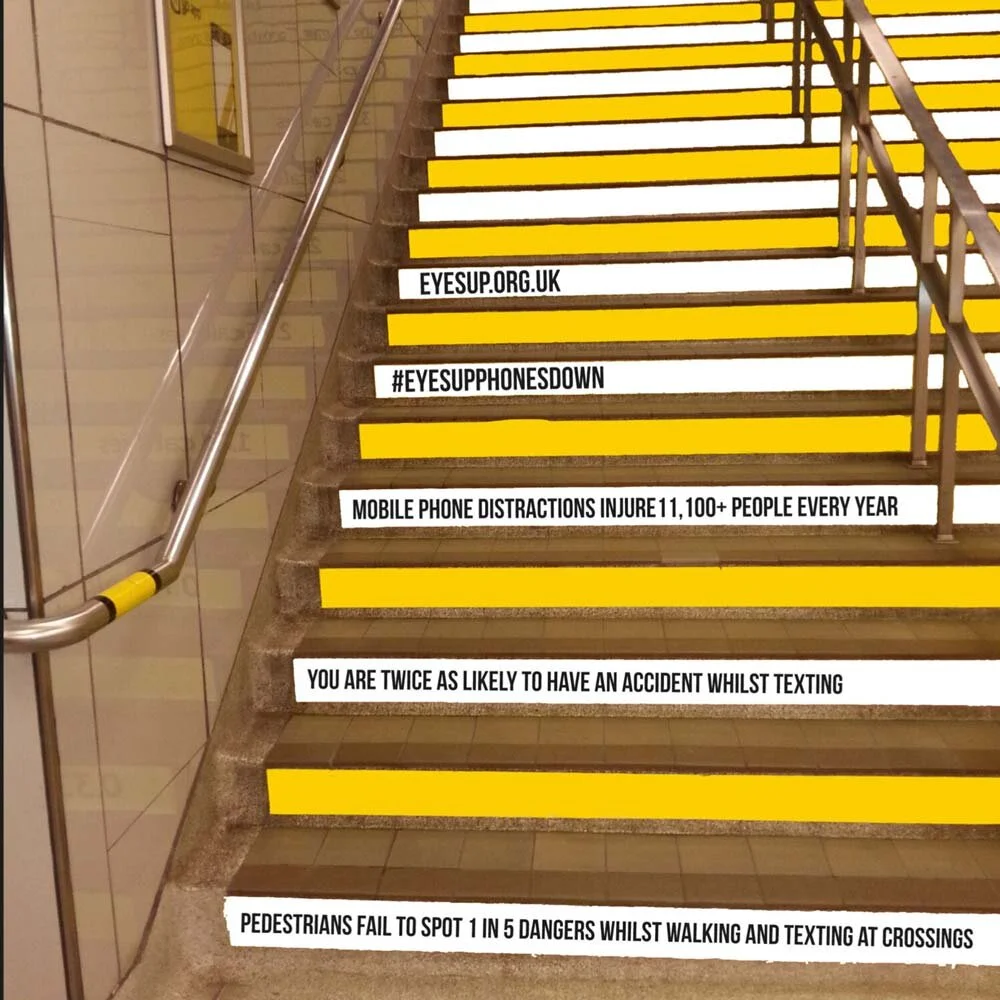
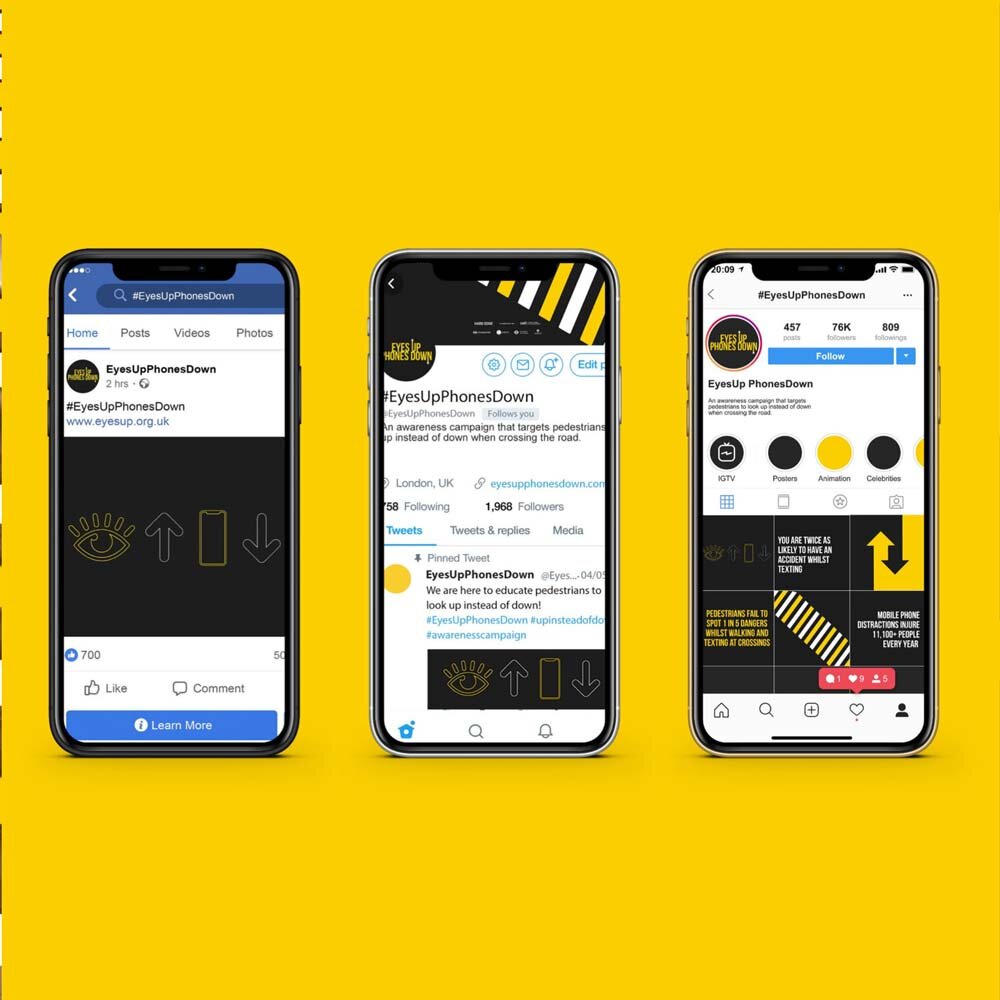
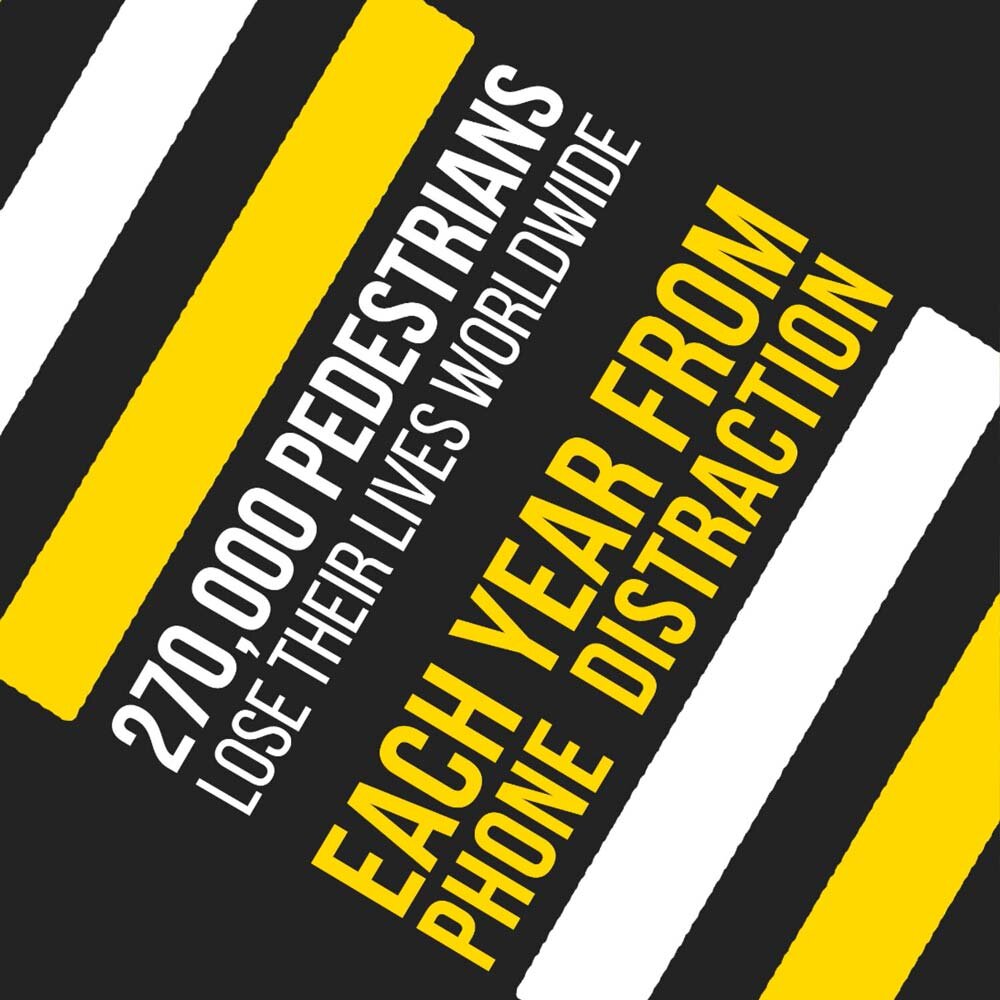
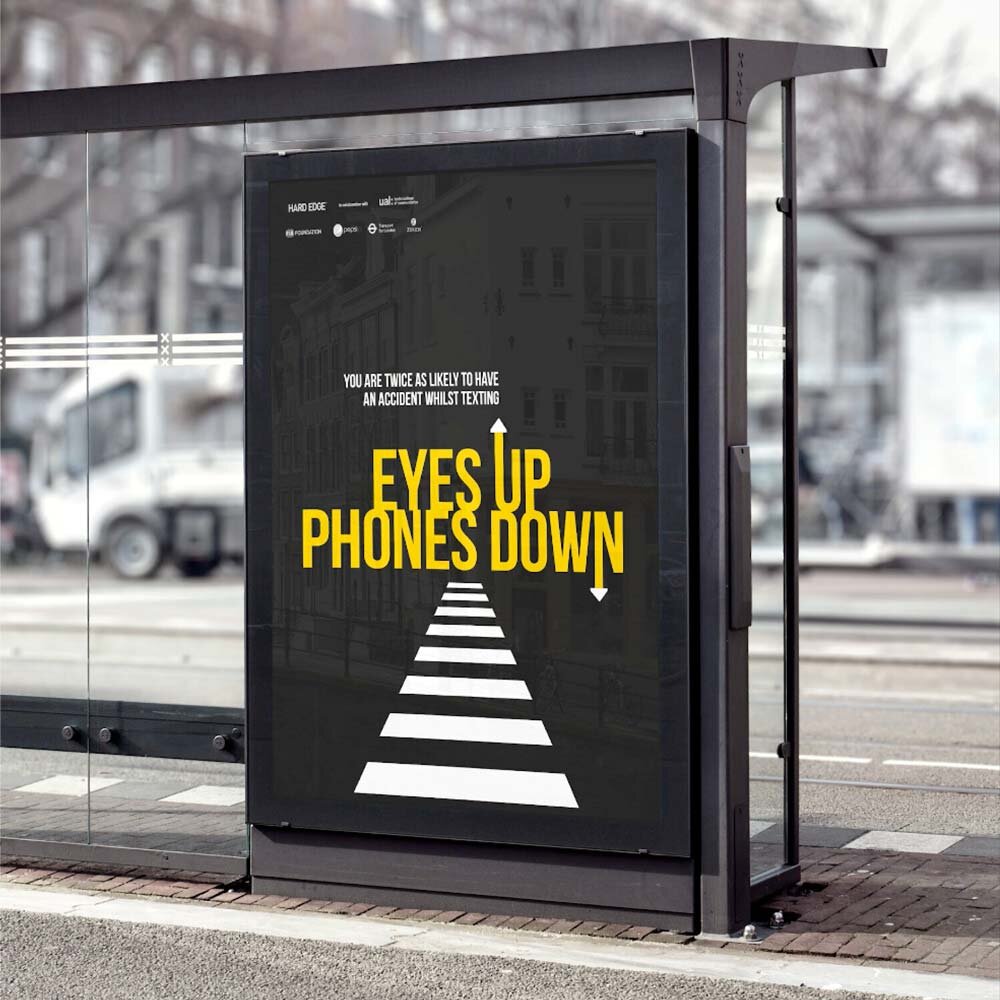
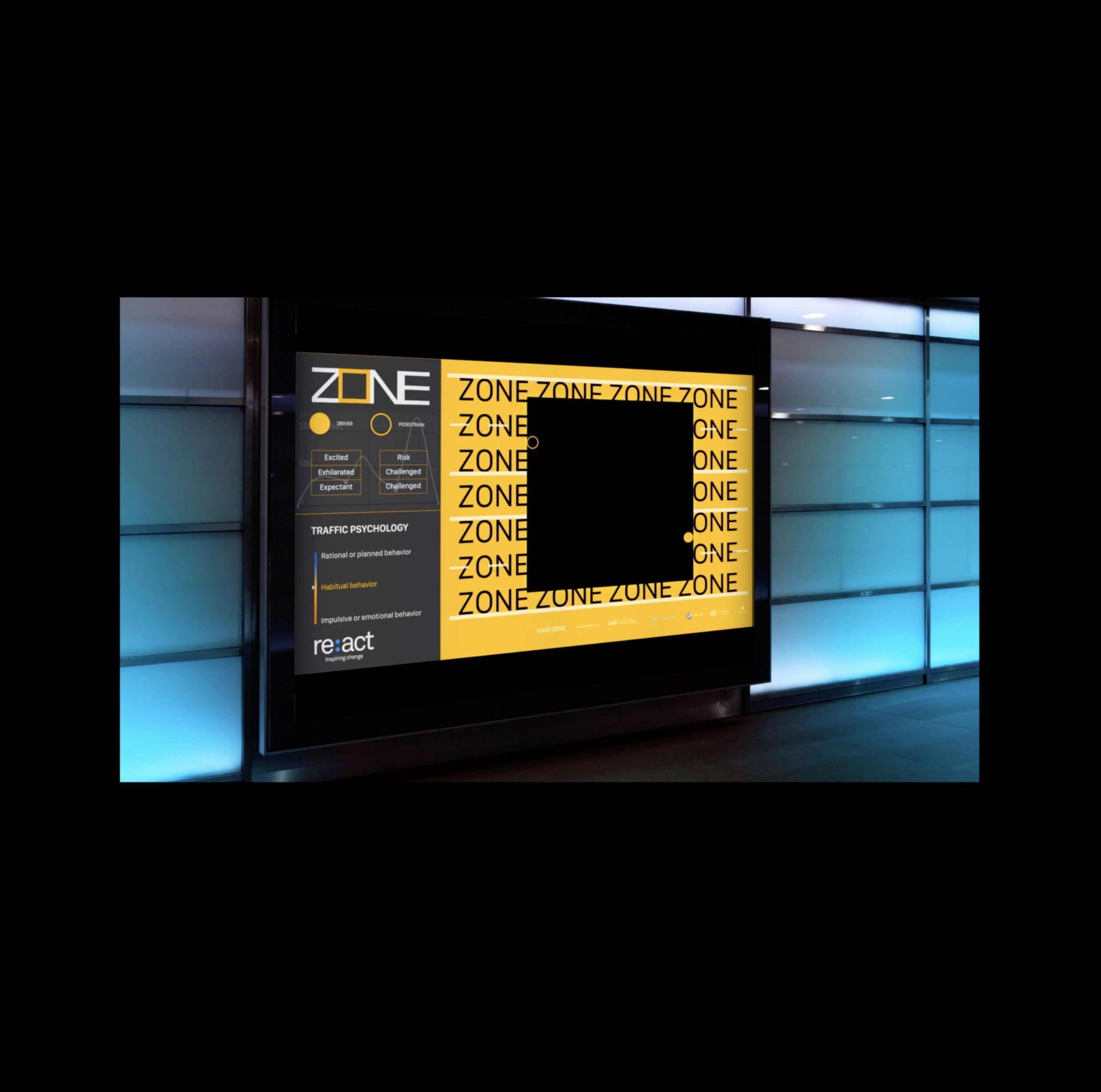
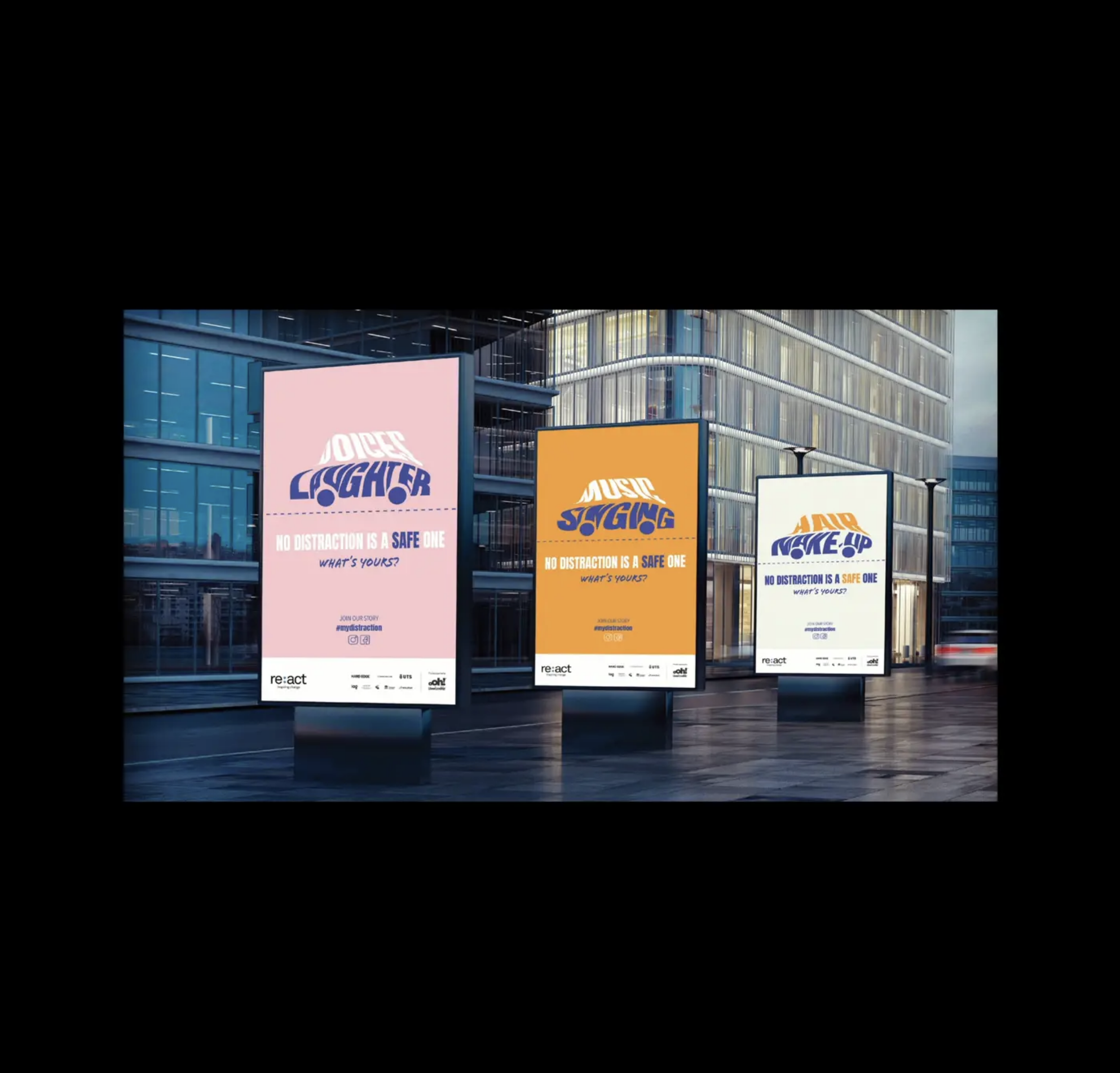
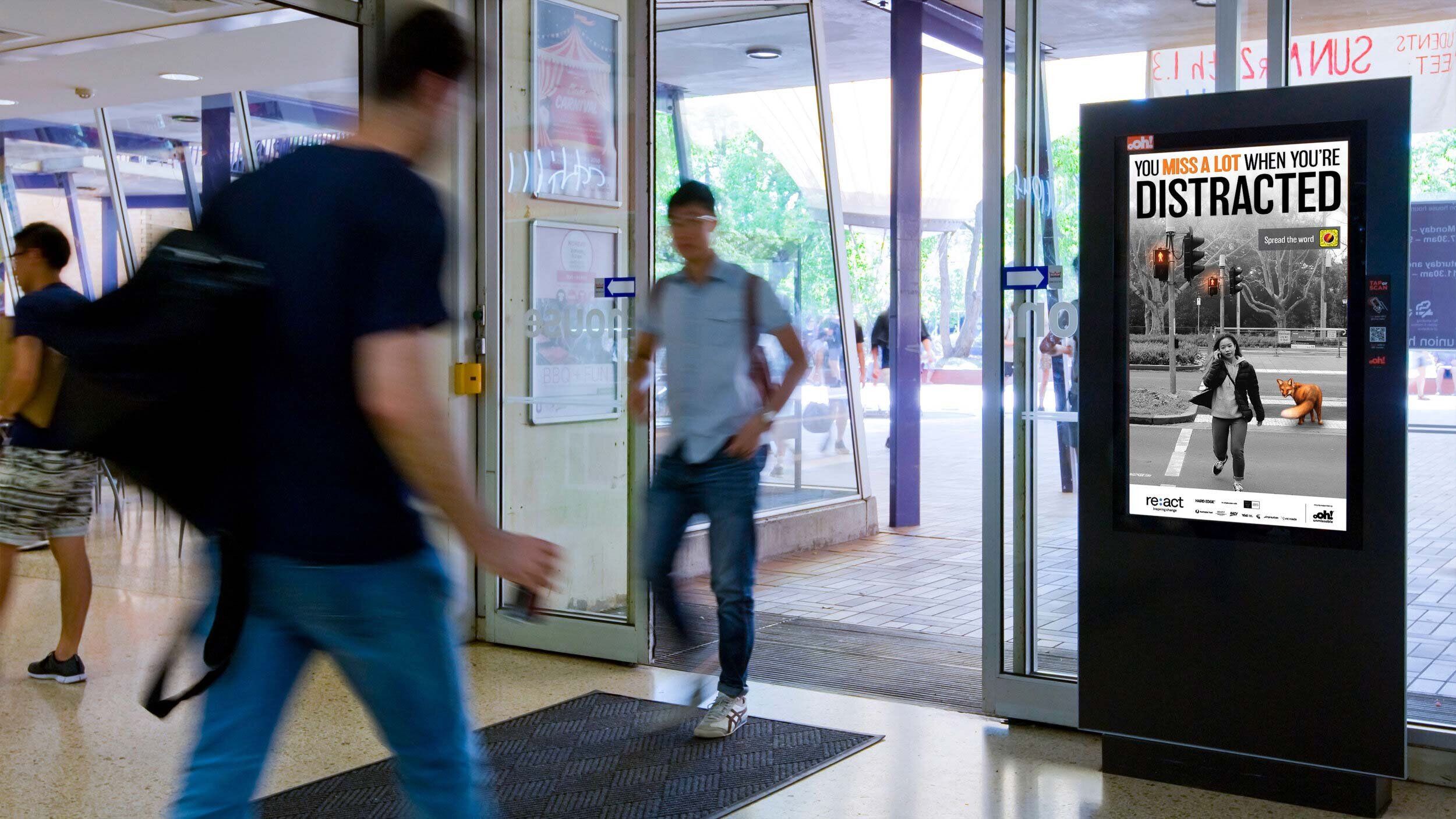
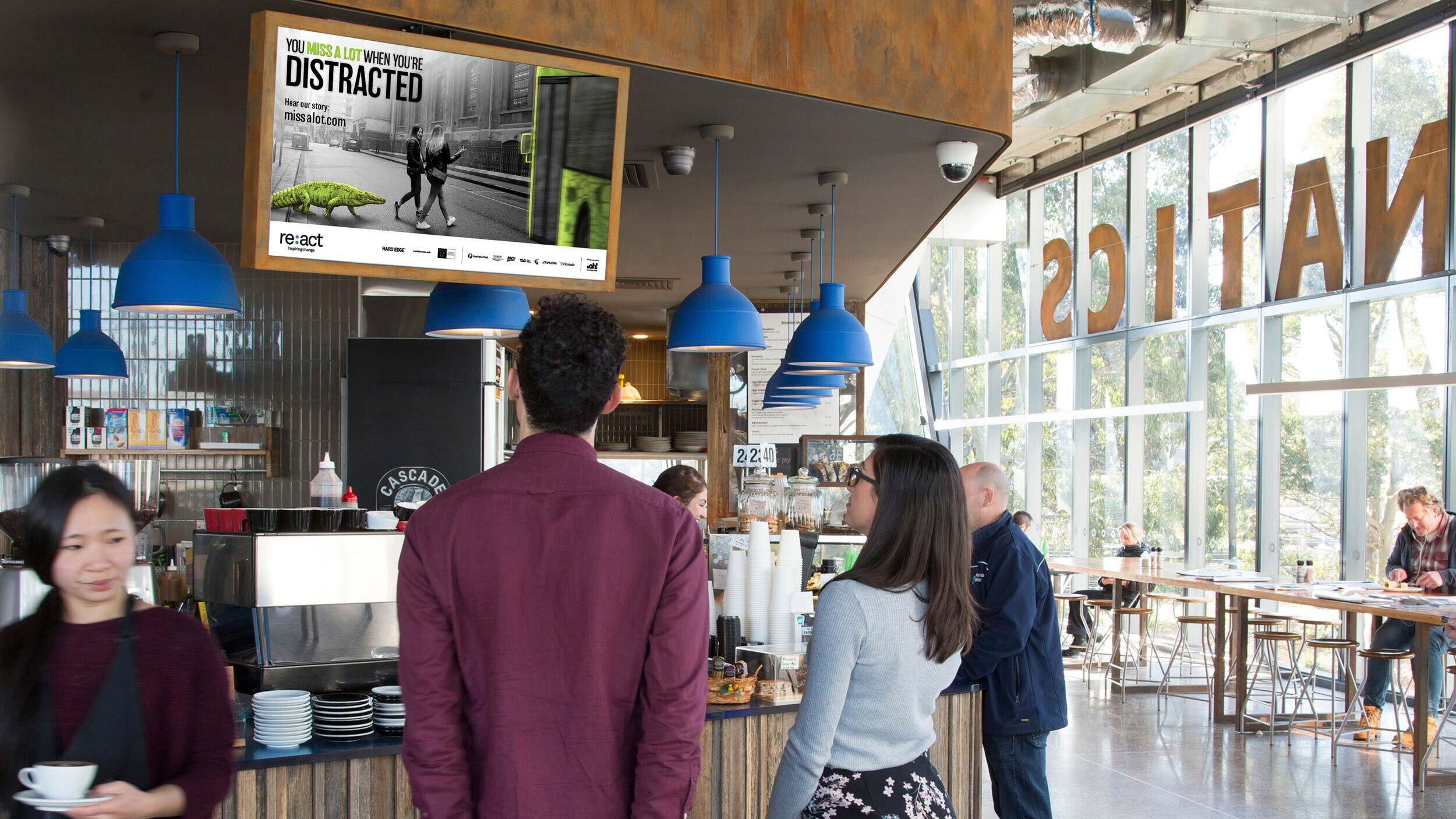
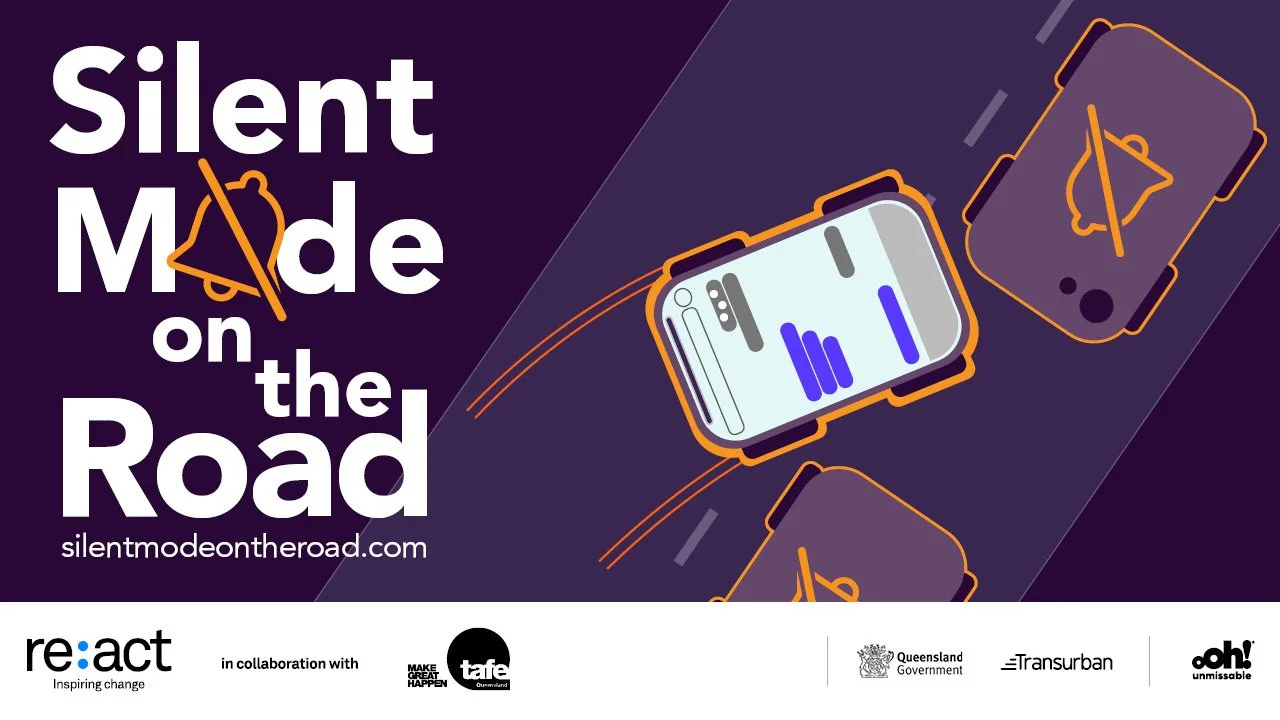
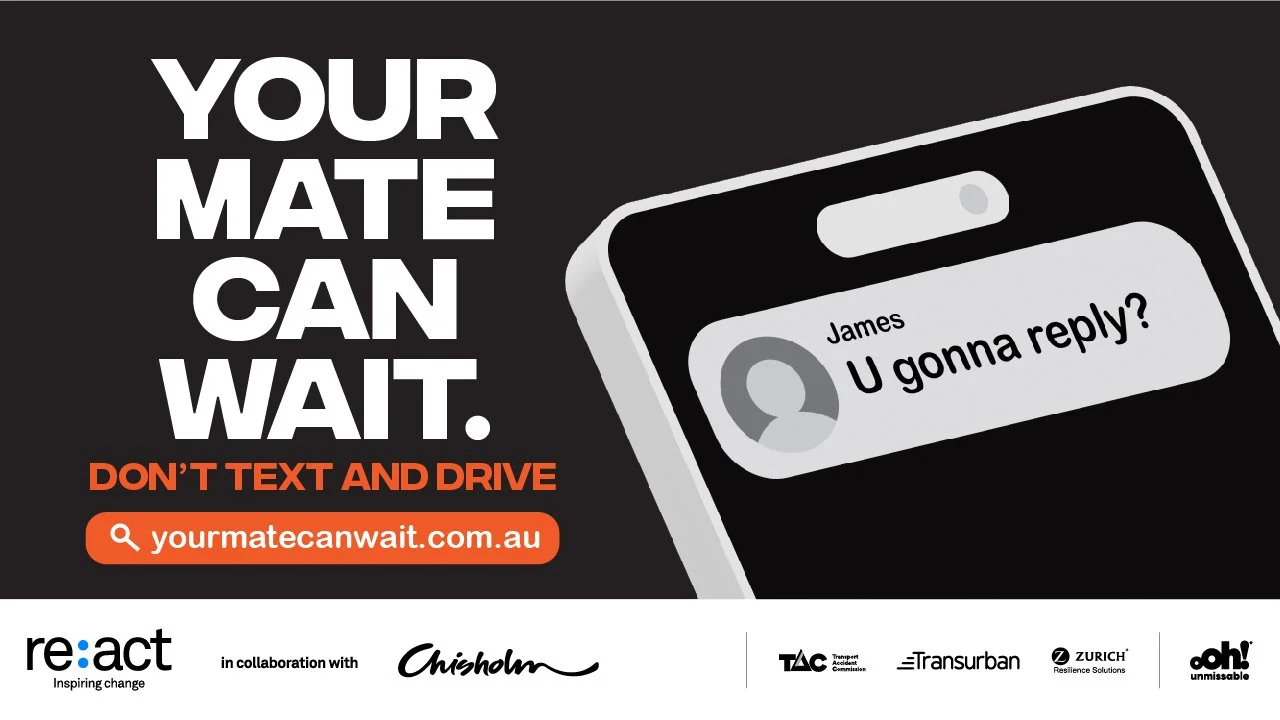
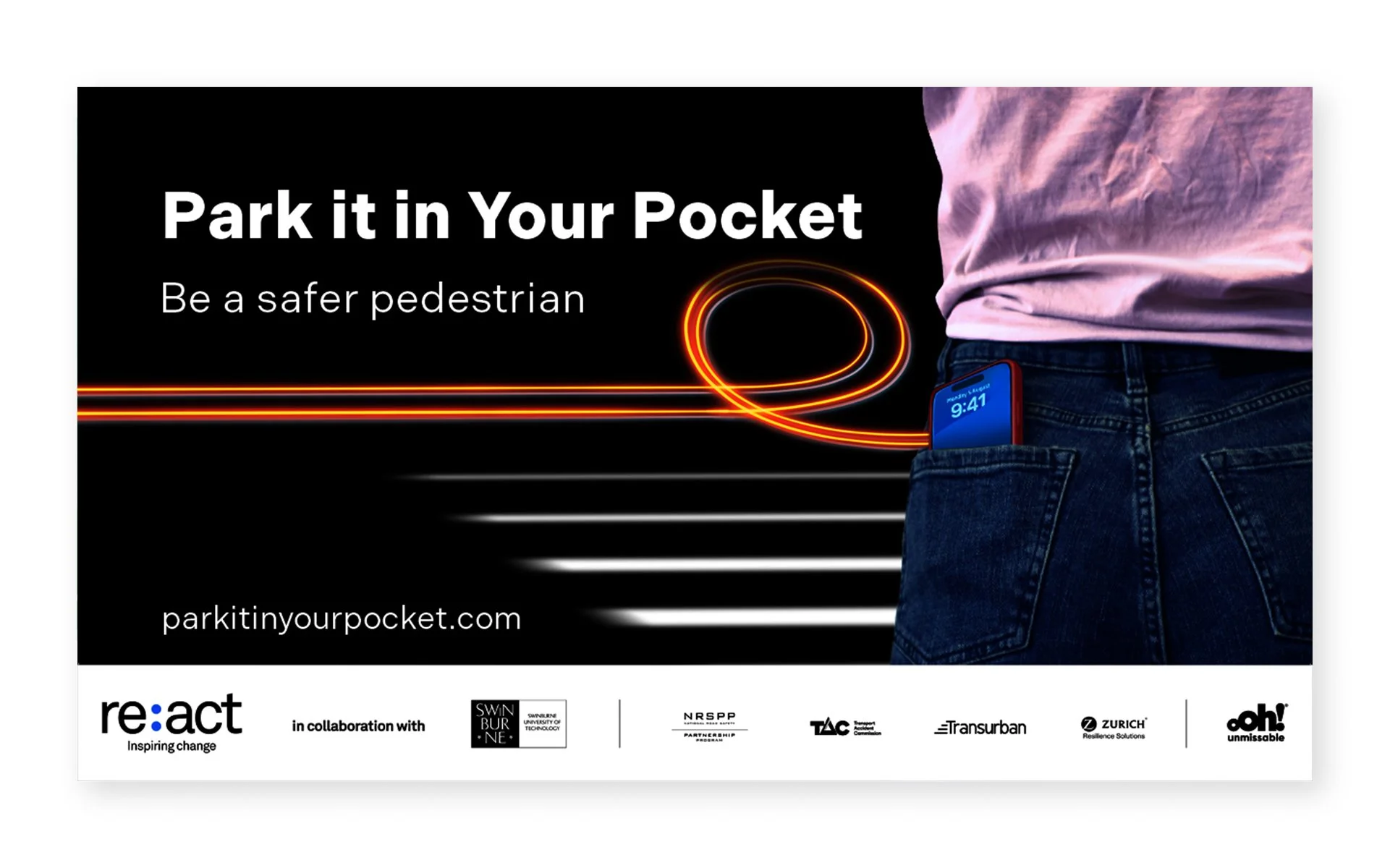
The 2024 Re:act program in the United States challenges University communication design students to create positive campaigns that educate their peers about not being distracted by cell phones. 

Students can focus on distraction as a driver or a pedestrian within the road environment, with campaigns aiming to change behavior around a serious road safety risk for our 17-25 year old target audience.


Institution Partner


Program Partners


National Media Partner



2023


Distraction

The 2023 Re:act program in the United States challenged university communication design students to create campaigns that educate their peers about the risks of distraction on and around our roads.

Whether you’re a driver, motorcyclist, cyclist, or pedestrian, distraction is a significant road safety issue. For example, distracted driving contributes to about half of all crashes in Maryland, with an average of 53,000 distracted driving crashes recorded annually in the five years to 2021.


Institution Partner


Program Partners


National Media Partner


2022


Shared Responsibility

Interactions between cars and pedestrians or cyclists account for many unnecessary road traffic fatalities and injuries in Maryland and across the United States. The challenge of this brief was to develop a campaign that builds a greater sense of shared responsibility between vulnerable road users (VRU) and vehicle drivers to reduce the number of crashes involving VRUs.


on the way

See how Re:act is spreading the shared responsibility road safety message.


live campaign

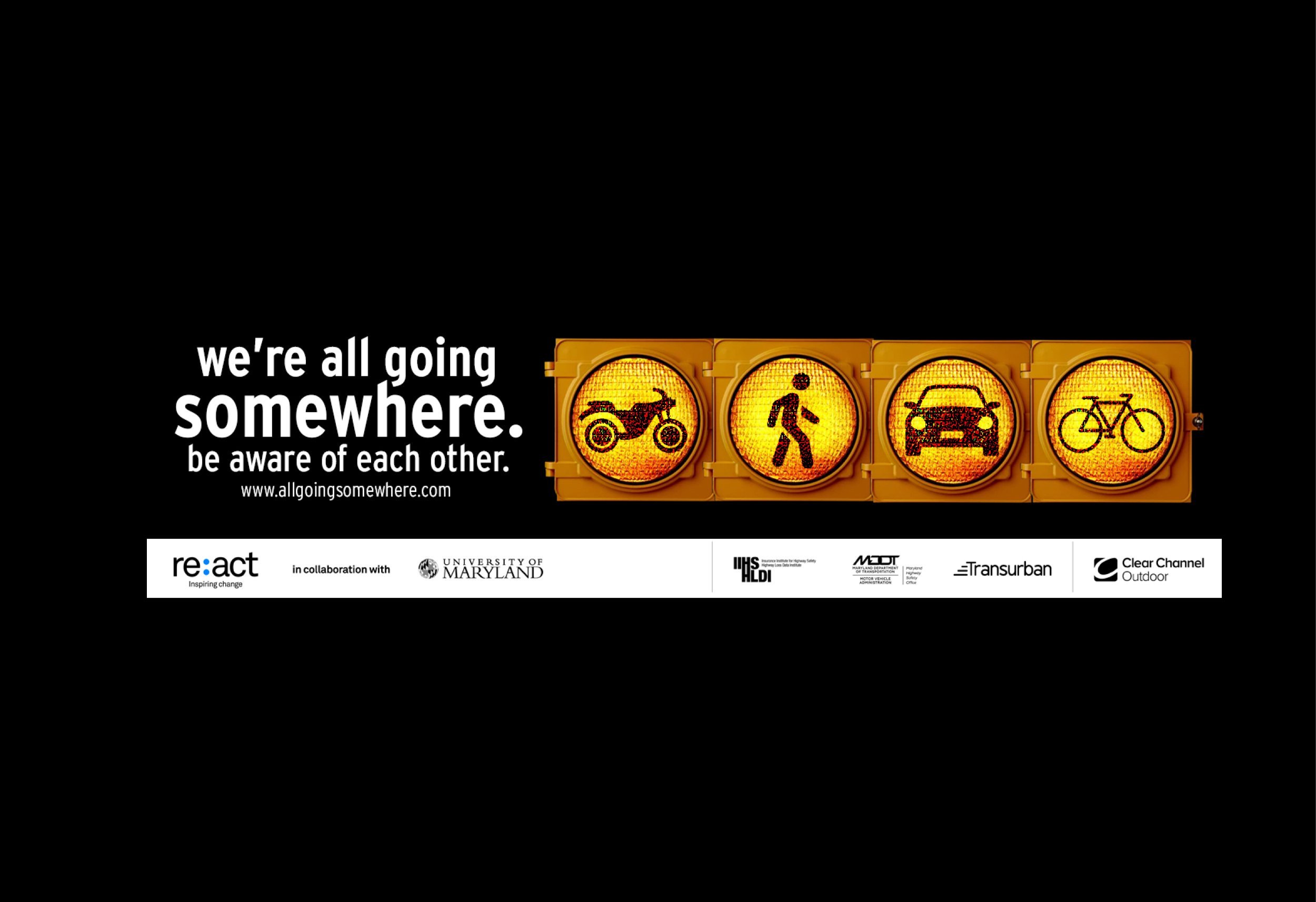
The selected Re:act 2022 U.S. campaign, ‘We are all going somewhere’, was created by University of Maryland-College Park student Madison Beakes to educate all road users about our shared responsibility for road safety.


92% of pedestrian-involved crashes in Maryland in 2019 resulted in injury or death.


resources


These resources helped shape the creative brief. They provide valuable insights into the issue of shared responsibility.


2022


Safer motorcycling

Motorcycles are matching cars as the leading cause of road traffic fatalities among
18-25 year olds and the majority of those seriously injured on UK roads in this age group are motorcyclists, according to provisional data. Re:act UK 2022 focuses on preventing and reducing the high incidence of motorcycle casualties among young road users.


Live campaign

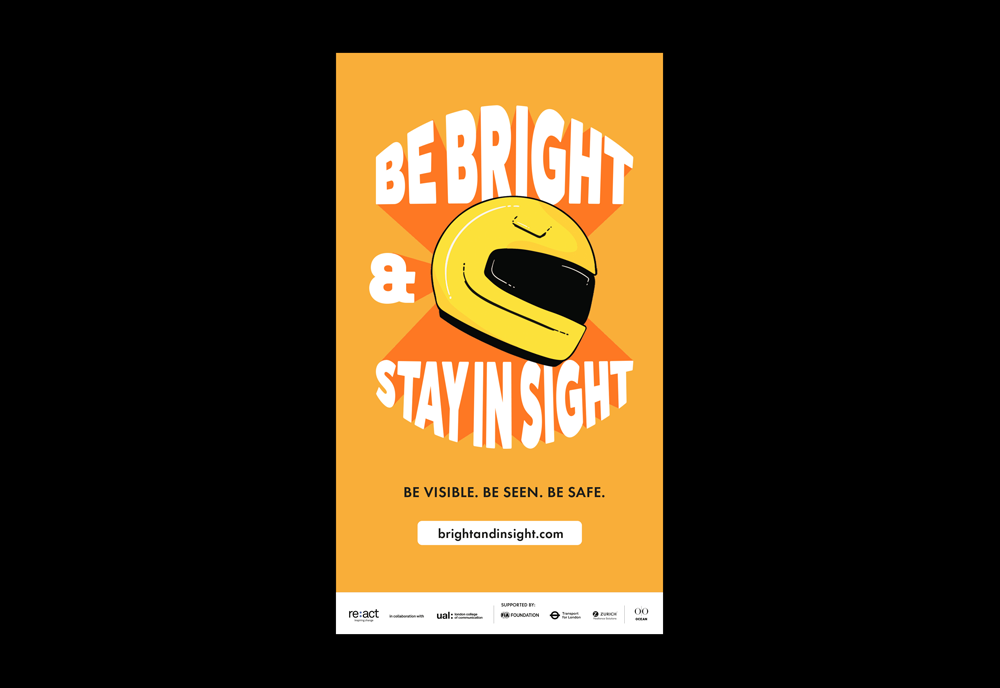
The selected Re:act 2022 U.K. campaign, ‘Be Bright and Stay In Sight’, was created by University of the Arts London student Beatriz Coelho to address the high incidence of motorcycle casualties among young road users. Find out more at the campaign website.


There were almost 15,000 reported crashes in Great Britain in 2020 involving motorcycles.


digital assets


resources


These resources helped shape the creative brief. They provide valuable insights into the issue of safer motorcycling.


2022


Shared Responsibility/
Responsabilidade Compartilhada

Interactions between cars, motorcycles and pedestrians account for a significant proportion of road traffic fatalities and injuries across Brazil. The challenge of this brief is to develop a campaign that builds a greater sense of shared responsibility between vulnerable road users (VRU) and vehicle drivers to reduce the number of crashes involving VRUs. 

As interações entre automóveis, motocicletas e pedestres são responsáveis por uma proporção significativa das mortes e lesões no trânsito em todo o Brasil. O desafio deste brief é desenvolver uma campanha que construa um maior senso de responsabilidade compartilhada entre usuários vulneráveis (UVV) e condutores de automóveis para reduzir o número de sinistros envolvendo UVVs.


our streets

See how the inaugural Re:act Brazil program raised awareness of our shared responsibility for road safety


Live campaign

The selected Brazilian campaign, ‘Avoid Another Name’, was created by University of Fortaleza students Amando Kato, Iago Félix, Matheus Almeida, Juliana Brasileiro, Luiza Gabriela and Ingrid Facó.

A campanha brasileira selecionada, 'Evite Mais um Nome', foi criada por estudantes da Universidade de Fortaleza (UNIFOR) Amando Kato, Iago Félix, Matheus Almeida, Juliana Brasileiro, Luiza Gabriela e Ingrid Facó.


Interactions between cars, motorcycles and pedestrians account for a significant proportion of road traffic fatalities and injuries in Fortaleza.

As interações entre carros, motocicletas e pedestres são responsáveis por uma proporção significativa das mortes e lesões no trânsito em Fortaleza.


resources


These resources helped shape the creative brief. They provide valuable insights into the issue of shared responsibility.

Esses recursos ajudaram a moldar o briefing criativo. Eles fornecem insights valiosos sobre a questão da responsabilidade compartilhada.


2022

Safer vehicles

Young drivers are over-represented in road statistics. While inexperience, risk-taking and busy lifestyles contribute to road trauma, the higher proportion of younger drivers in older cars makes young people more vulnerable to road crashes and injury. In 2022, Re:act aims to raise awareness of the benefits of purchasing safer vehicles, and to make safety part of the conversation when young drivers are buying a vehicle.


Purchasing a vehicle with a higher safety rating improves road crash outcomes.


safer choices

See how Re:act changed participants’ attitudes towards vehicle safety.


universities

The universities supporting Re:act 2022.


Tafes

The TAFEs supporting Re:act 2022.


resources


These resources, shared by re:act 2022 partners, helped shape the creative brief. They provide valuable insights into how purchasing safer vehicles can reduce road trauma.


2022


live campaign

Queensland University of Technology student Remy McCorquodale made use of a well-known cautionary tale for the ‘In the market? campaign.
To find out more, visit their campaign.


digital assets


2022


live campaign

Inspired by the popular horror genre, the ‘Dangerous cars are not on your side’ campaign was created by Salem Denisenko and Taliyah Hadfield. To see how the campaign came together, head to the campaign website.


digital assets


2023


Distraction

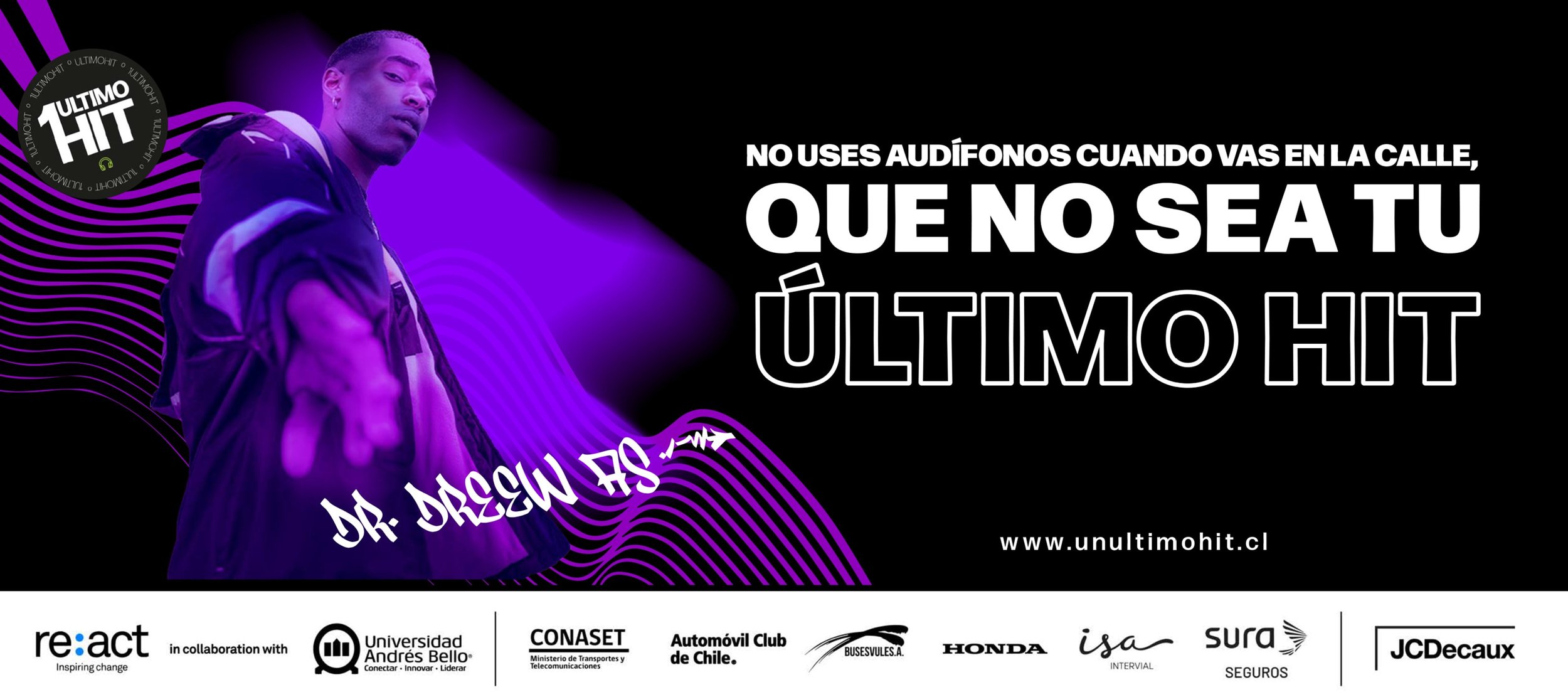
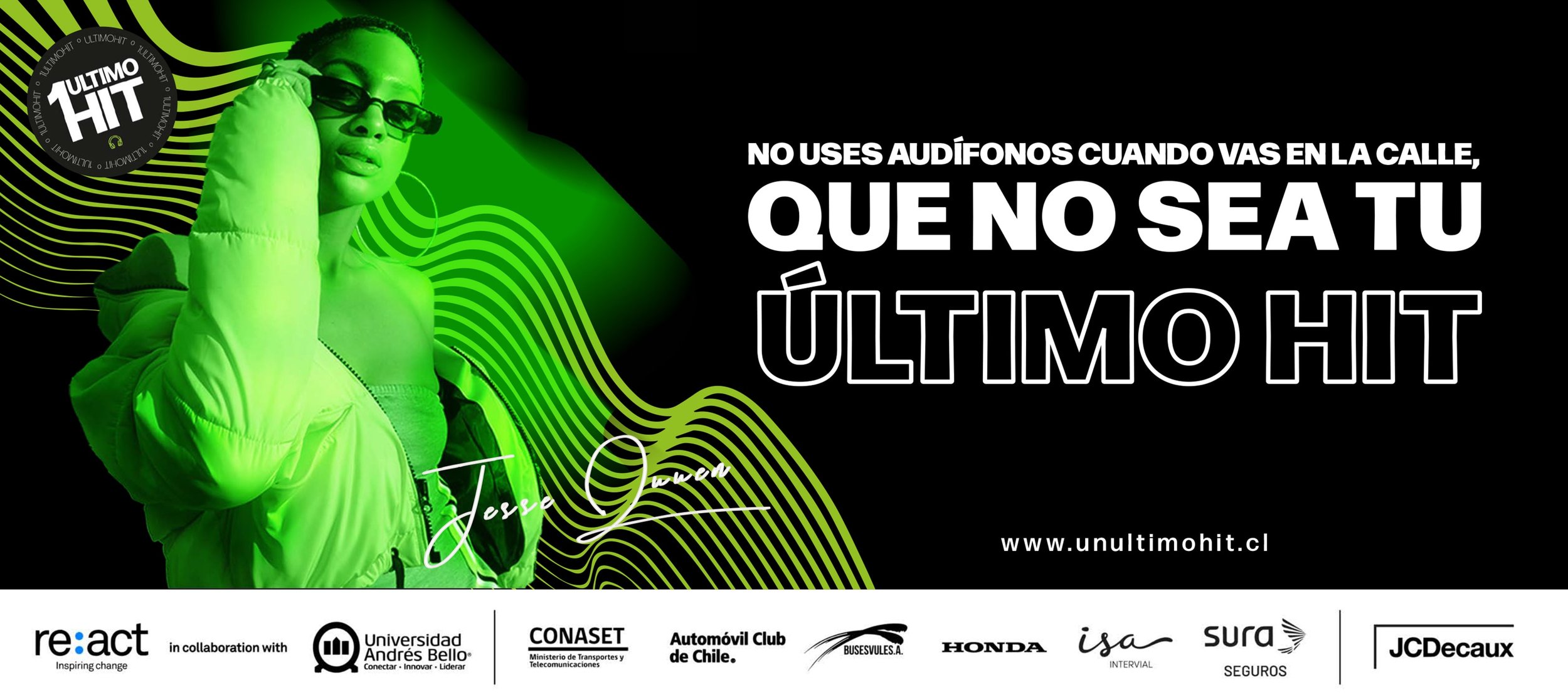
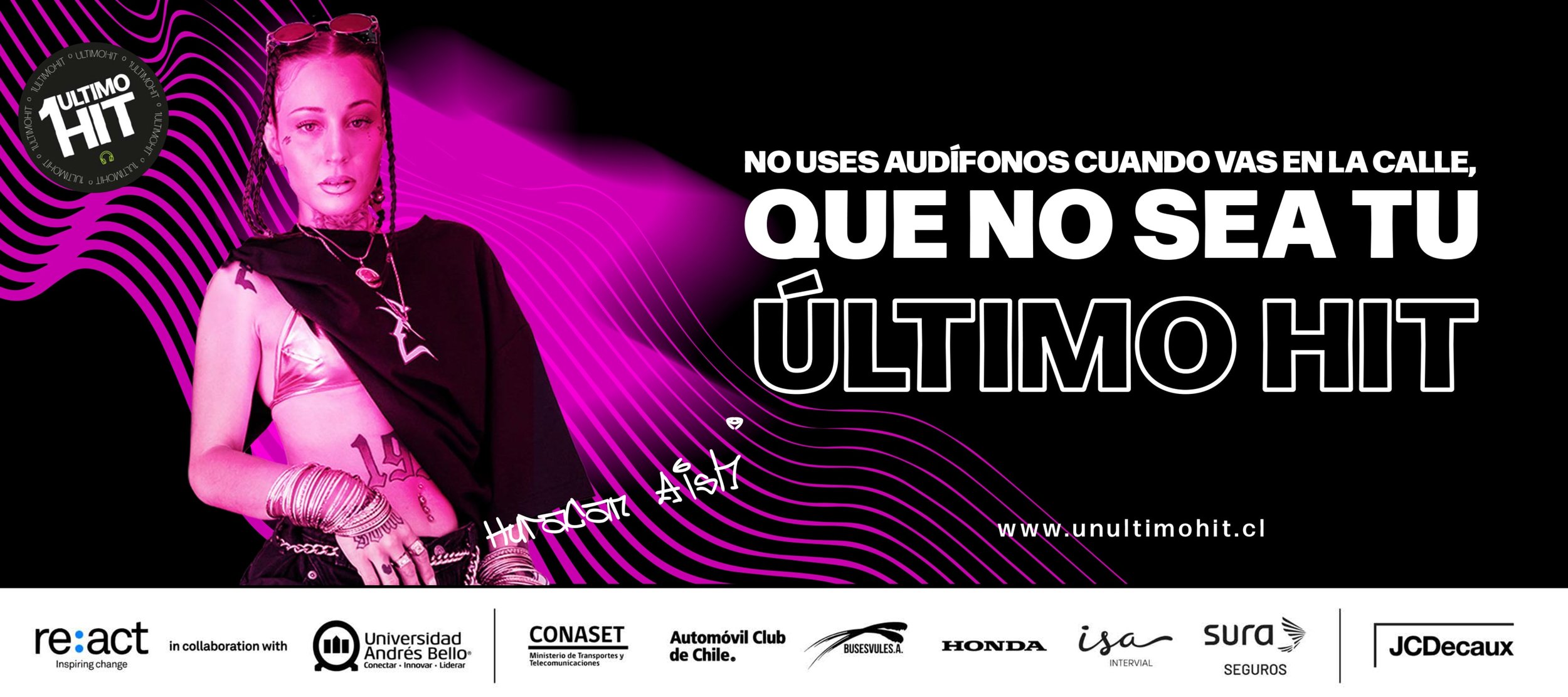
The 2023 Re:act program in Chile challenged university communication design students to create campaigns that educate their peers about the dangers of distraction on and around our roads.

Whether you’re a driver, motorcyclist, cyclist, or pedestrian, distraction is a significant road safety issue. Students created a campaign that raises awareness of the risks of any road user being distracted, or a campaign targeting a common distraction for a specific road user group, such as drivers using their cell phones or pedestrians wearing headphones.


Institution Partner


Program Partners


National Media Partner


2022


live campaign

The ‘Does it check out?’ campaign was created by Swinburne University of Technology students Catherine Stirling, Charmaine Hung, Amanda Wang and Tegan Welsh. To find out more, including watching the TVC the students made, head to their campaign.


digital assets


2022


Live campaign

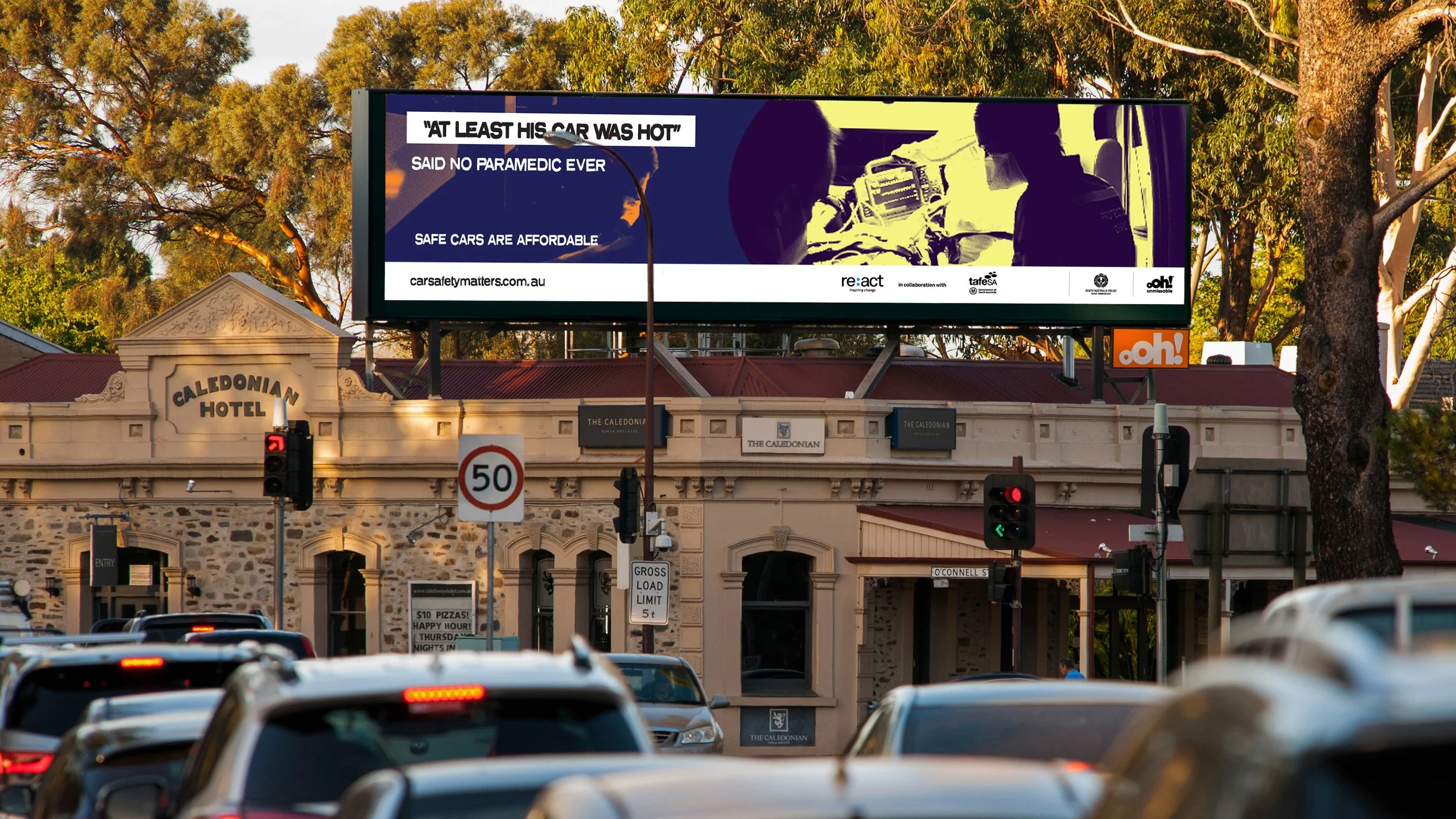
The selected campaign - “At least his car was hot” said no paramedic ever – considered avoidable car crashes from the perspective of first responders. Find out why car safety matters at the campaign website.


digital assets


2022


live campaign

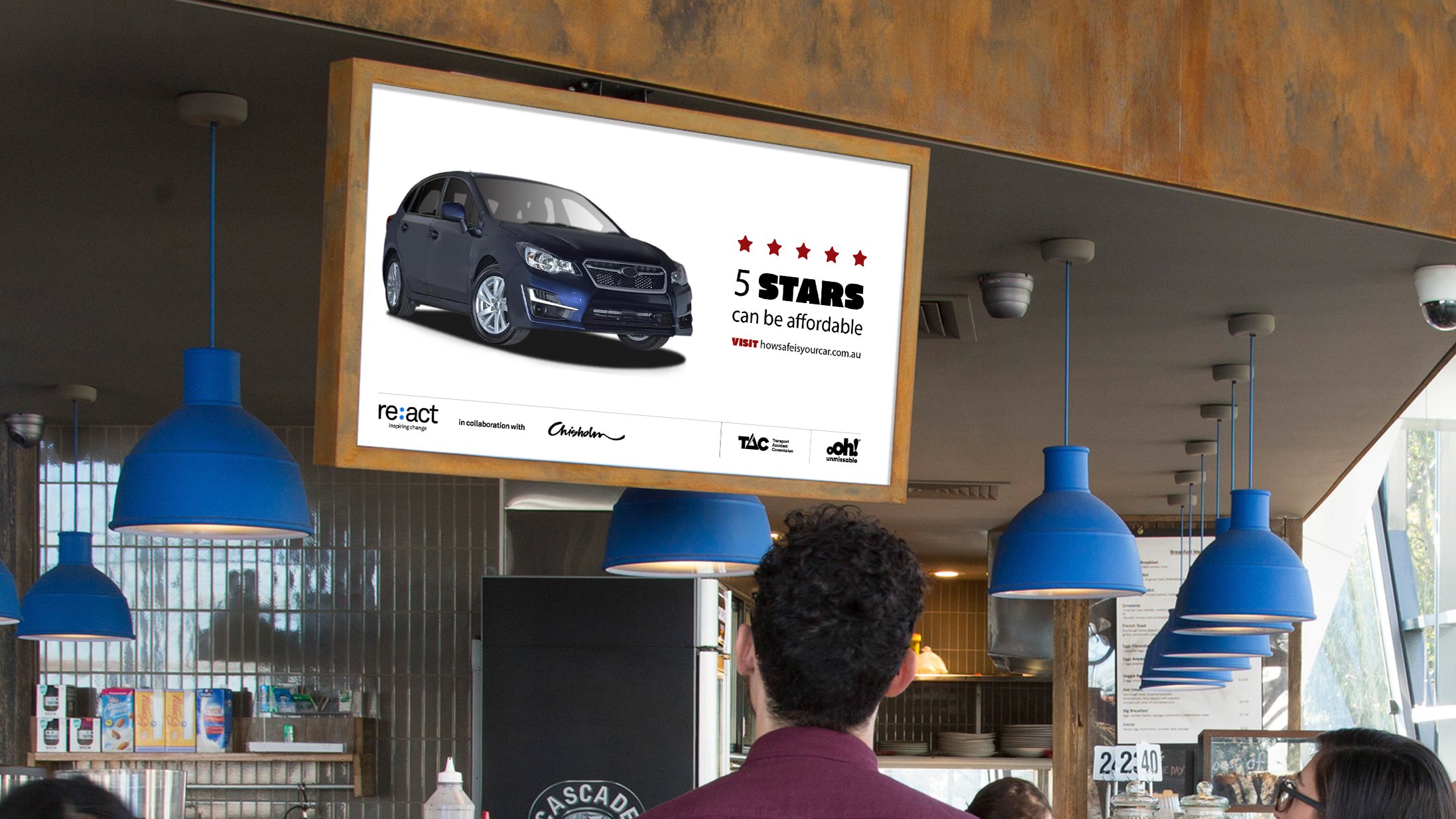
‘5 stars can be affordable’ is the clear and direct message from campaign creator Chris Karatsivoudis.


digital assets


2021

2021 Australia.png

Fatigue

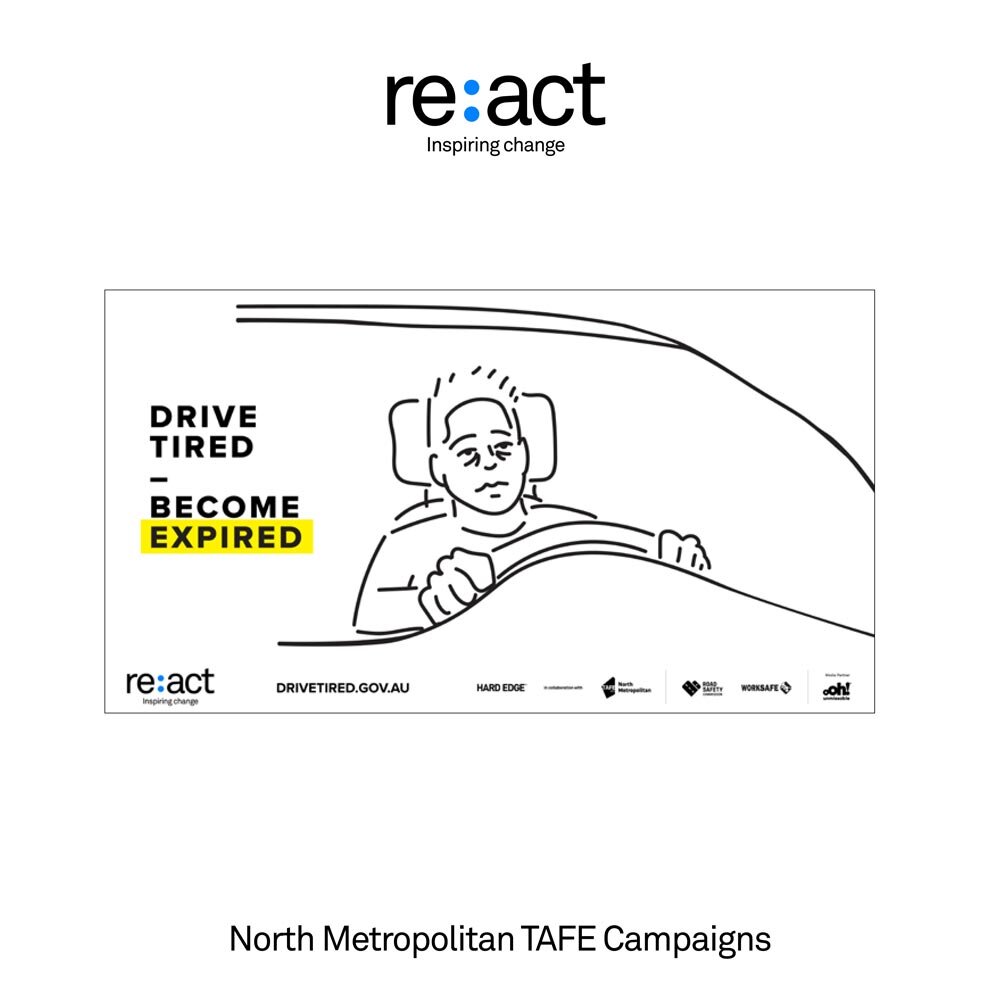
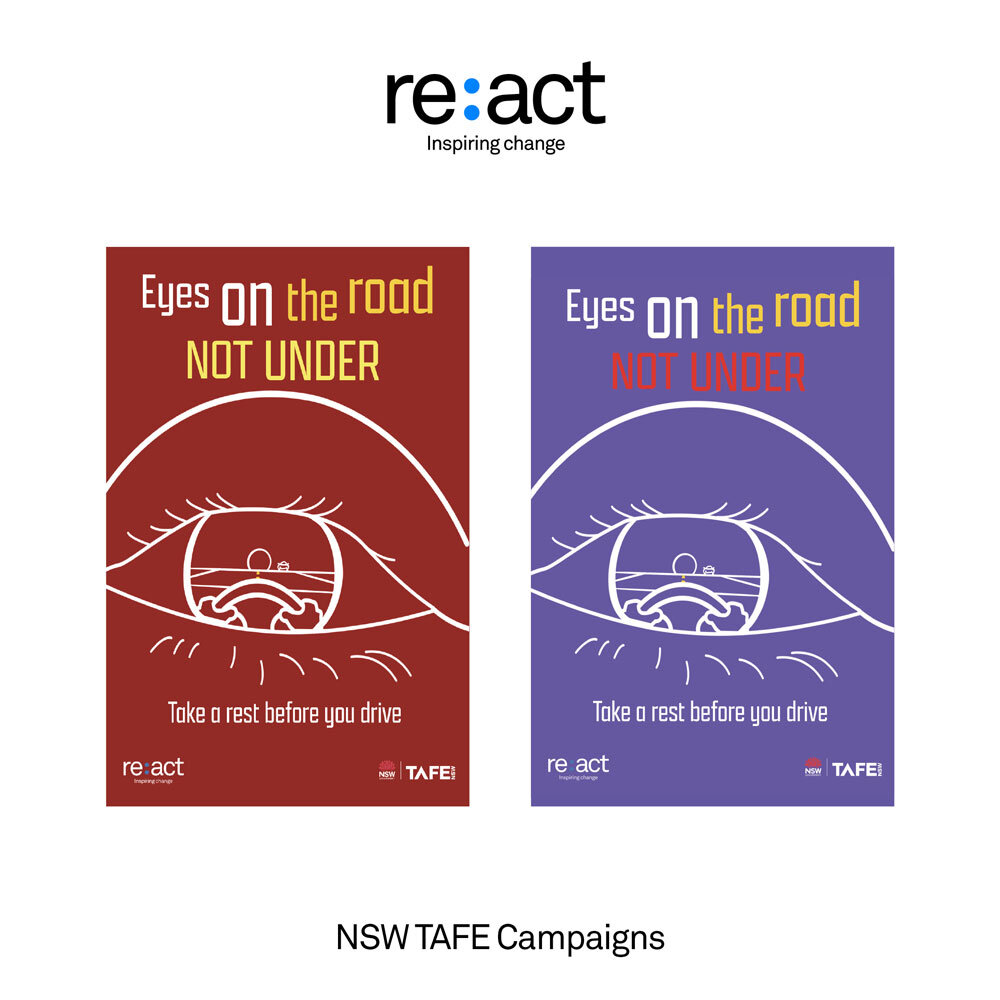
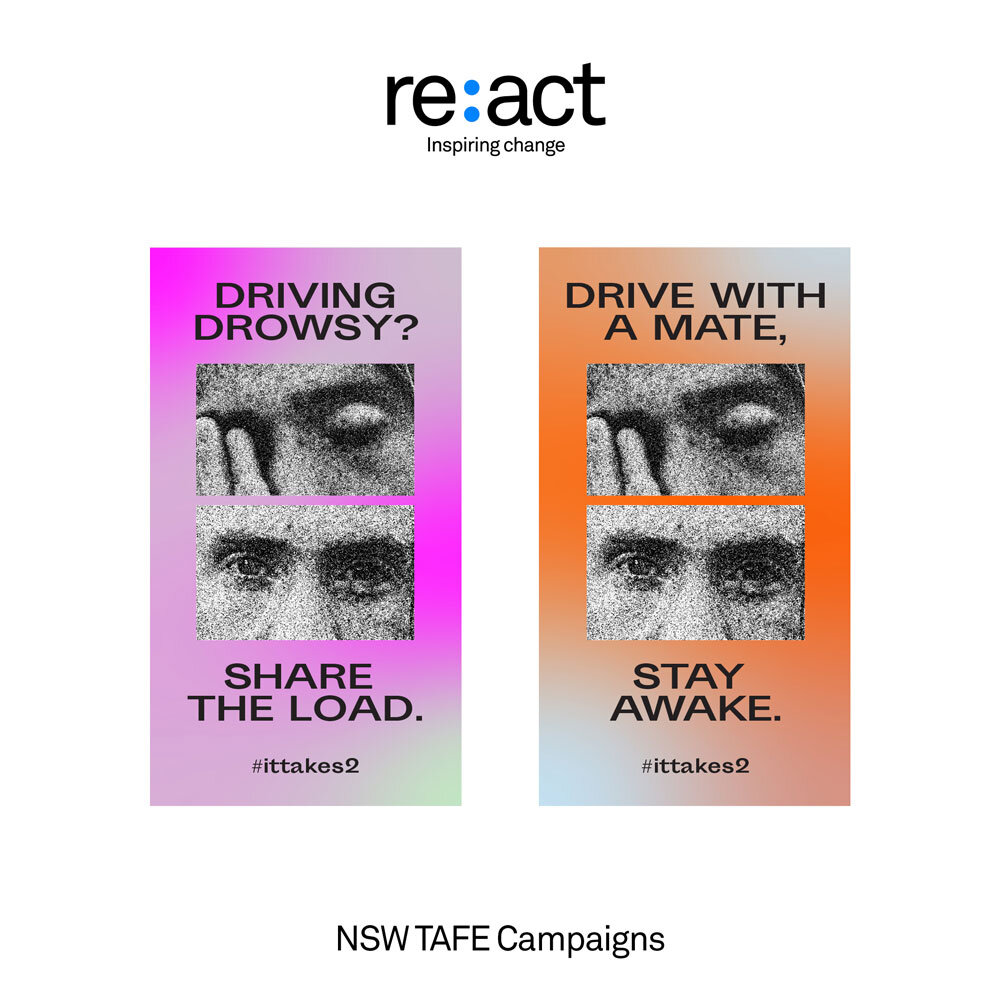
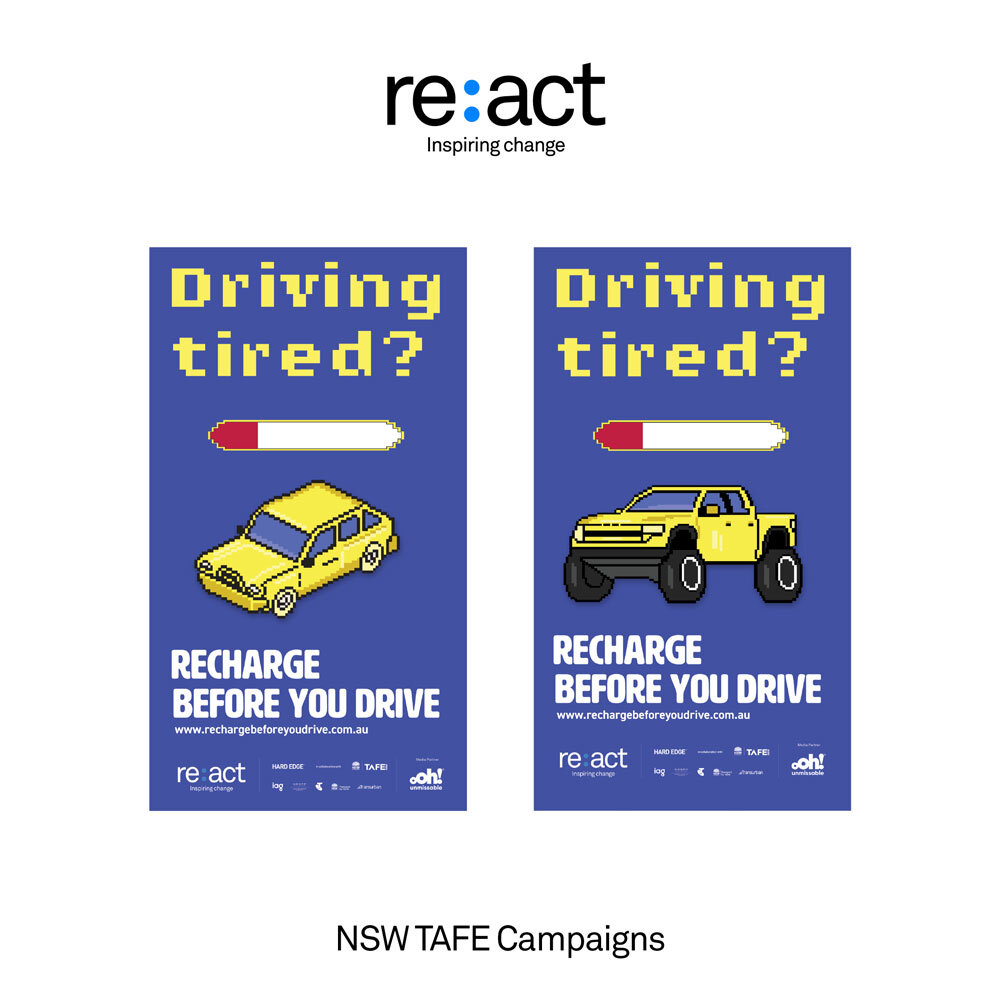
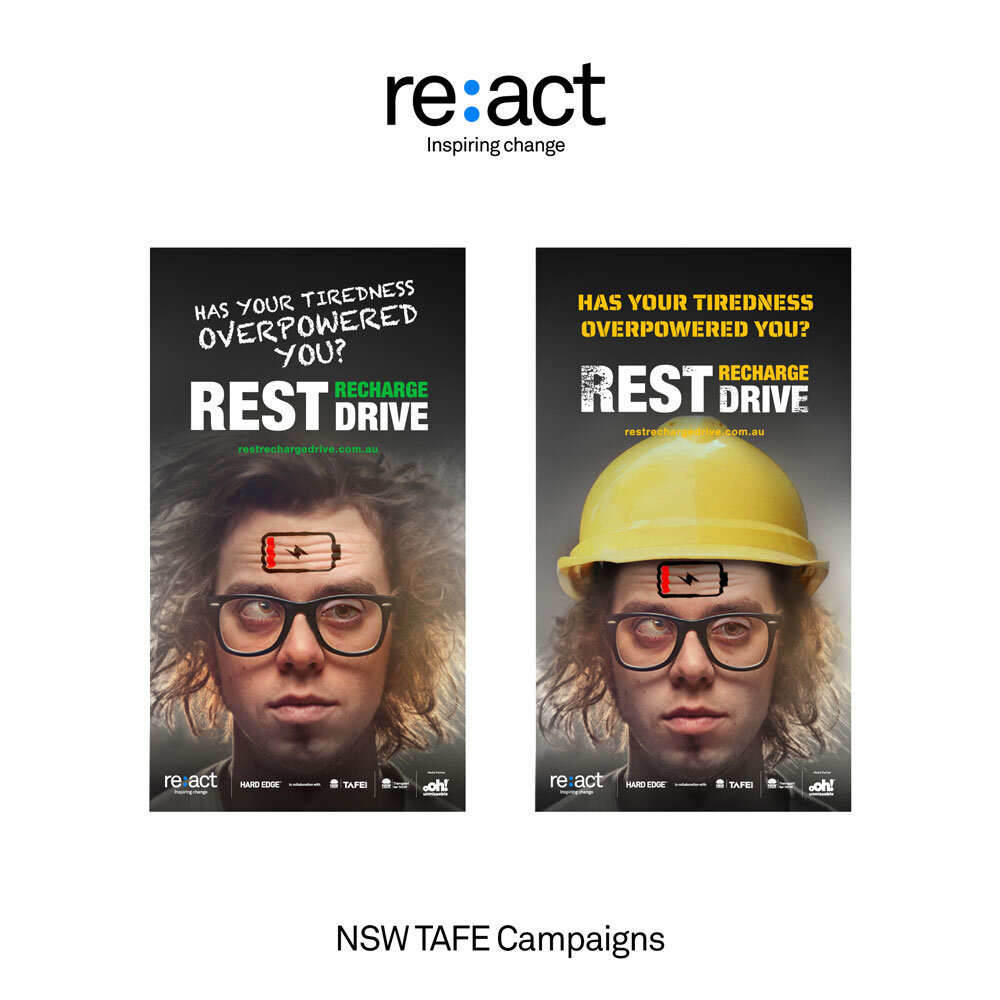
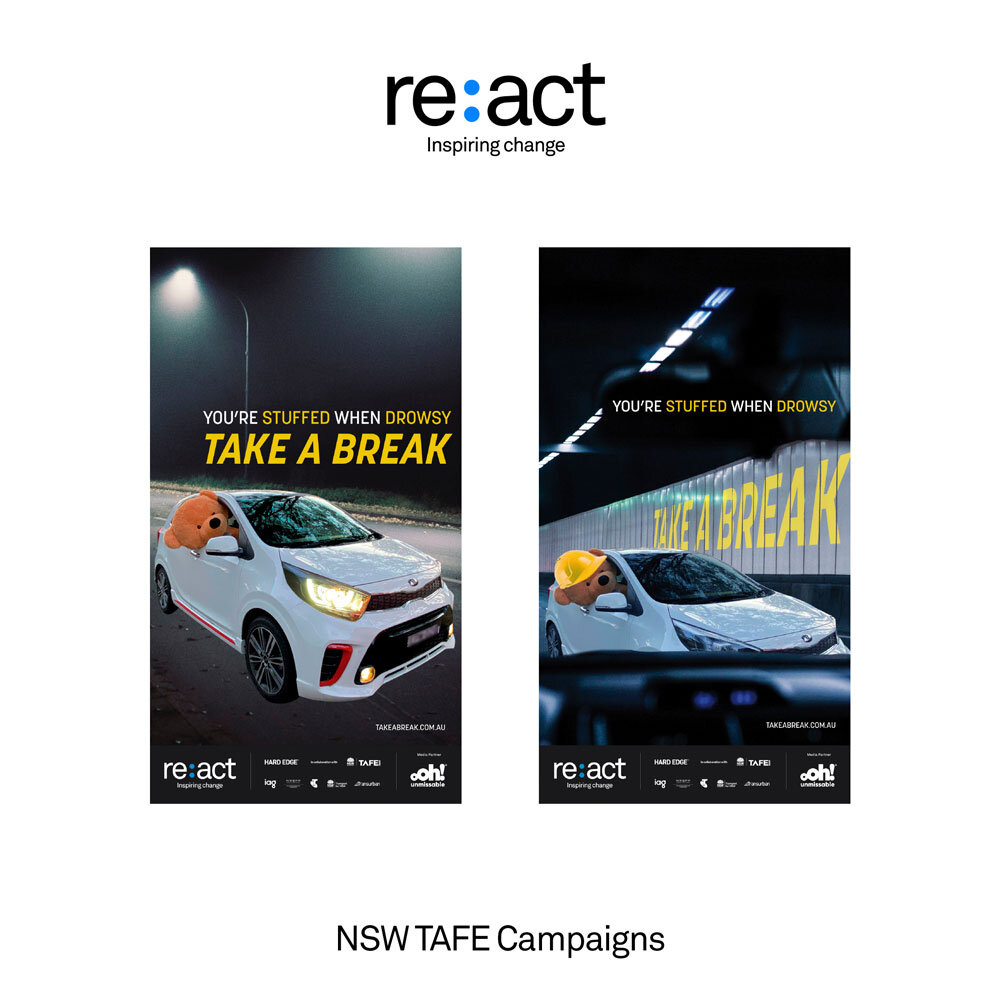
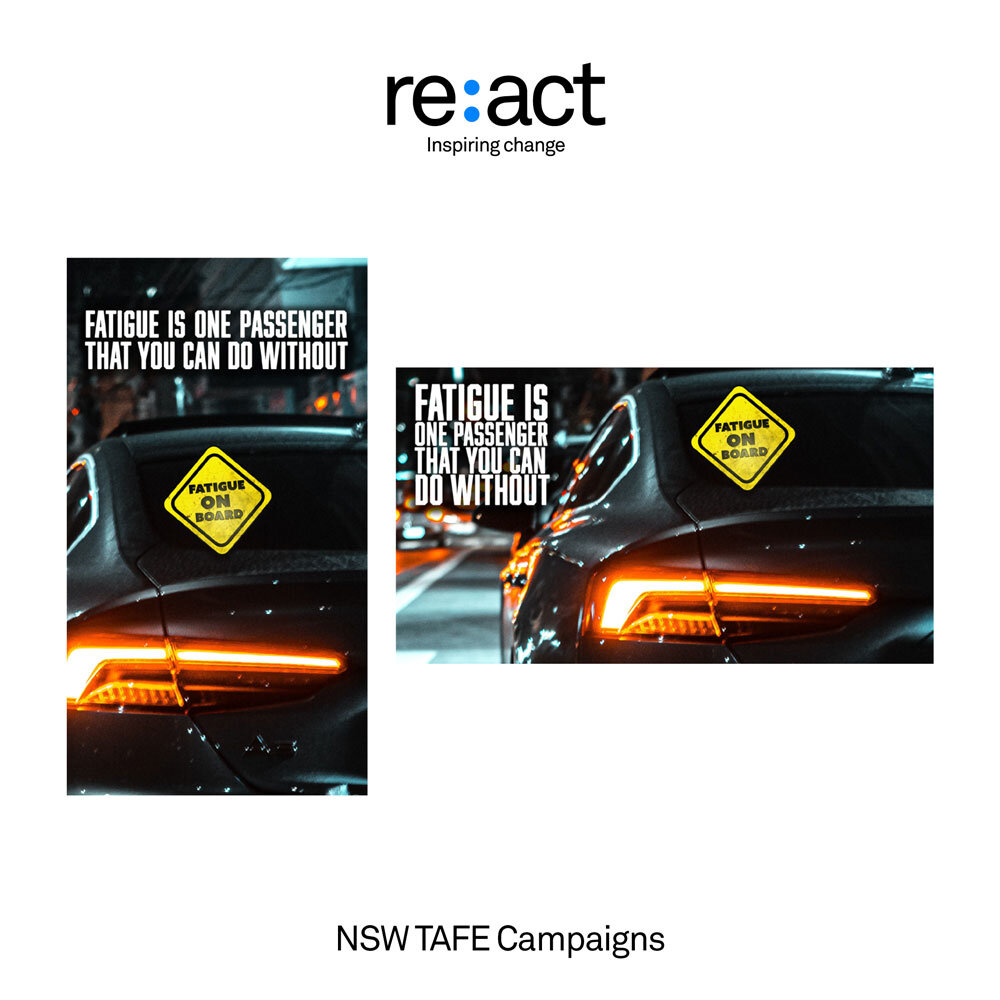
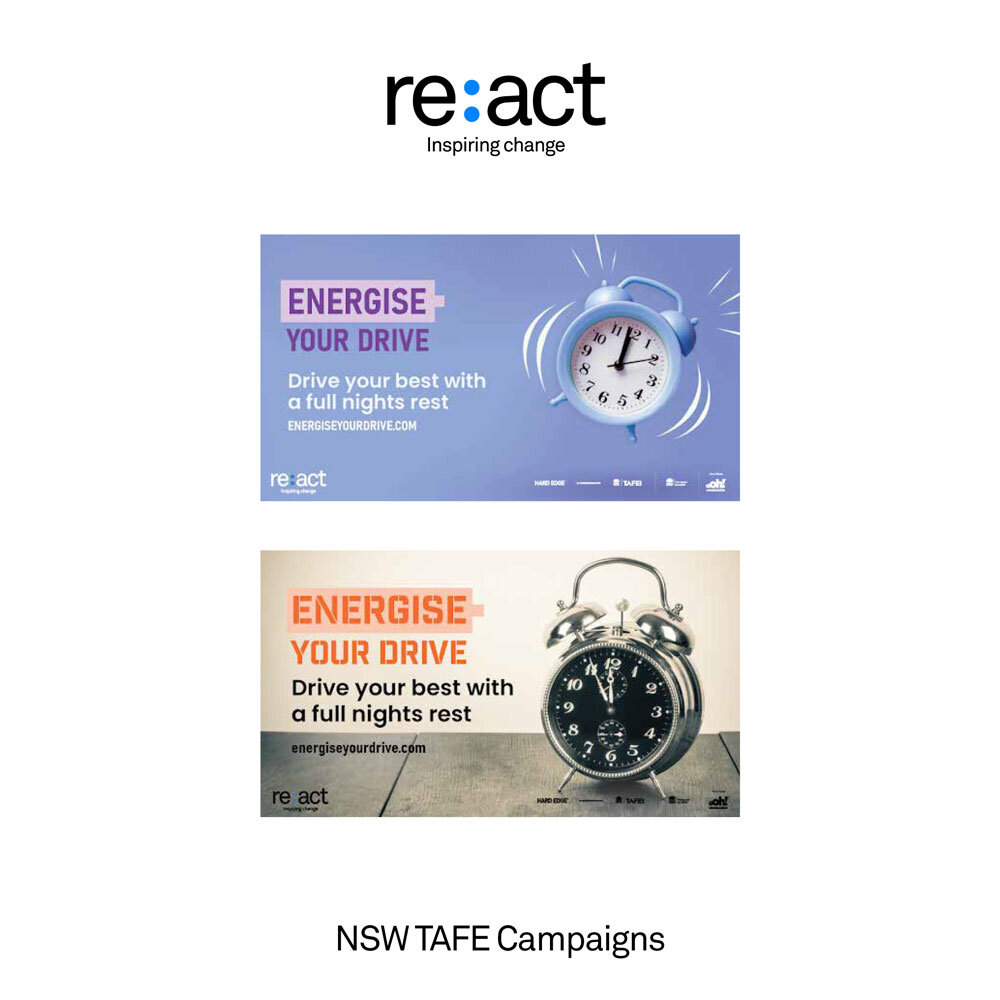
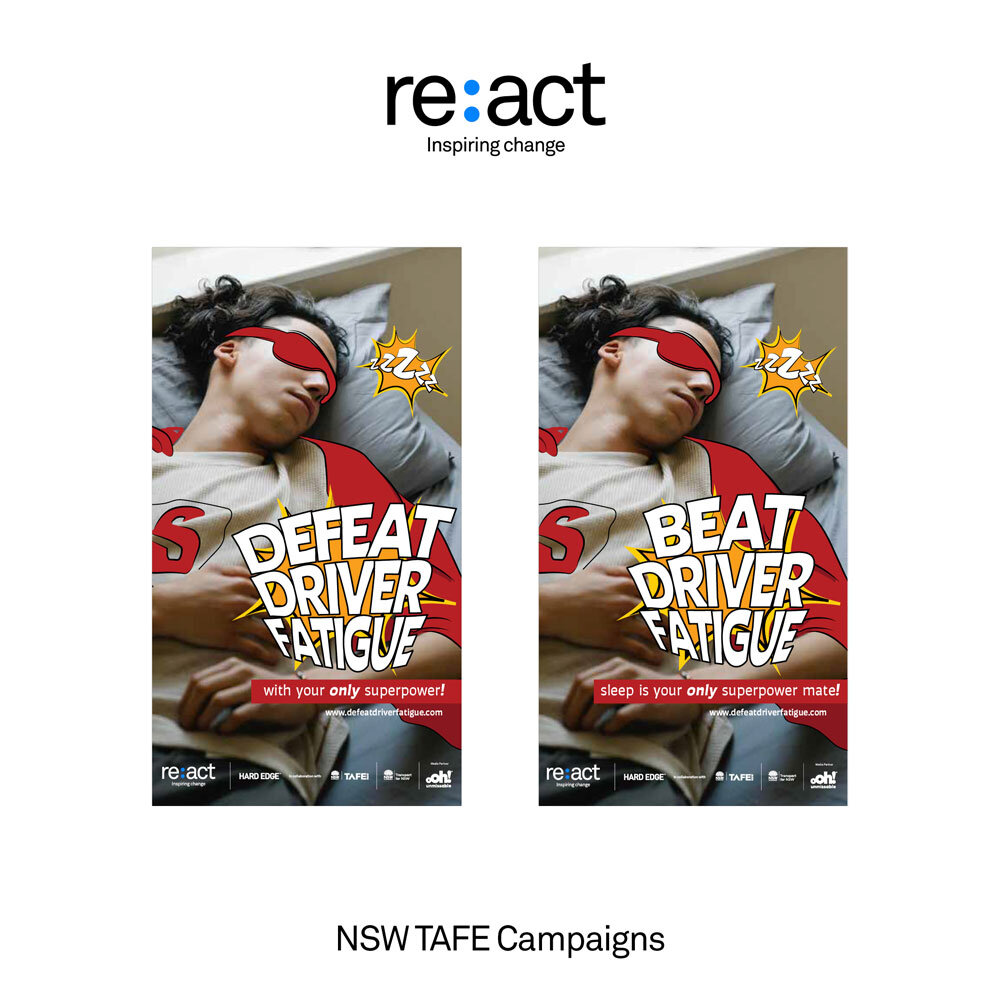
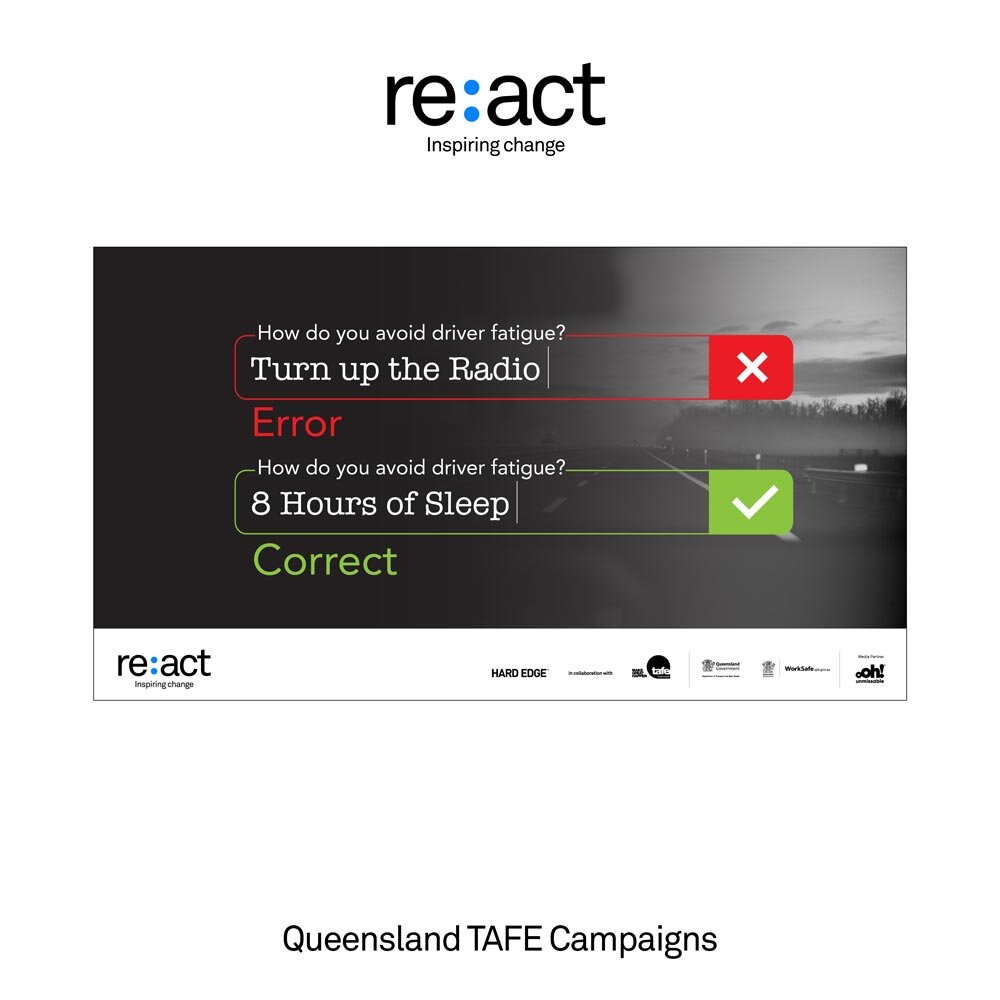
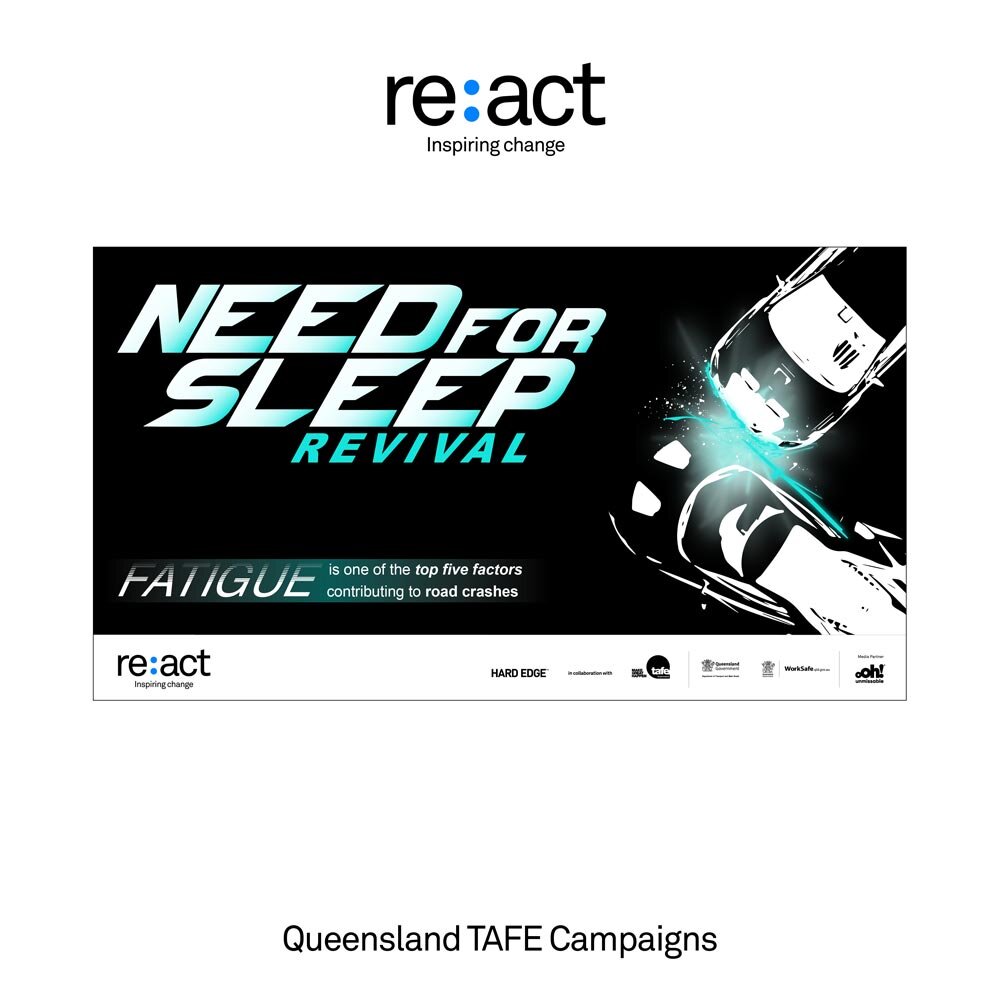
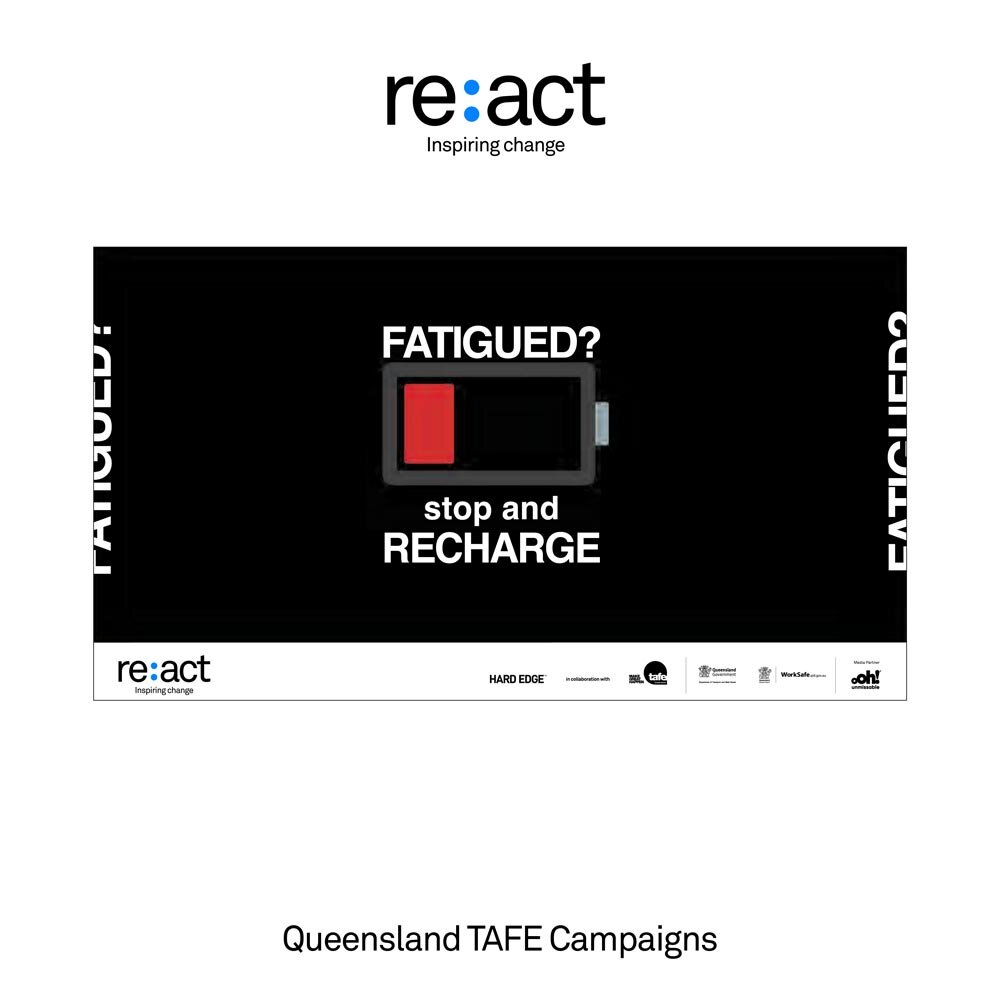
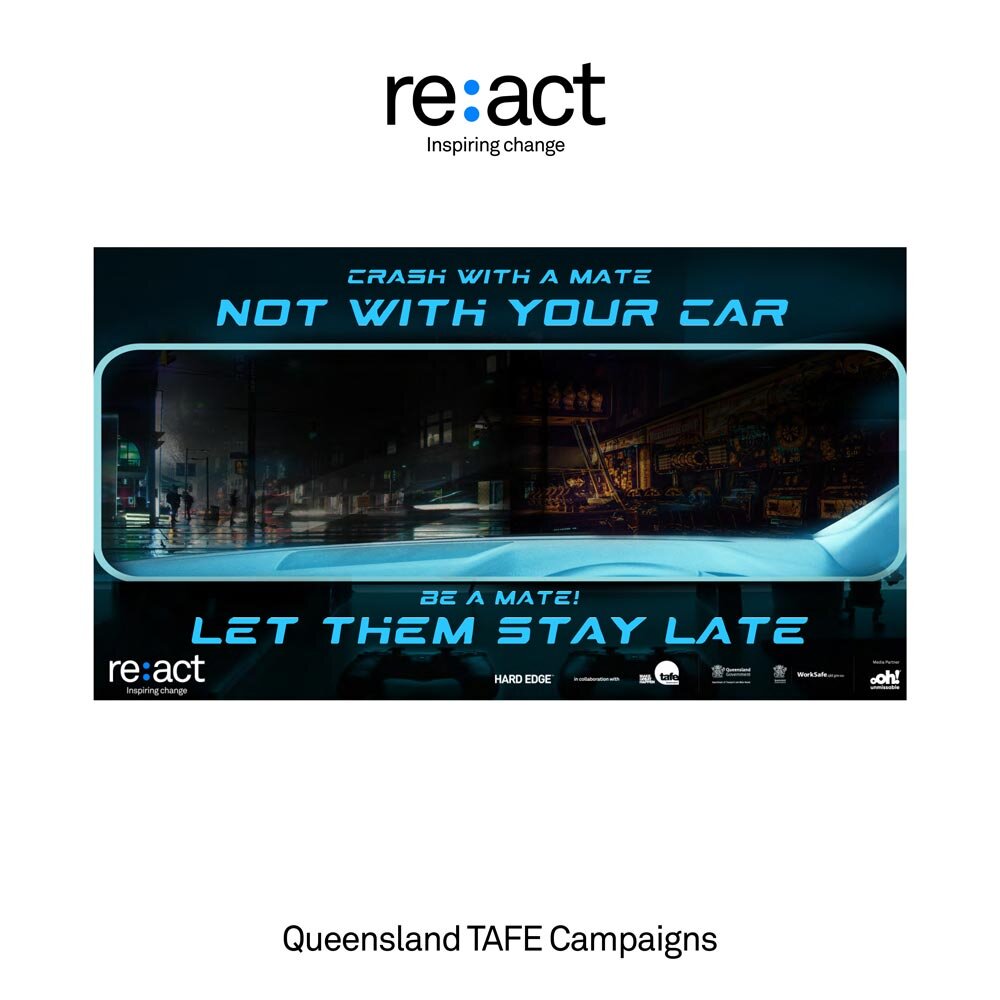
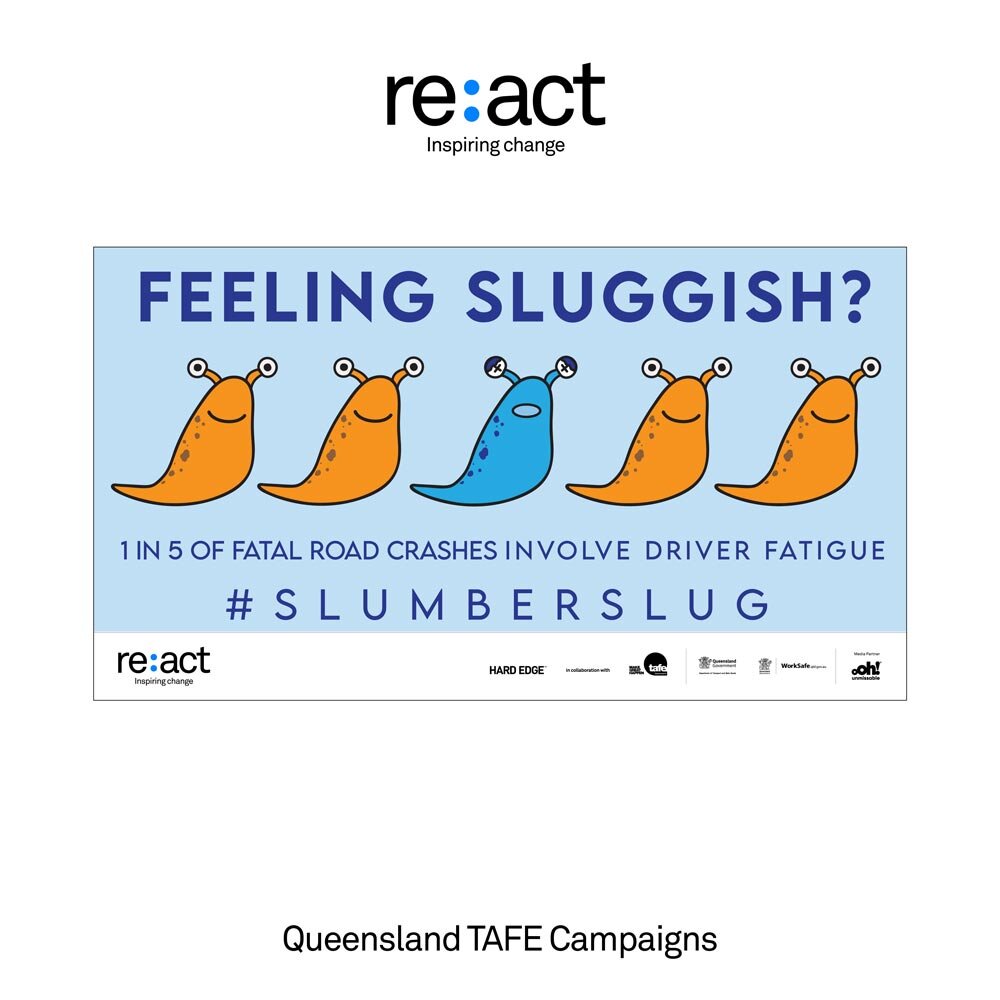
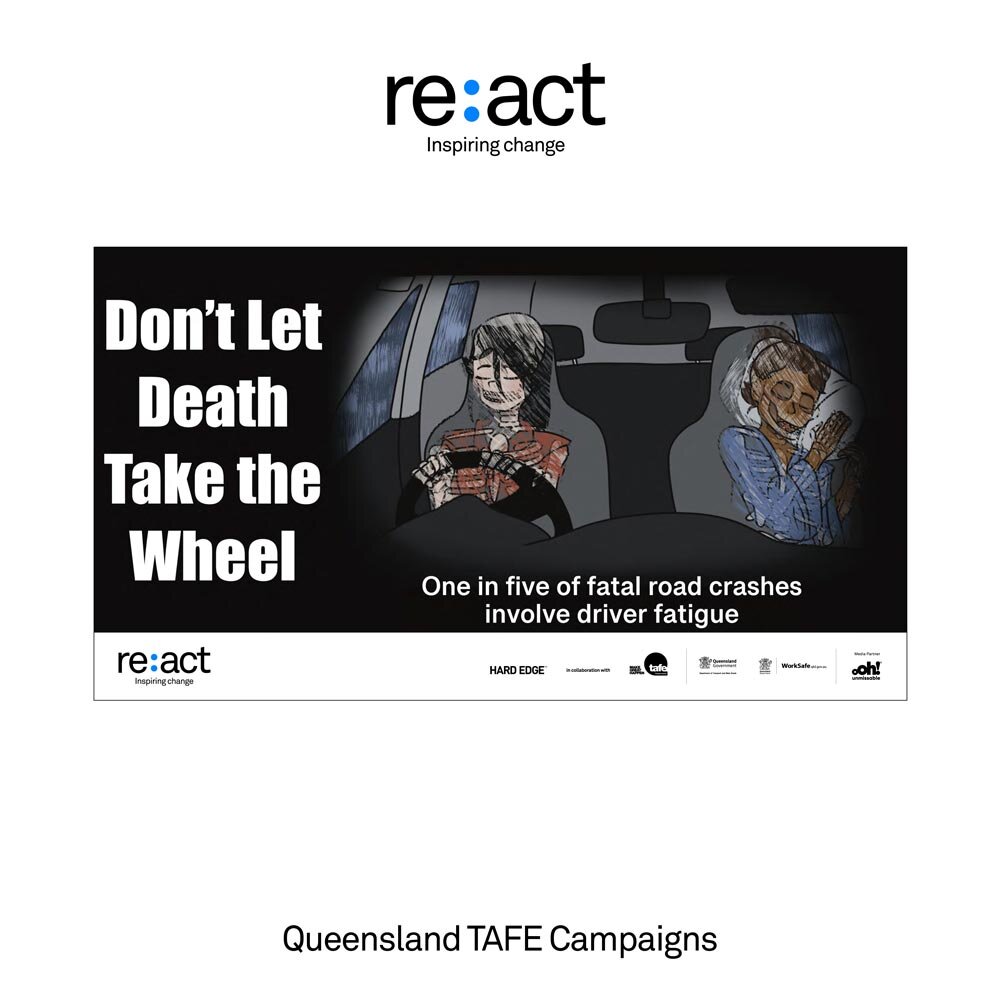
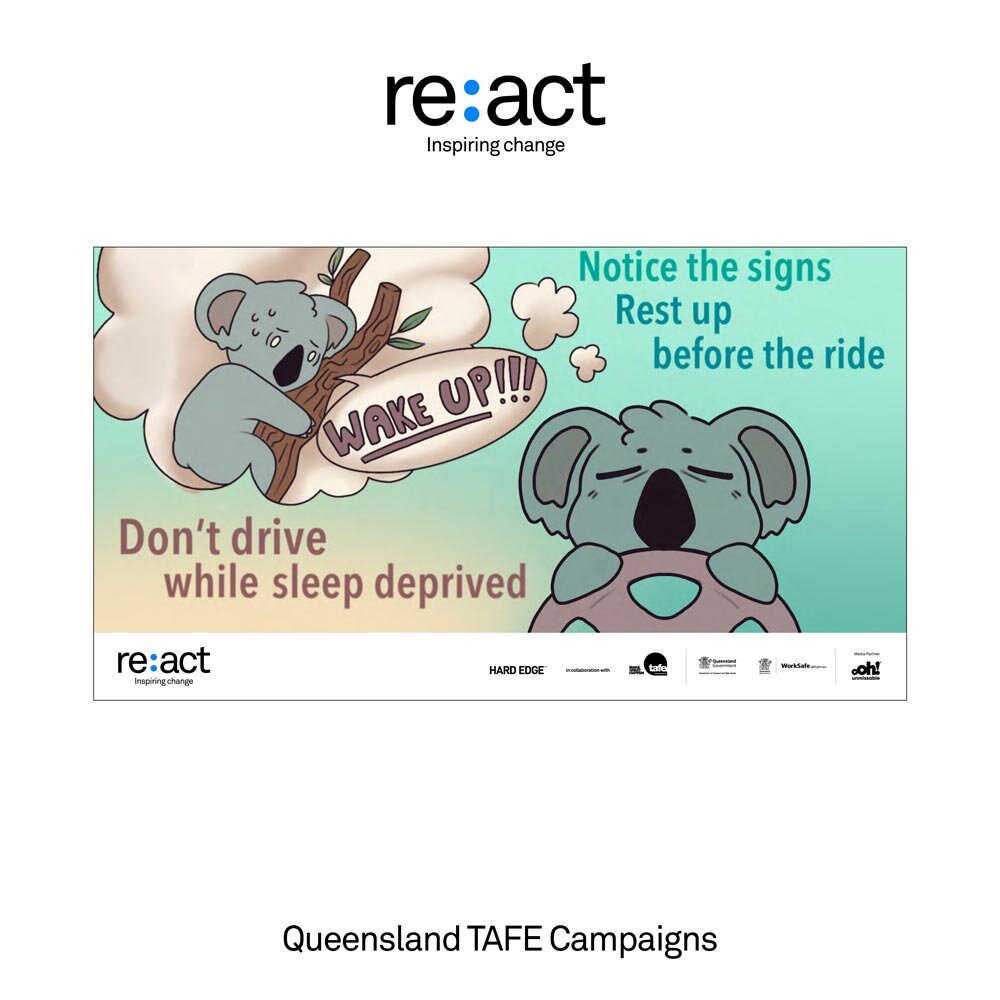
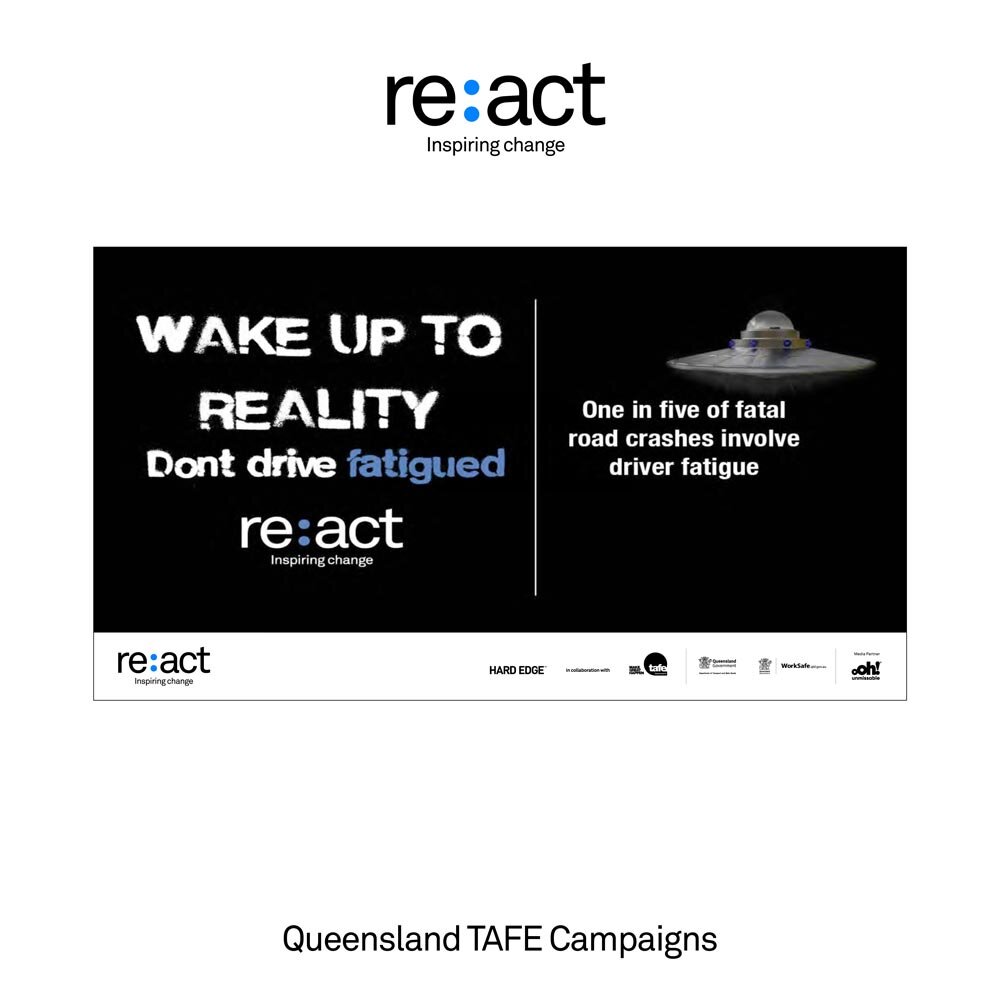
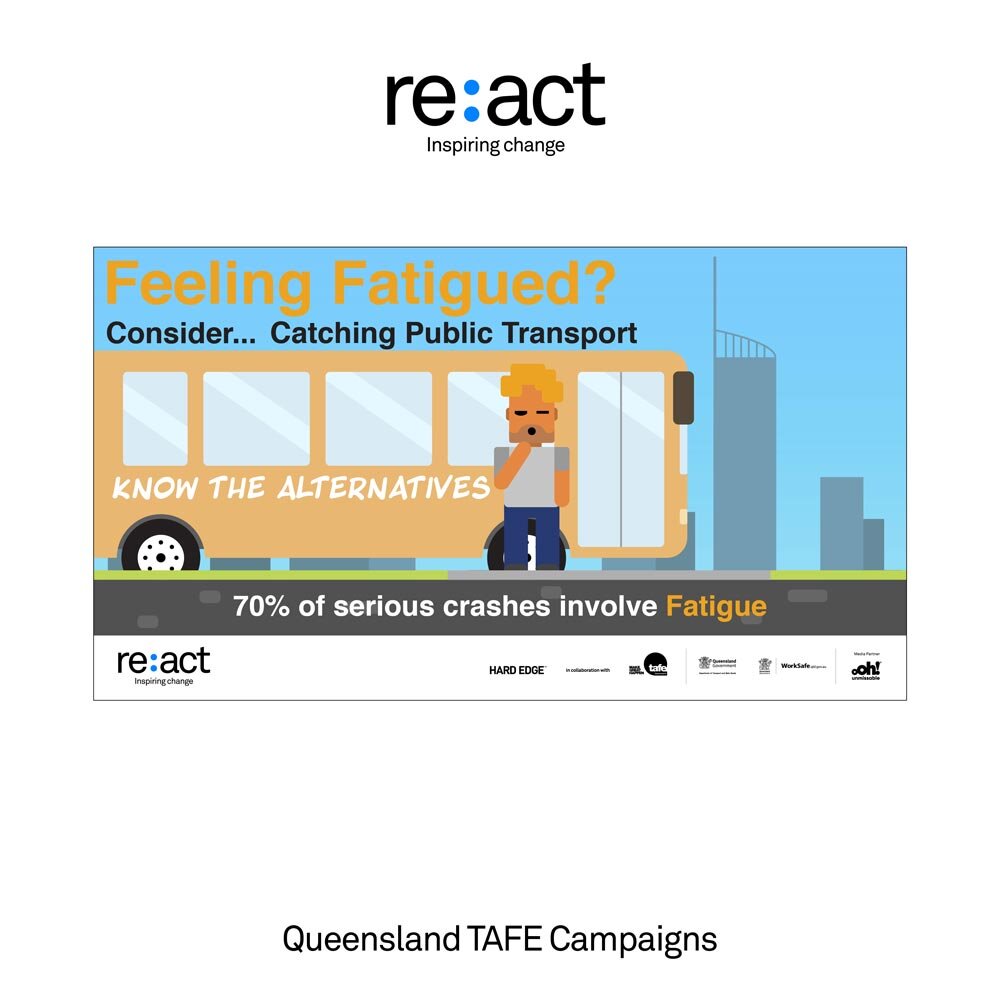
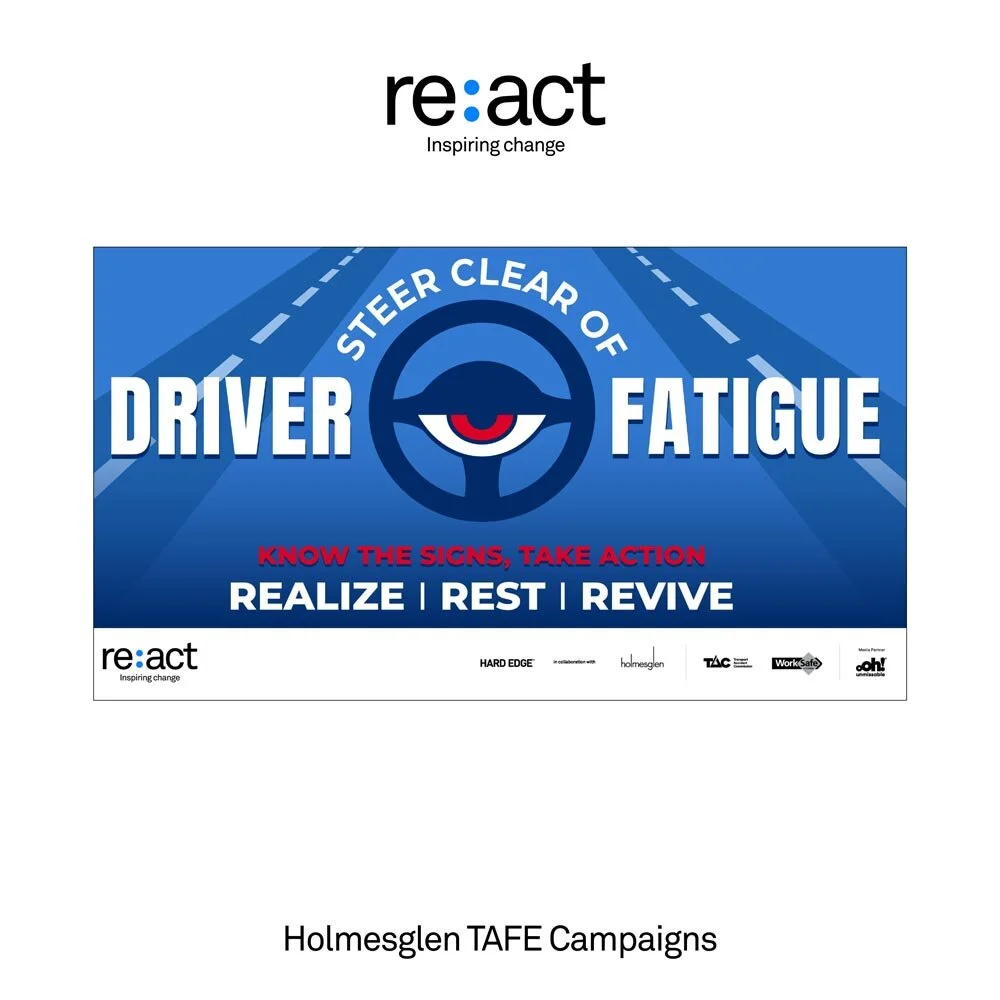
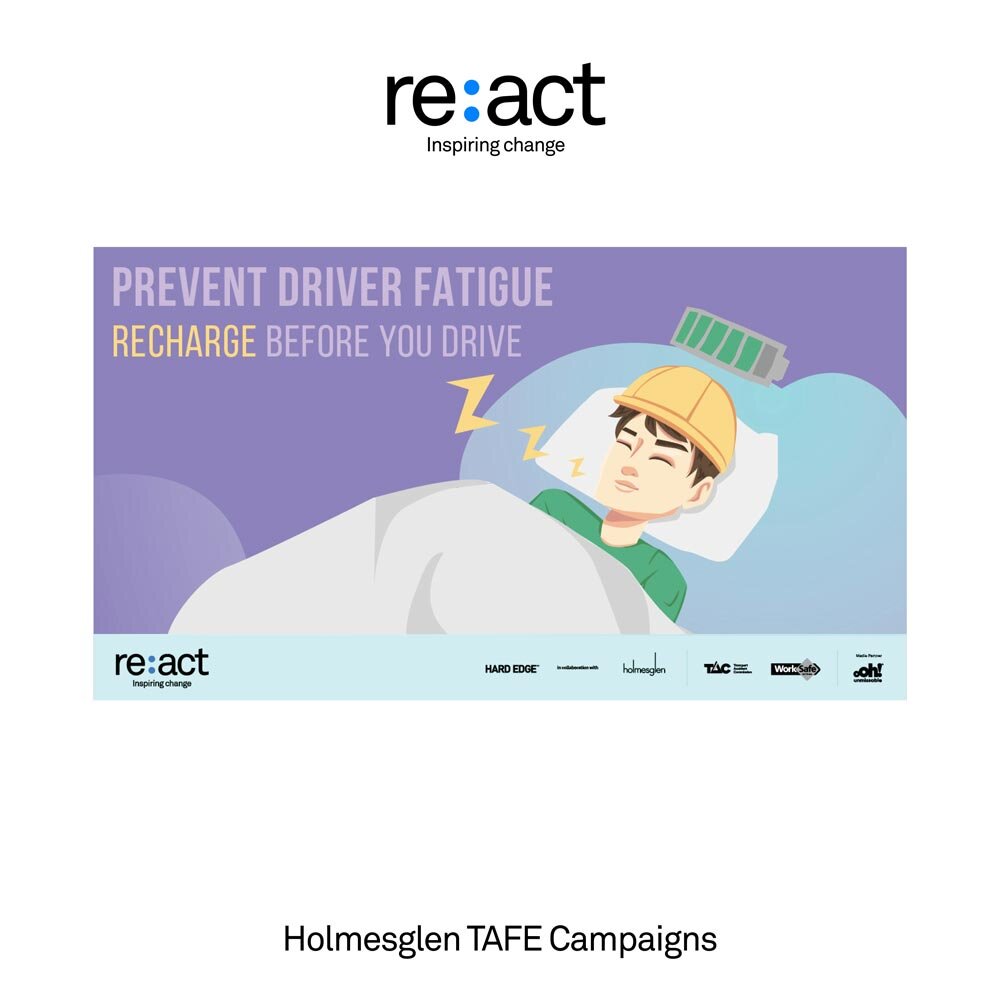
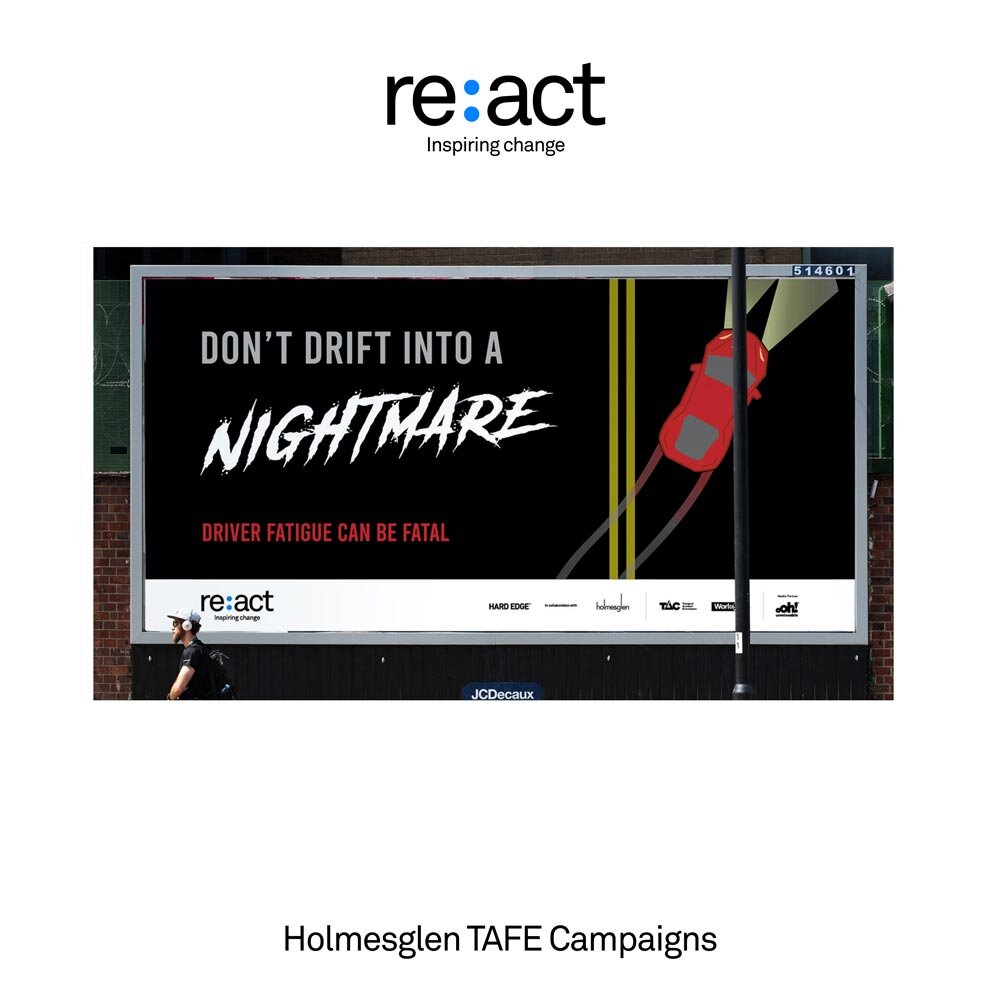
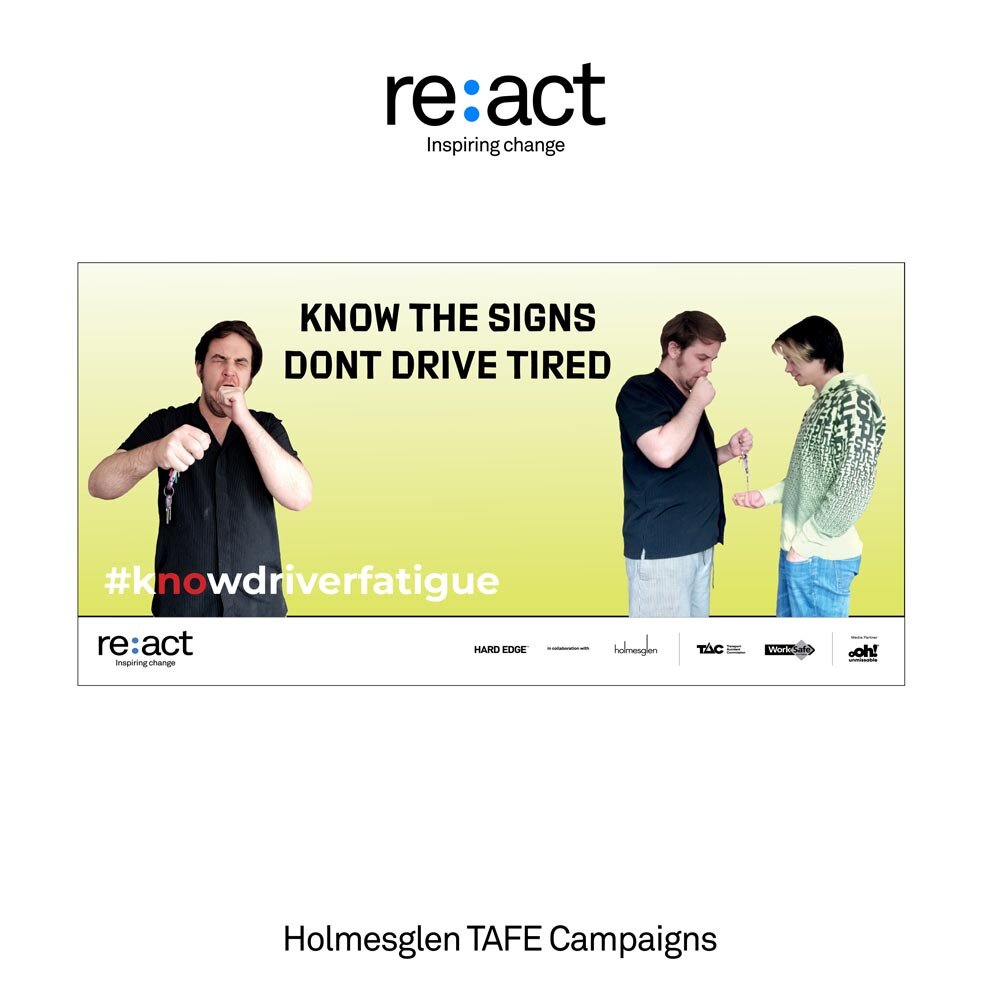
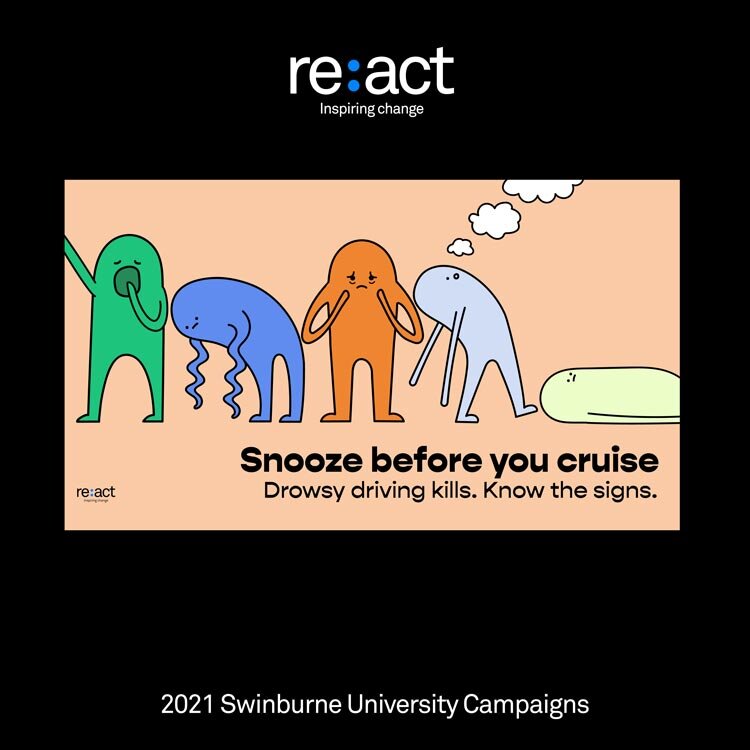
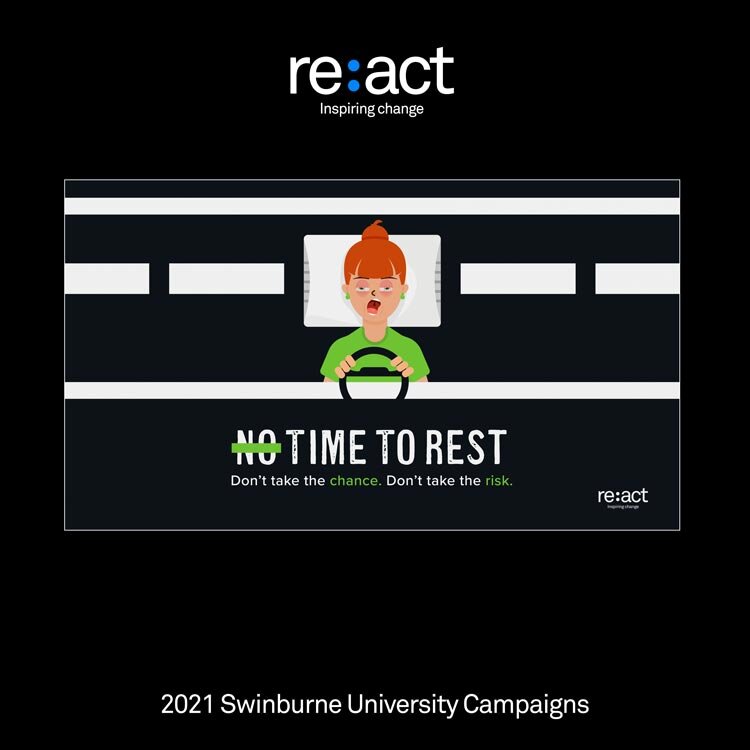
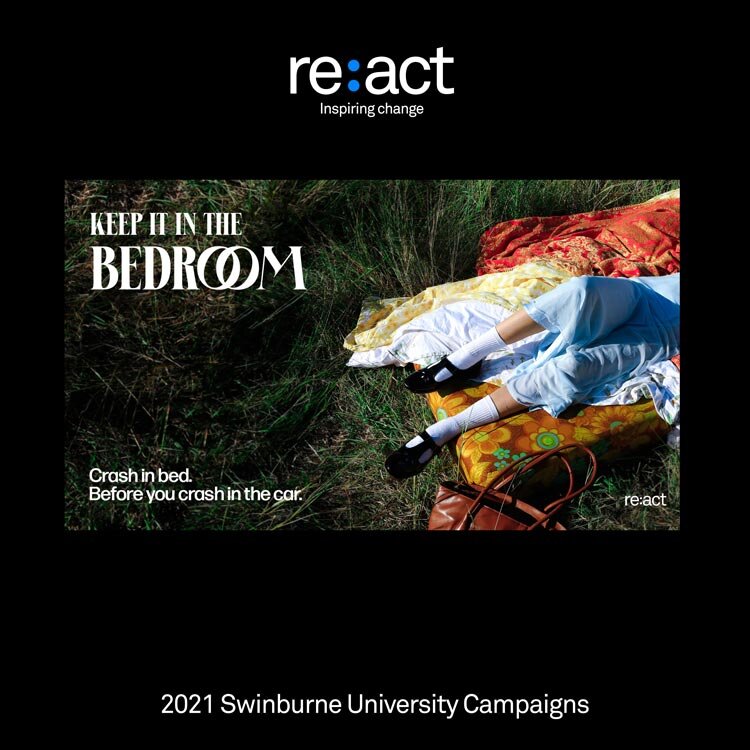
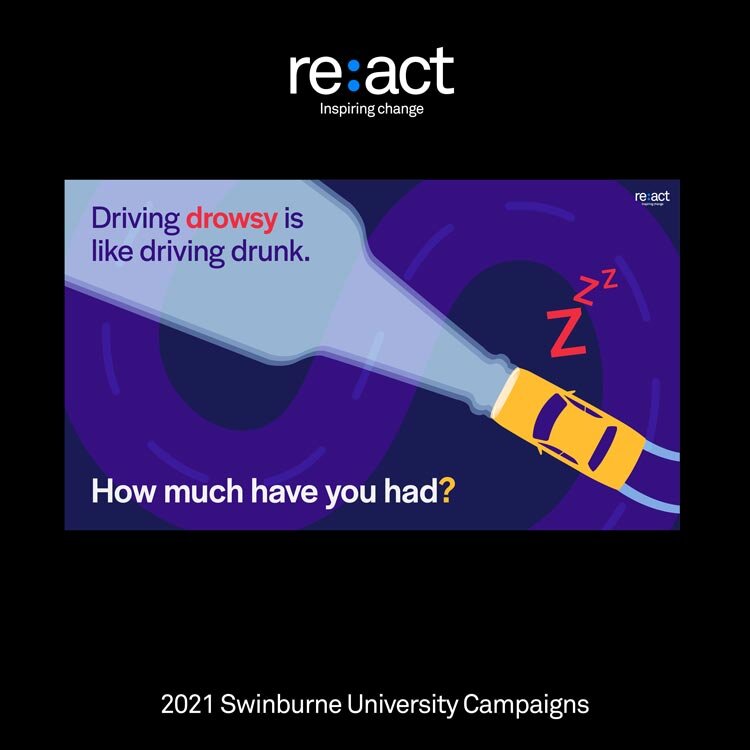
Fatigue is a lack of alertness, or drowsiness, that can be caused by lack of sleep. Fatigue impacts driver behaviour and our risk of being involved in a crash because driving while fatigued impairs alertness, decision making and reaction time. Research suggests more than a third of people have driven while fatigued, and younger drivers are much more likely to report driving fatigued. Re:act 2021 aims to educate young Australian drivers about the risks of ‘driving drowsy’ and to change their behaviour.


18-25s is the age group with the highest incidence of driving while drowsy.


Young drivers share first-hand experiences of fatigue and how their behaviours and awareness around driving fatigued changed after participating in Re:act.


universities

The universities supporting Re:act 2021.


Tafes

The TAFEs supporting Re:act 2021.


resources


These resources, shared by re:act 2021 partners, helped shape the creative brief. They provide valuable insights into the issue of driving while fatigued.


media release


2022


live campaign

The eye-catching ‘Safe cars won’t cost you an arm and a leg’ campaign was created by Mark Gerts and Max Lethem. To find out more, head to their campaign website.


digital assets


2021

LONDON.png
 
Re-act_Partner_Logos-Negative-London_Blk.png
 

Vulnerable road users and drivers: shared responsibility

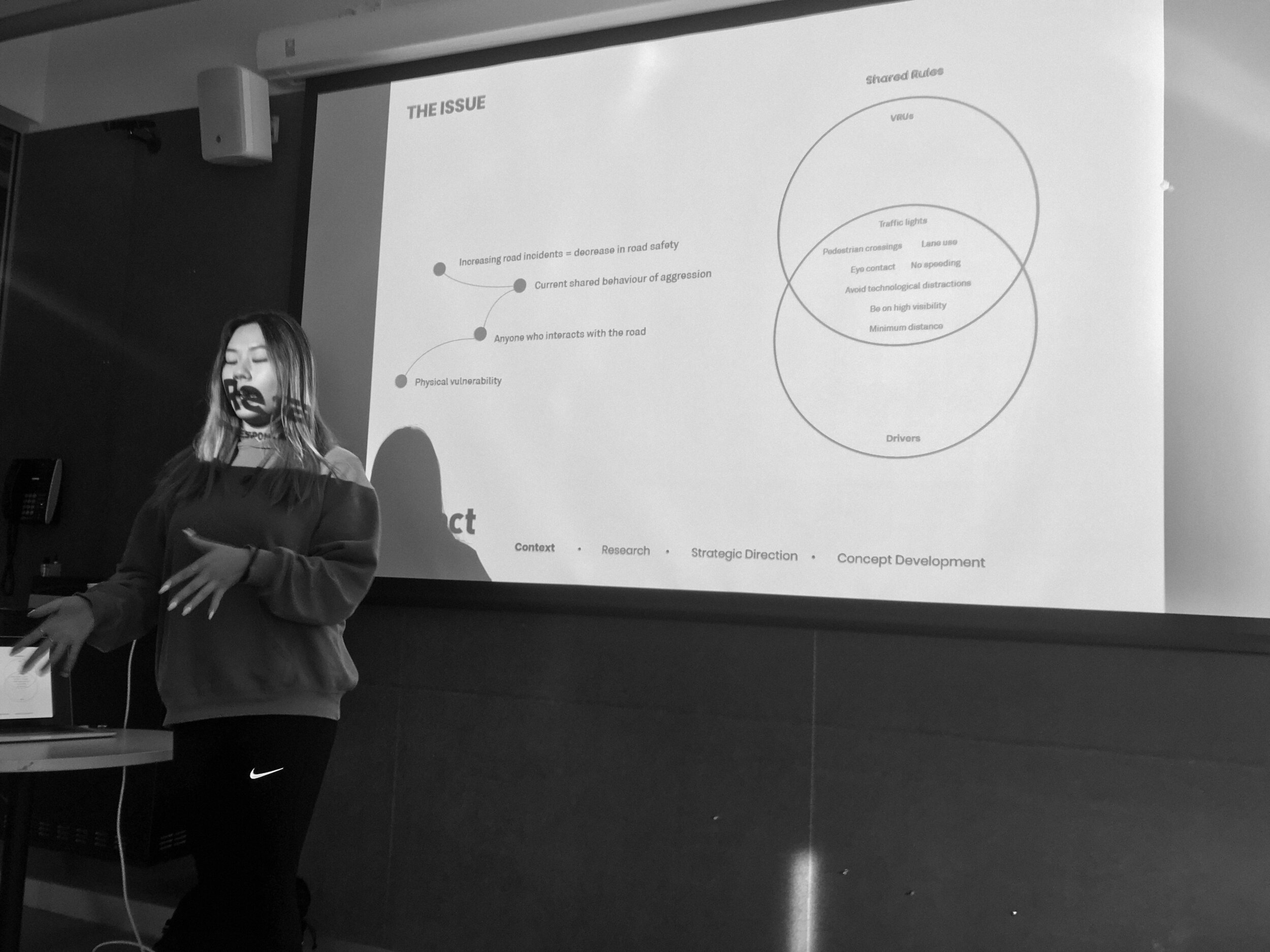
A vulnerable road user (VRU) is any pedestrian, cyclist or motorcyclist who uses or interacts with the road system. With less protection than motor vehicle occupants, they are more vulnerable in a crash to serious injury or death. With an increase in the number of VRUs on our roads and streets, and in urban traffic density, interactions between VRUs and other vehicles are increasing. Re:act 2021 is all about increasing the sense of shared responsibility between different road user groups and changing behaviour to reduce crashes involving VRUs.


VRU-GIF_LR2.gif


Pedestrians represented 14% of all casualties in 2019.


live campaign

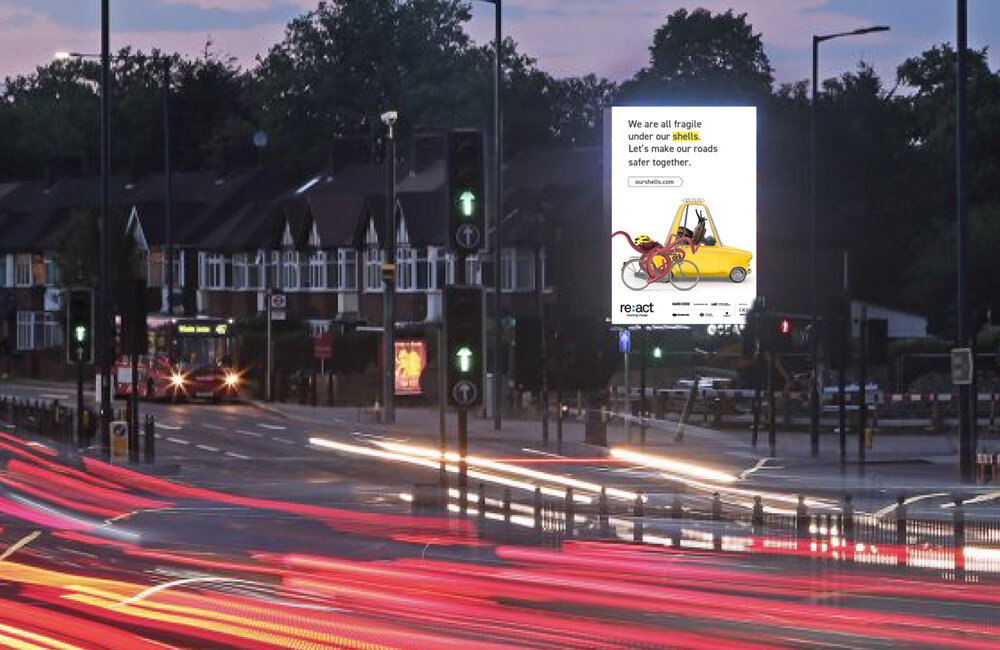
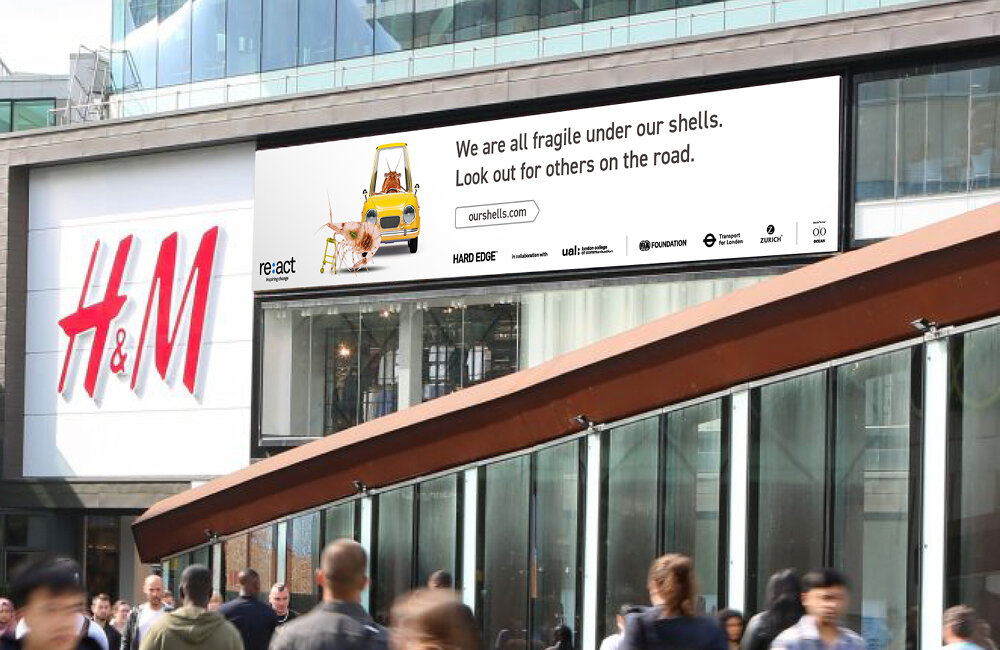
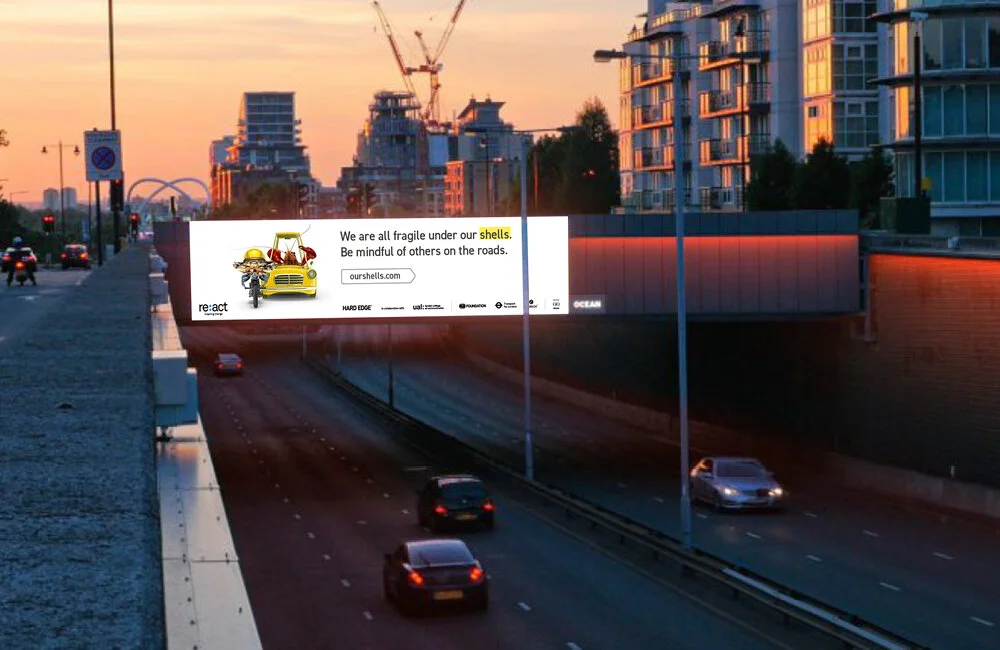
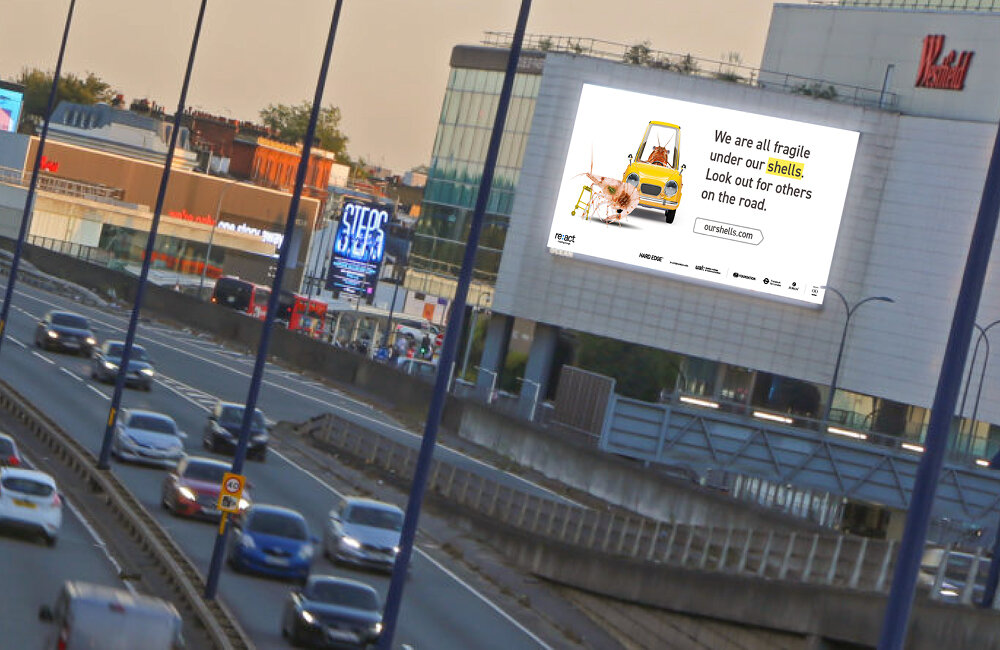
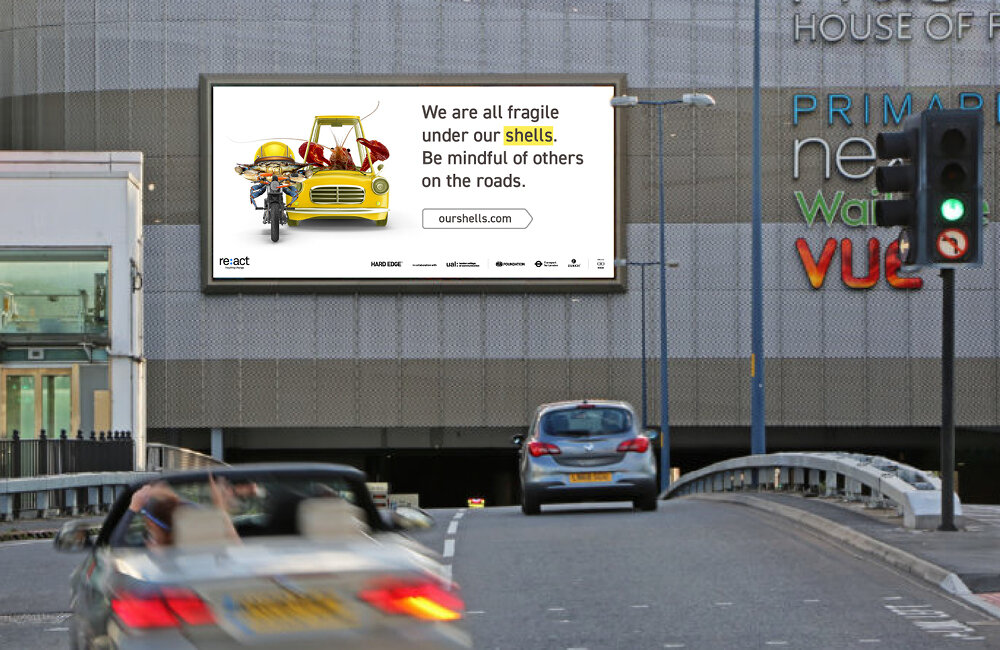
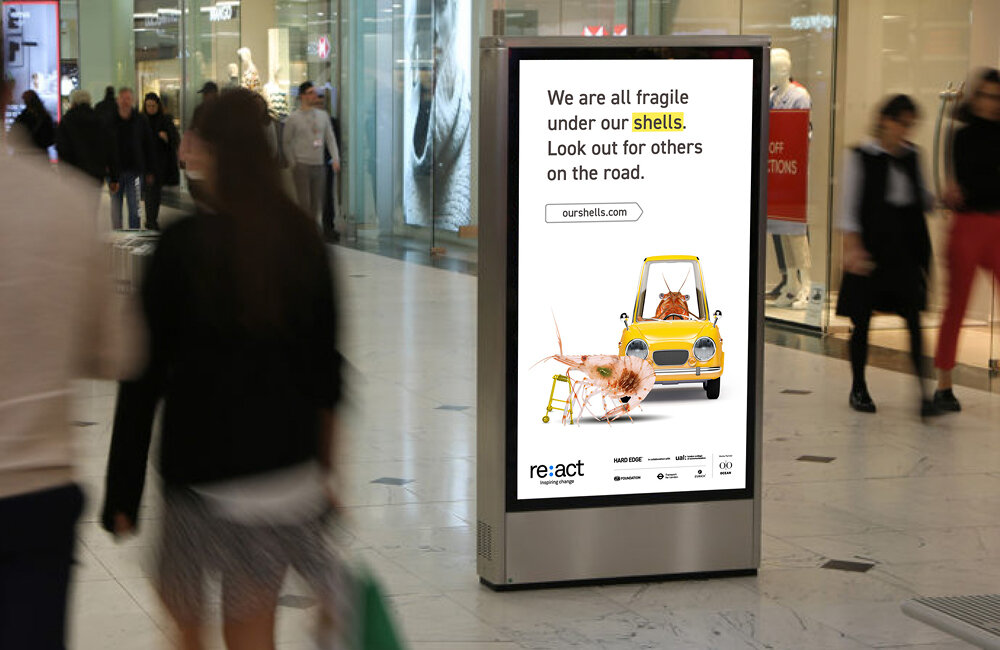
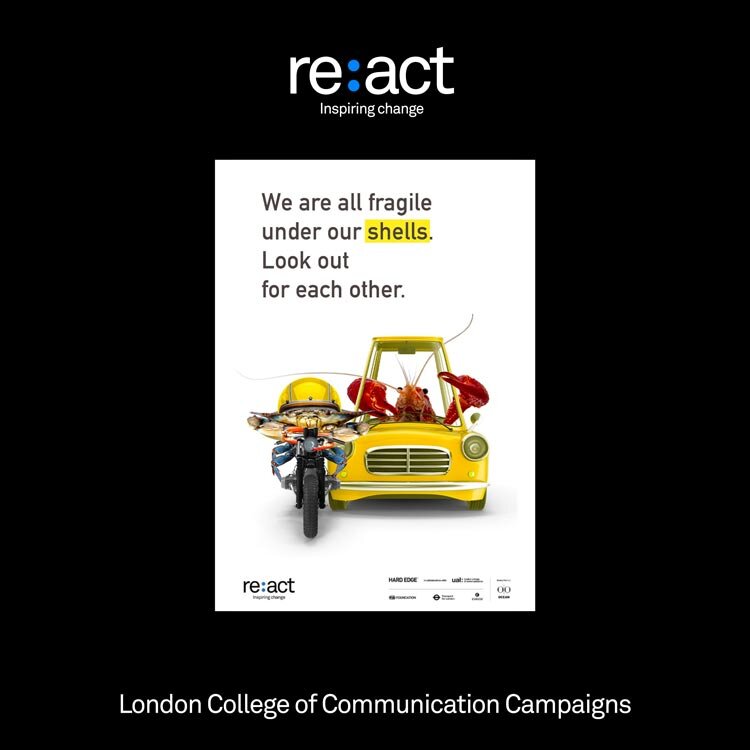
UAL student Agota Rencsenyi’s ‘We are all fragile under our shells' campaign, designed to highlight our shared responsibility for road safety and build understanding between road user groups, was launched across almost 50 of Ocean Outdoor’s London digital billboards on the UK Summer Bank Holiday in August.


selected campaign

A clever and eye-catching campaign, created by University of the Arts London student Agota Rencsenyi, is the selected London campaign for the 2021 Re:act international road safety behaviour change program. What a great approach to get the shared responsibility road safety message to a young audience.

UALcampaign.jpg
 

campaign presentations

Congrats to our participating Re:act students in London on such amazing work – creative thinking and great ideas that not even a global pandemic could disrupt. Well done to all involved.


digital assets


resources


These resources, shared by Re:act 2021 partners, helped shape the creative brief. They provide valuable insights into the issue of vulnerable road users and shared responsibility.


media release


media

Ocean News

Feb, 2021

Ocean partners Re:act for London road safety programme


2021

Perth Curtin2.png
 
Re-act_Partner_Logos-Negative-Perth_TAFE_Blk.png


live campaign

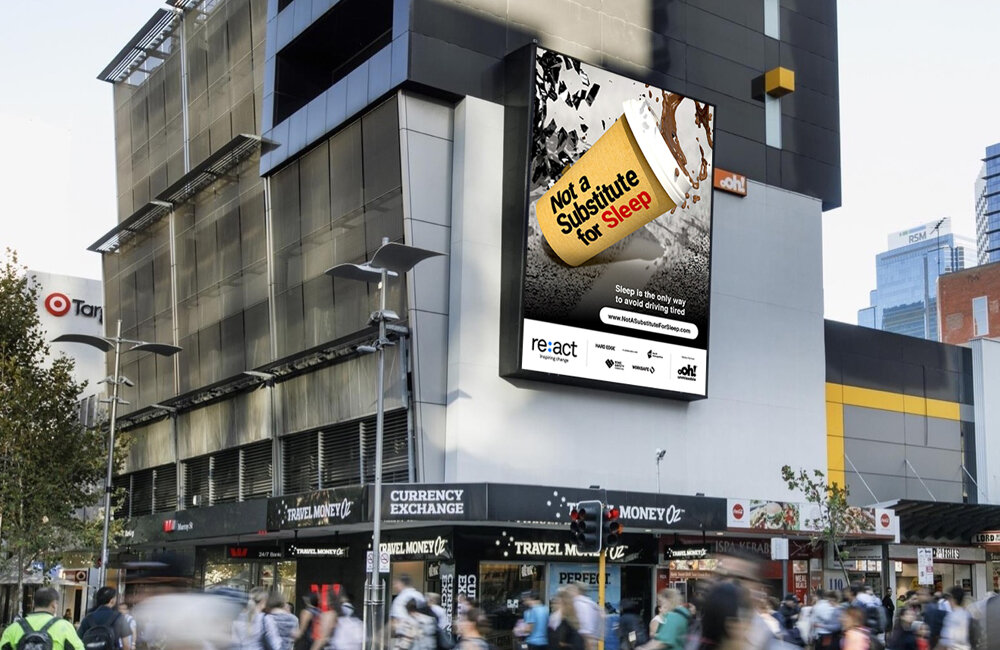
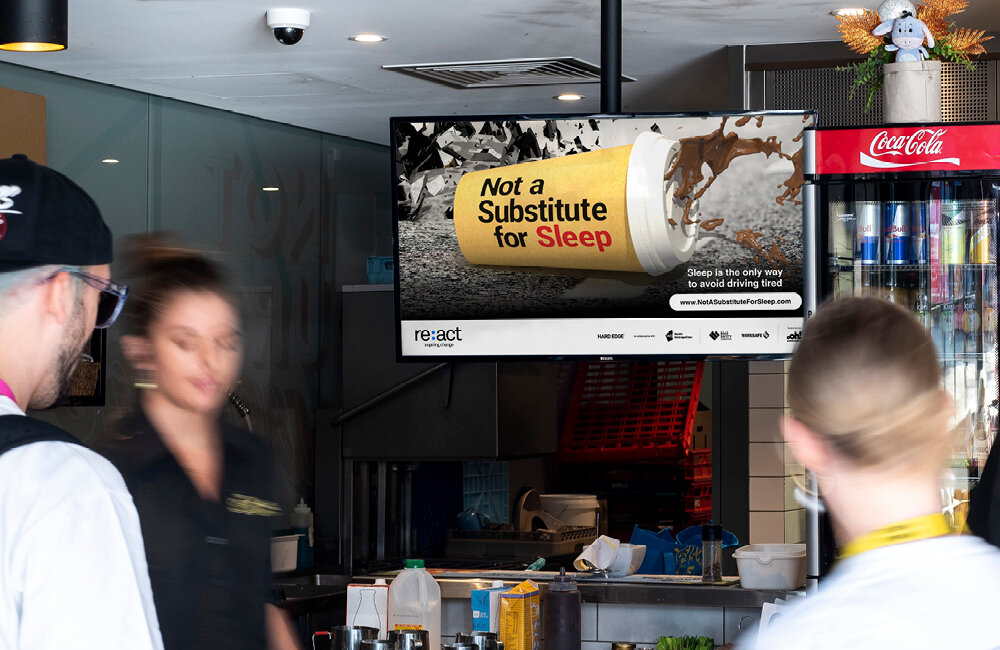
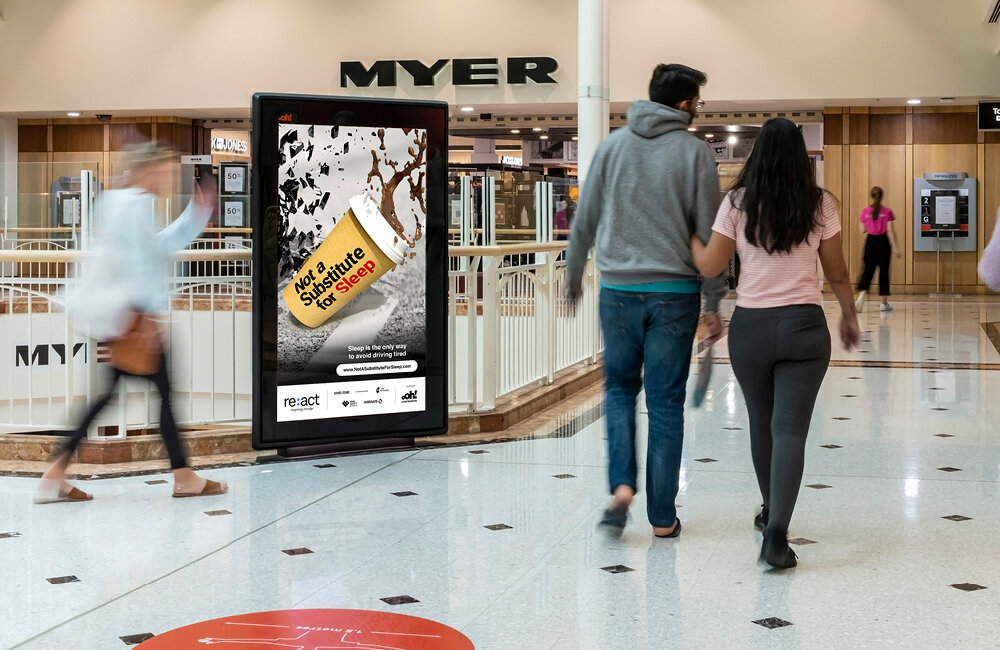
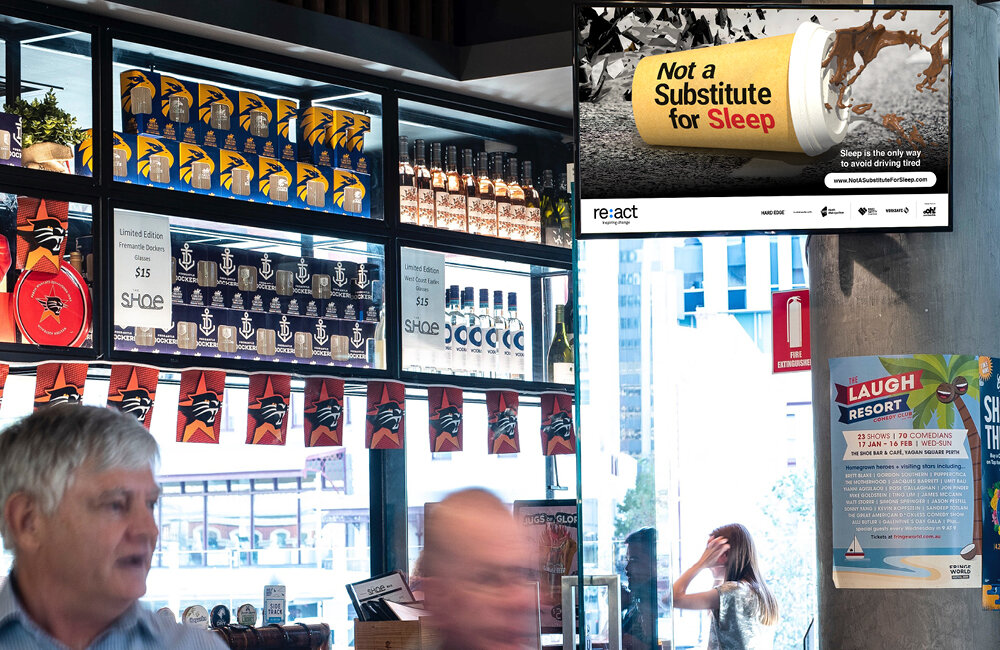
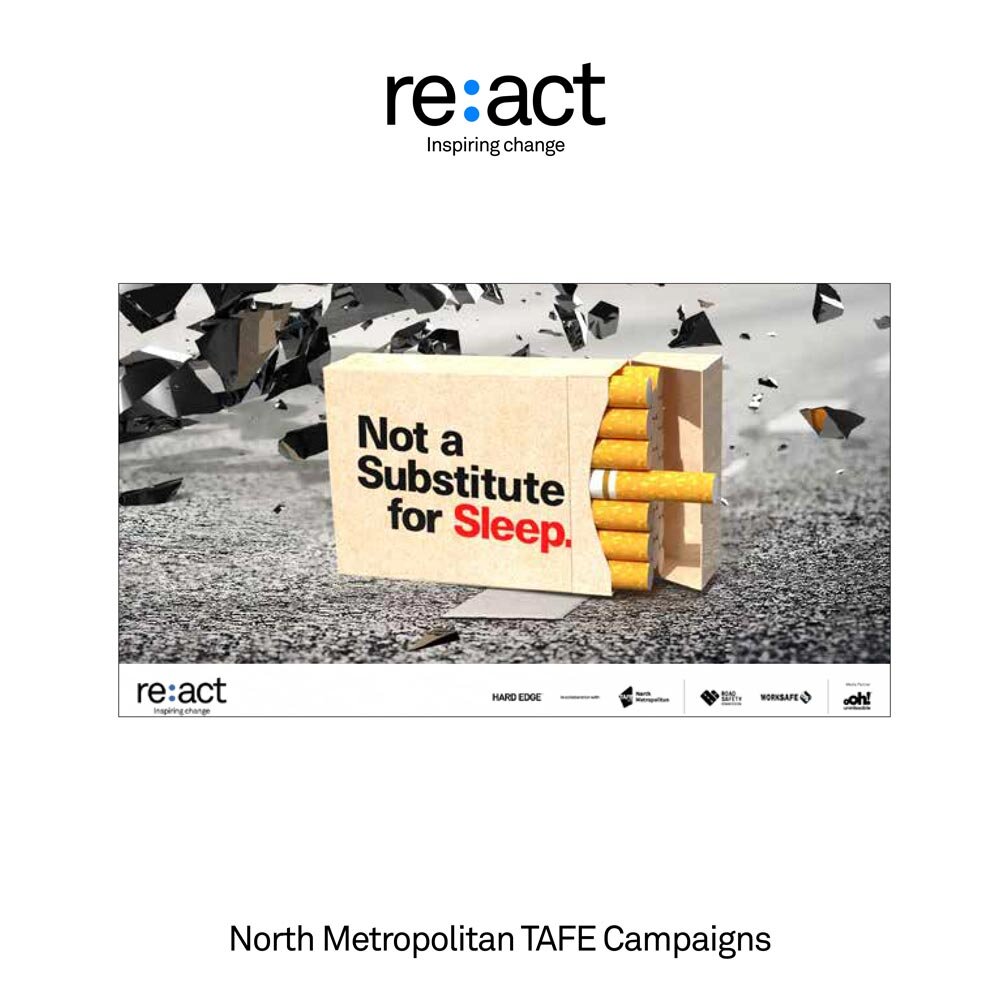
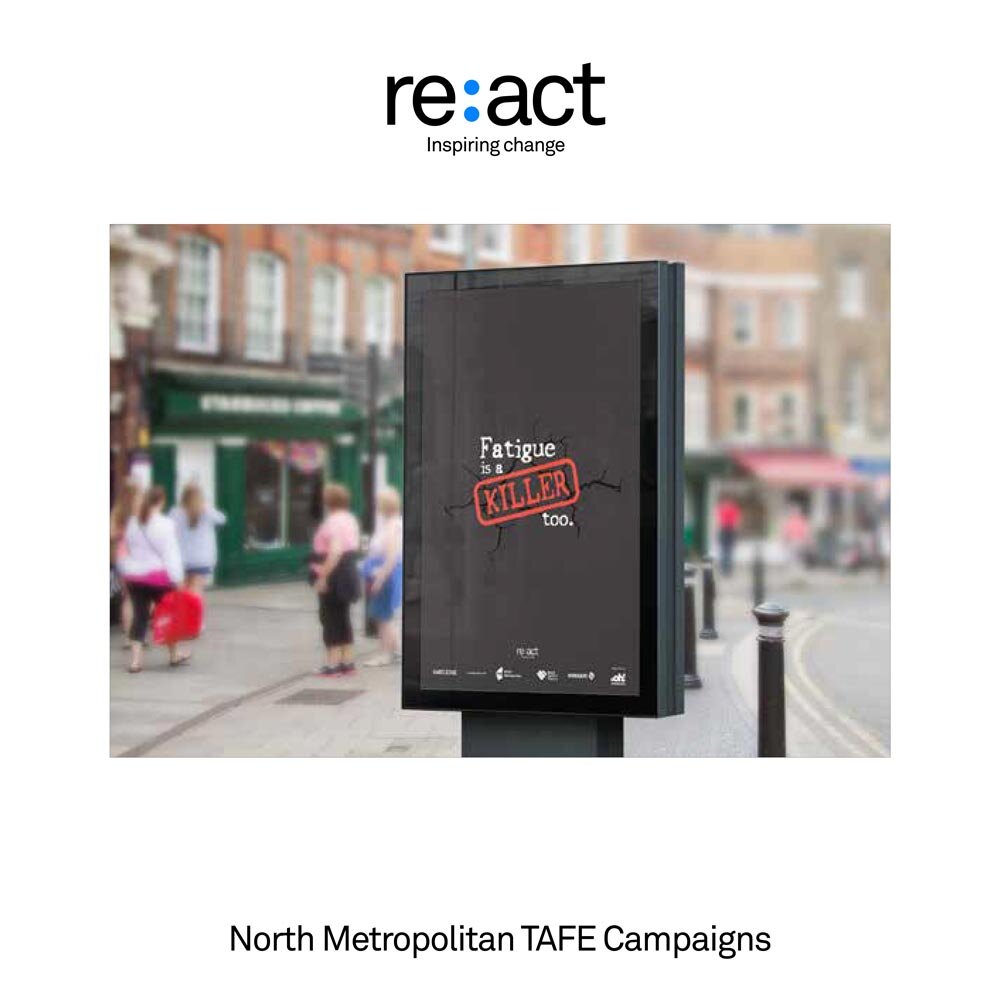
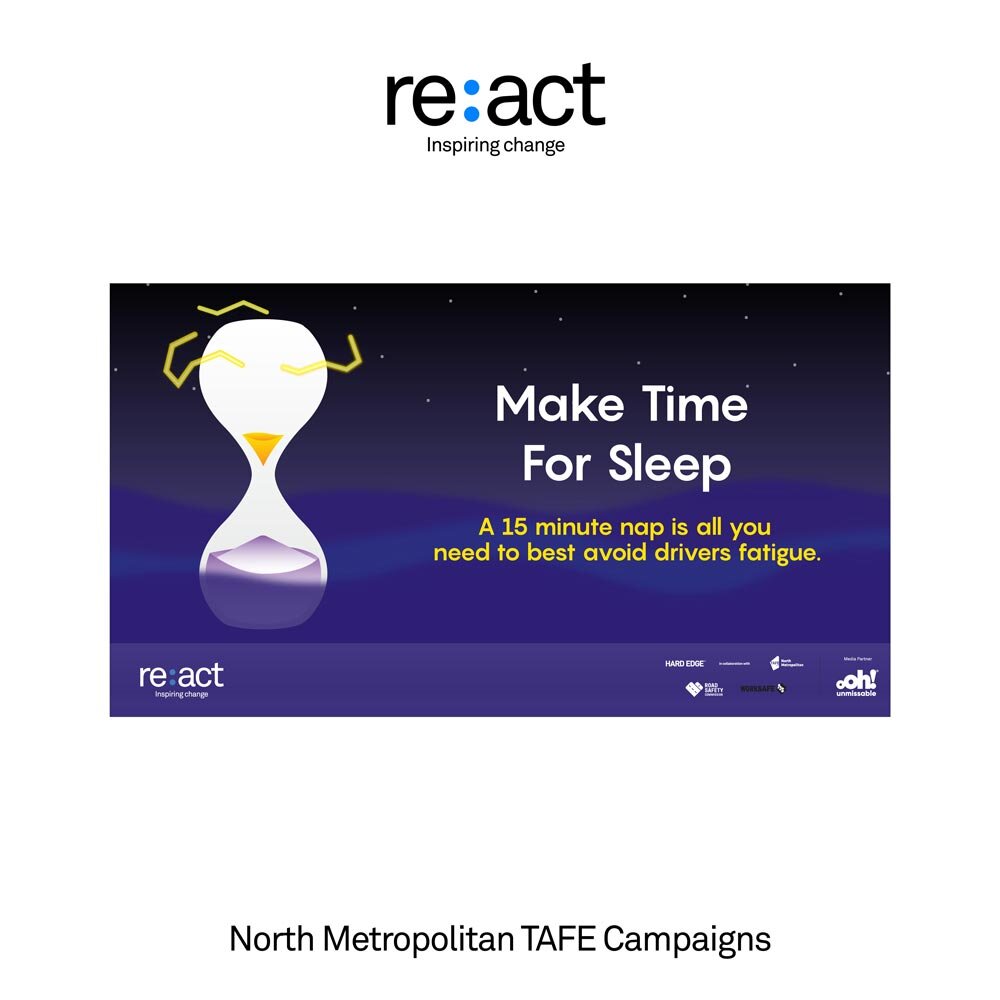
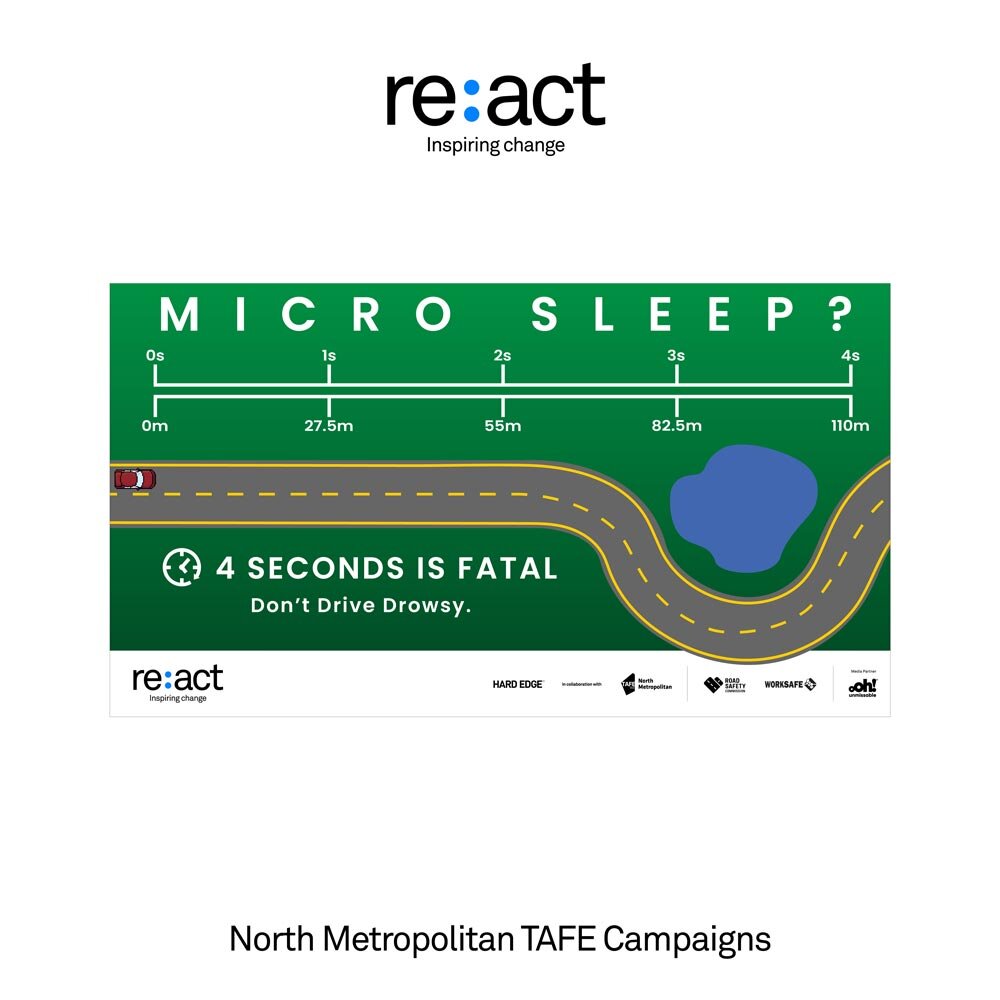
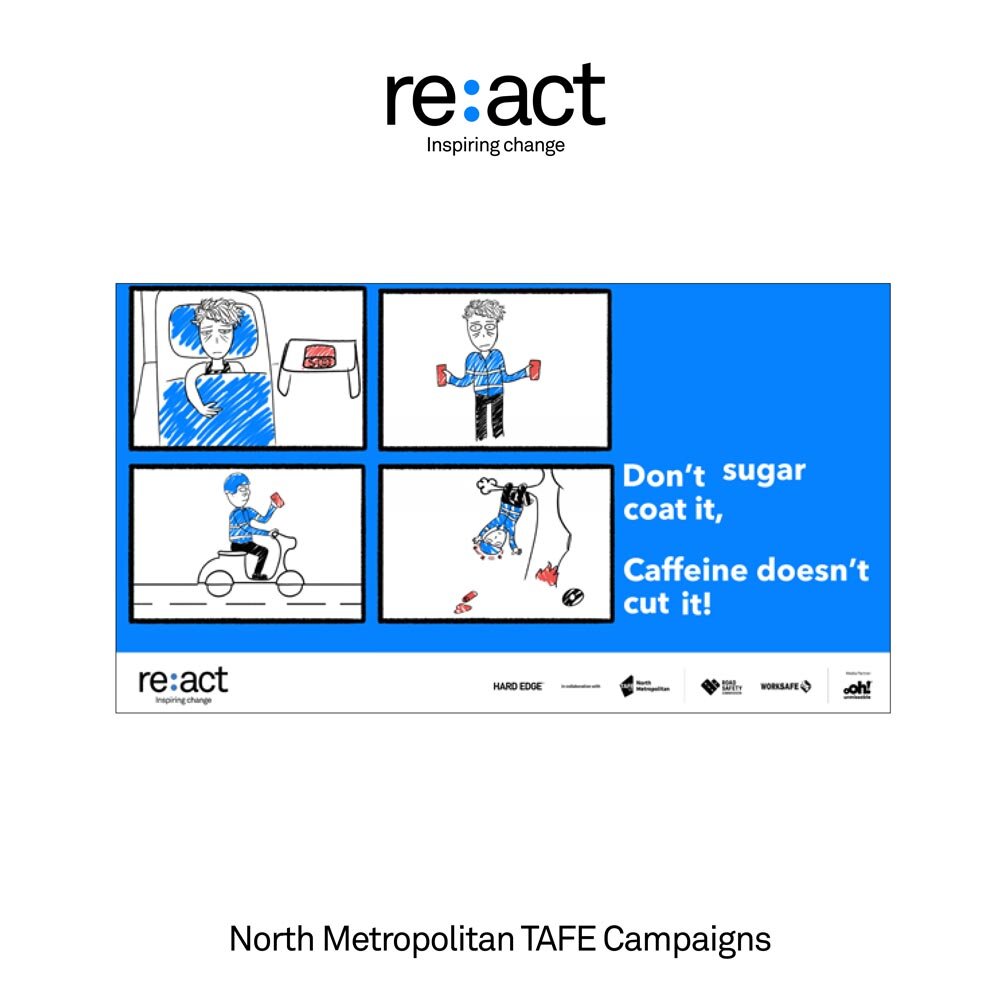
North Metropolitan TAFE graphic design student Stephanie Simpson’s ‘Not a substitute for sleep’ fatigued driving road safety campaign was launched by WA Road Safety Minister Paul Papalia in mid-August. To find out more or stay up to the date with her campaign, head to notasubstituteforsleep.com


selected campaign

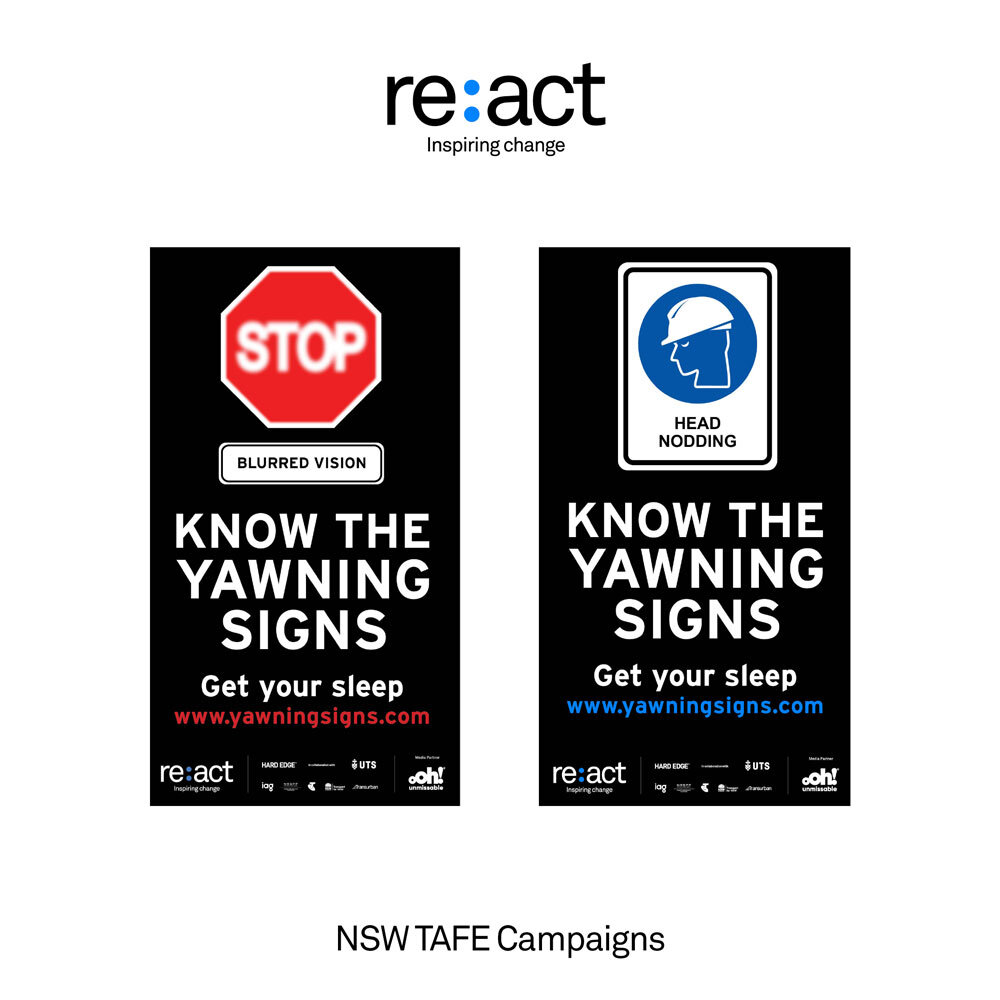
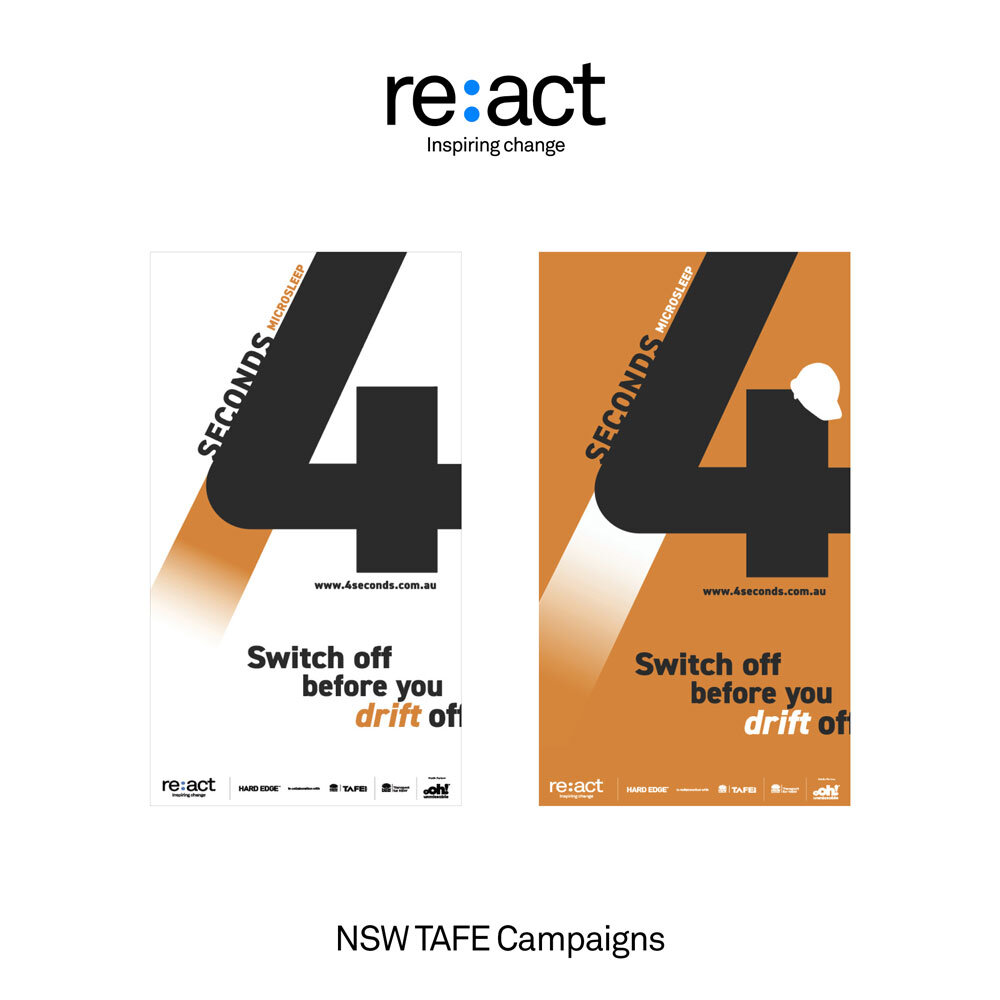
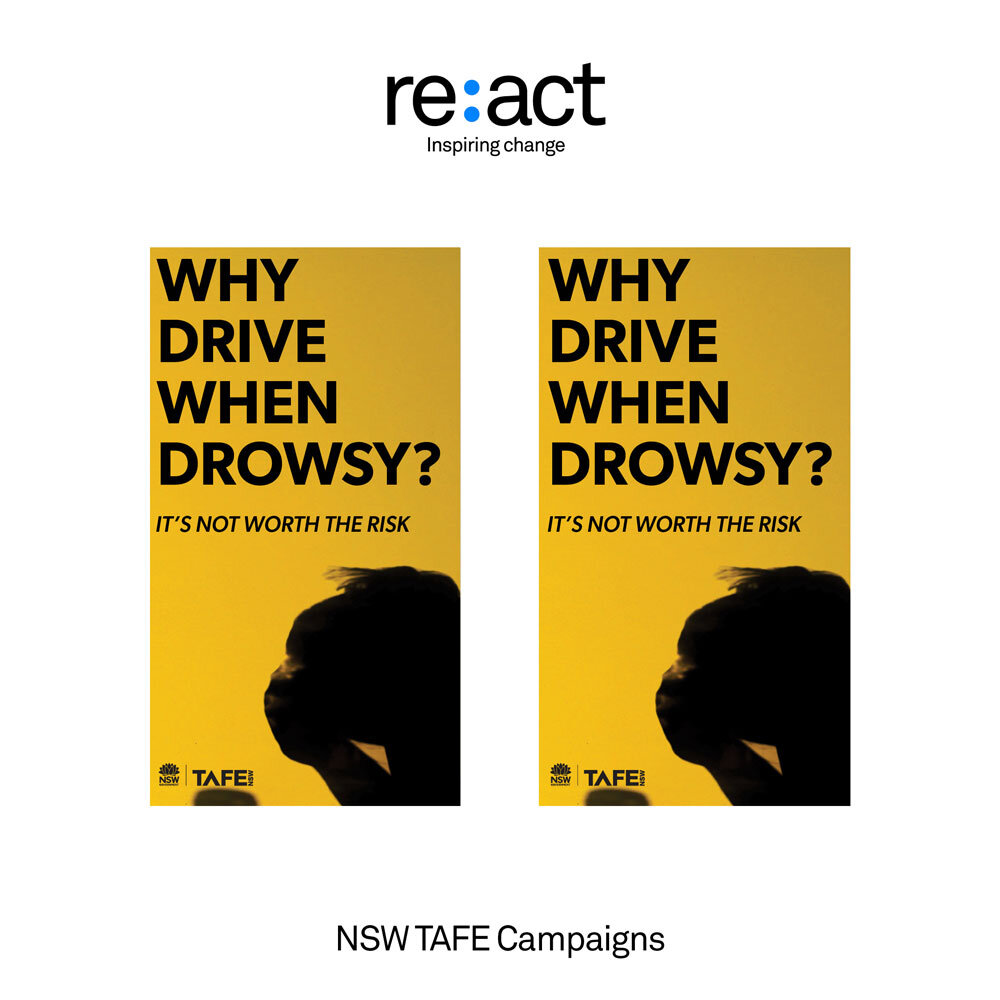
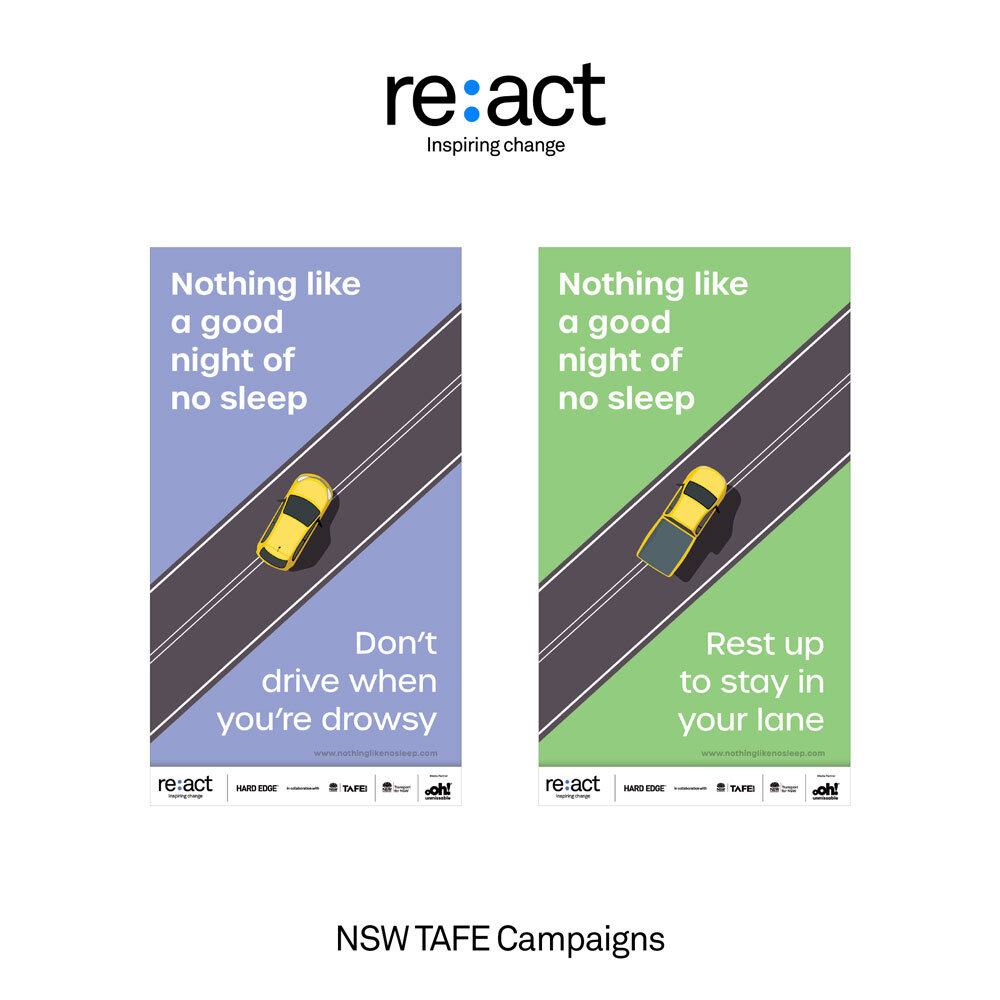
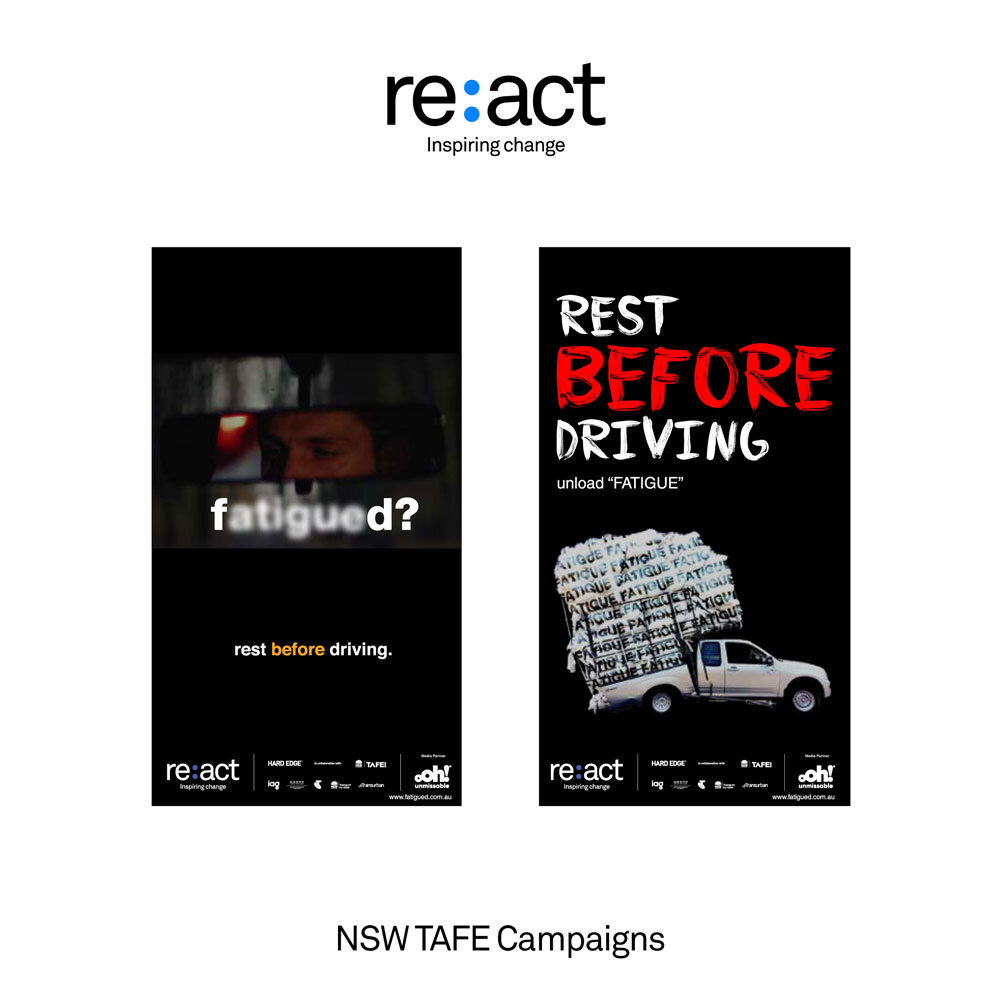
An eye-catching road safety campaign that focuses on young drivers using stimulants like coffee to counteract the effects of fatigue is the selected Re:act TAFE 2021 campaign in Western Australia.

Devised by North Metropolitan TAFE graphic design student Stephanie Simpson, the ‘Not a Substitute for Sleep’ campaign raises awareness among young drivers of the risks of driving fatigued by highlighting stimulants cannot overcome the effects of driving tired.


campaign presentations

What a brilliant way to kick-off Re:act TAFE, with amazing ideas and creative execution from students at North Metropolitan TAFE in Perth today. Congrats to the students, lecturers and program partners, and thanks for the incredible support.


digital assets


2021

SYDNEY.png


live campaign

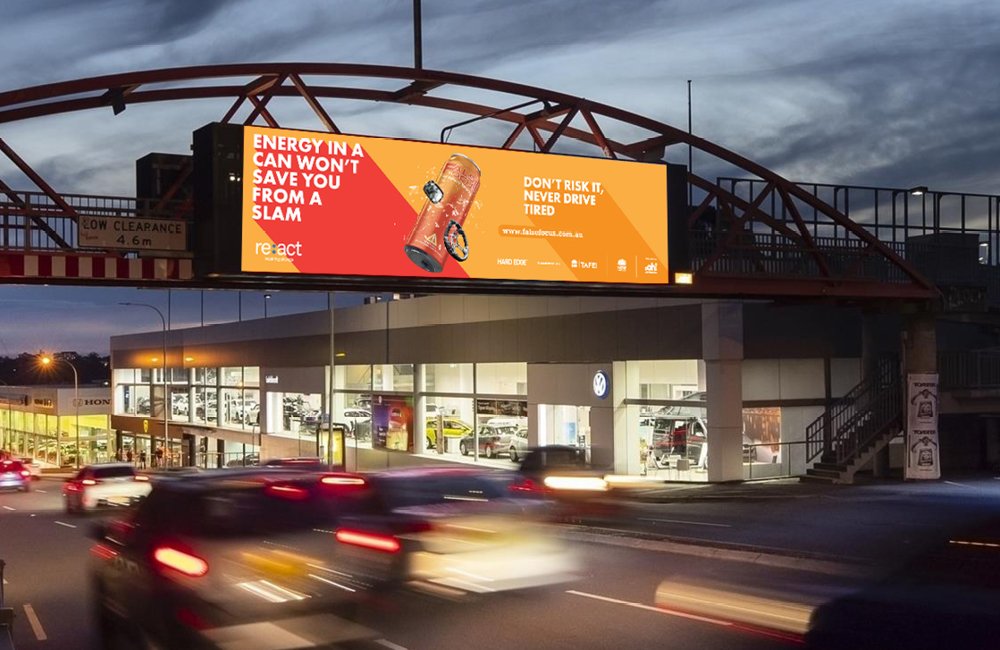
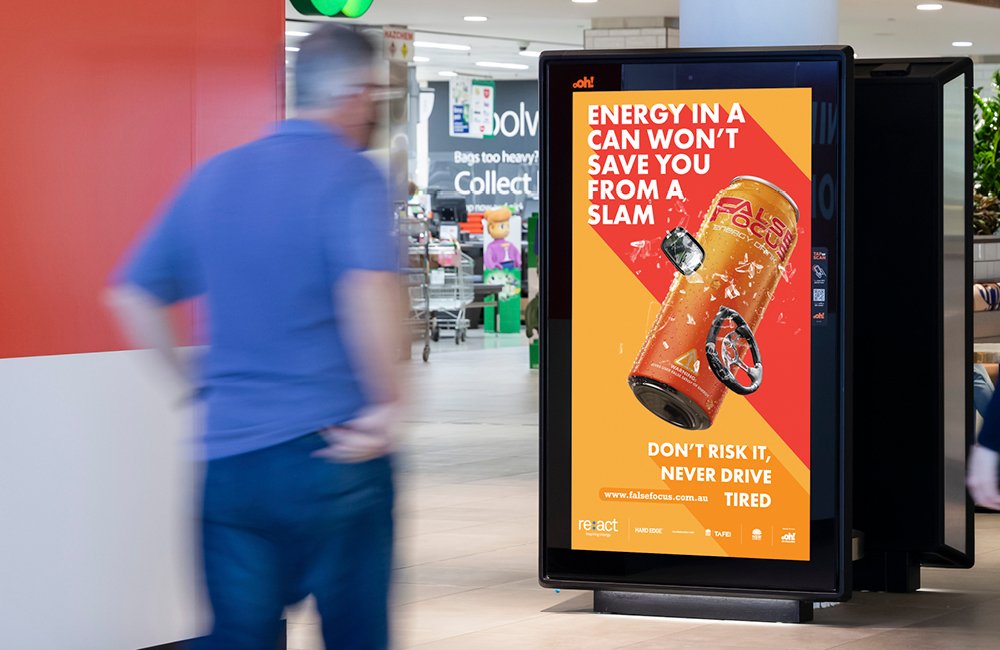
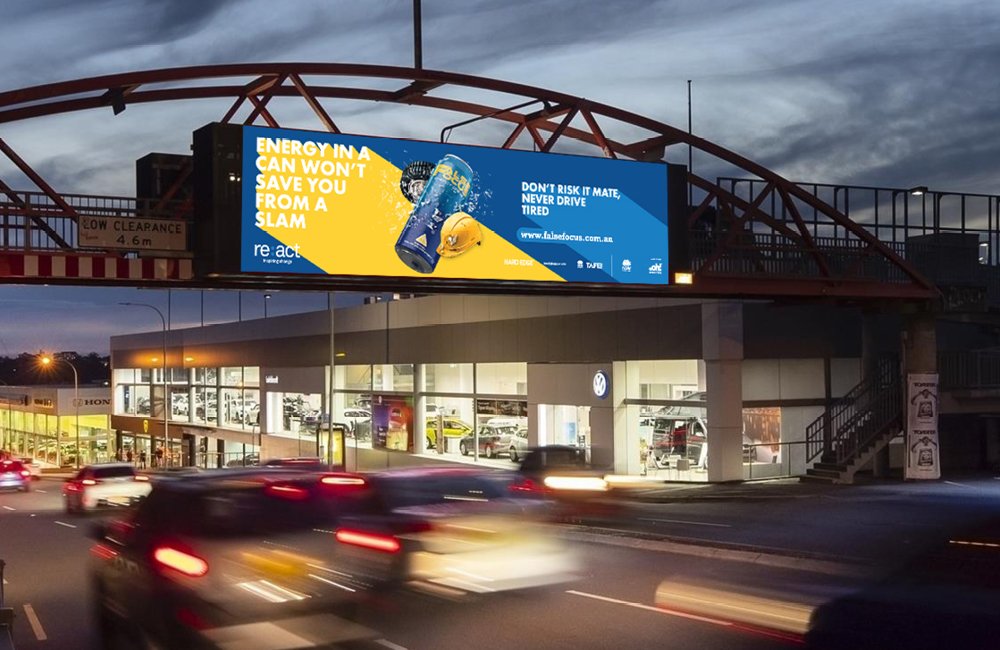
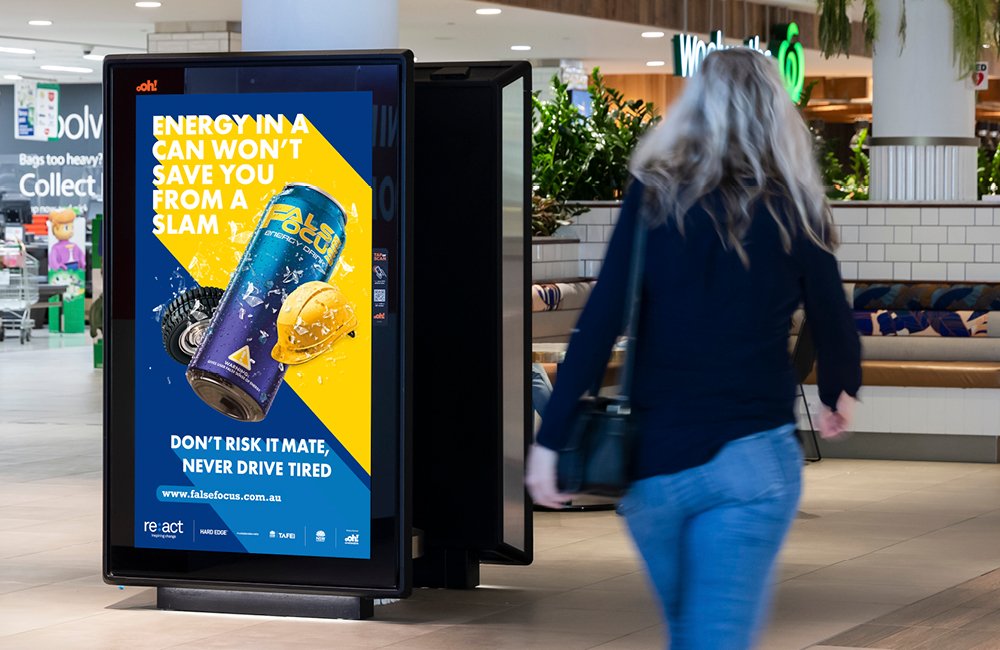
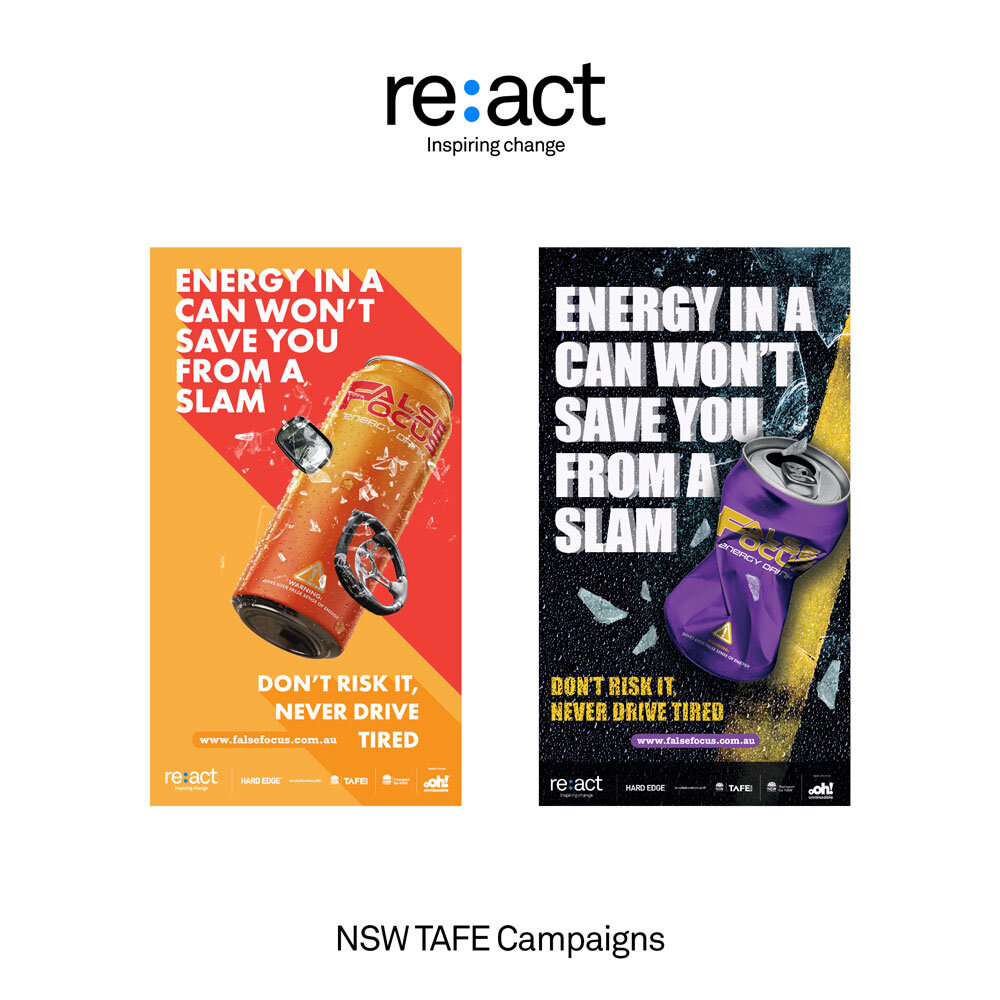
The innovative ‘Energy in a can won’t save you from a slam’ fatigued driving road safety campaign, created by TAFE NSW students Derbail Kinsella and Thomas Carr, is live online and on 250 digital billboards across metropolitan and regional NSW. Head to falsefocus.com.au to find out more and stay up to date.


Selected campaign

Research showing young drivers commonly use energy drinks to try and combat the effects of fatigue inspired TAFE NSW Design Centre Enmore students Derbail Kinsella and Thomas Carr to create their own energy drink – False Focus – to deliver a drowsy driving road safety message to young drivers and workers.

Their myth-busting ‘Energy in a can won’t save you from a slam’ message is the Re:act TAFE NSW 2021 selected campaign.


campaign presentations

Insightful thinking and incredible creative from students at TAFE NSW Design Centre Enmore to communicate the risks of driving fatigued. Congrats to students, lecturers and program partners and thanks for the amazing commitment to Re:act TAFE 2021, particularly in difficult times.


digital assets


2021

Queensland.png
 
Re-act_Partner_Logos-Negative-GoldCoast_TAFE_Blk.png


live campaign

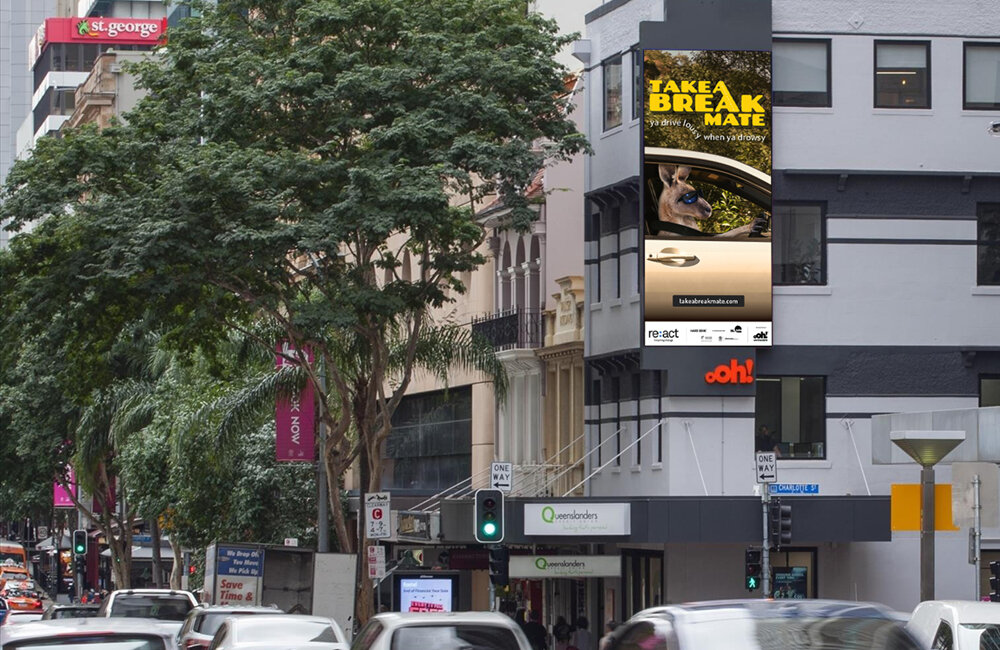
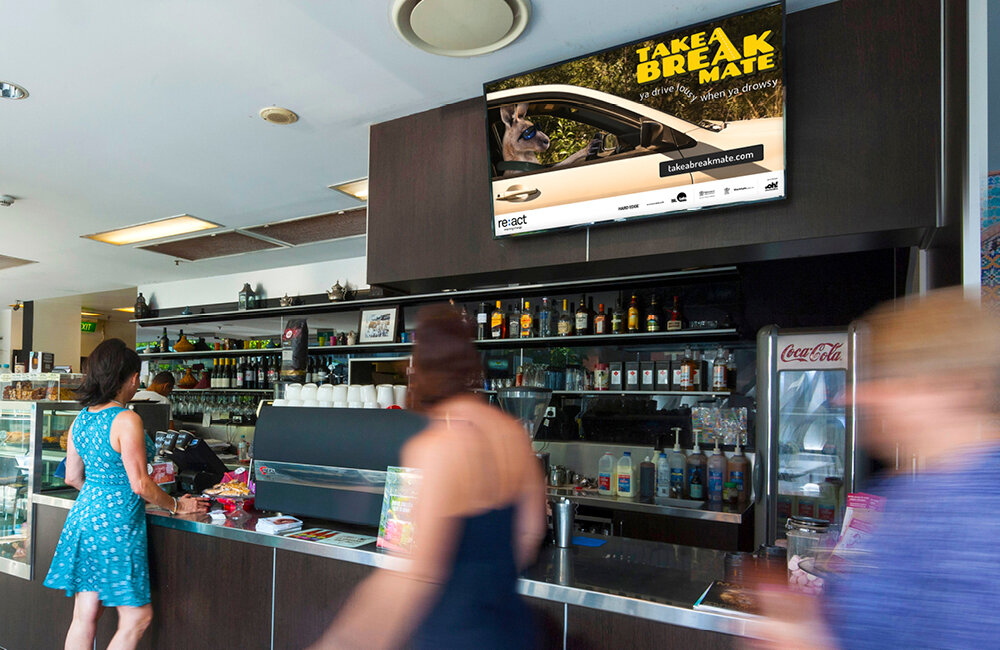
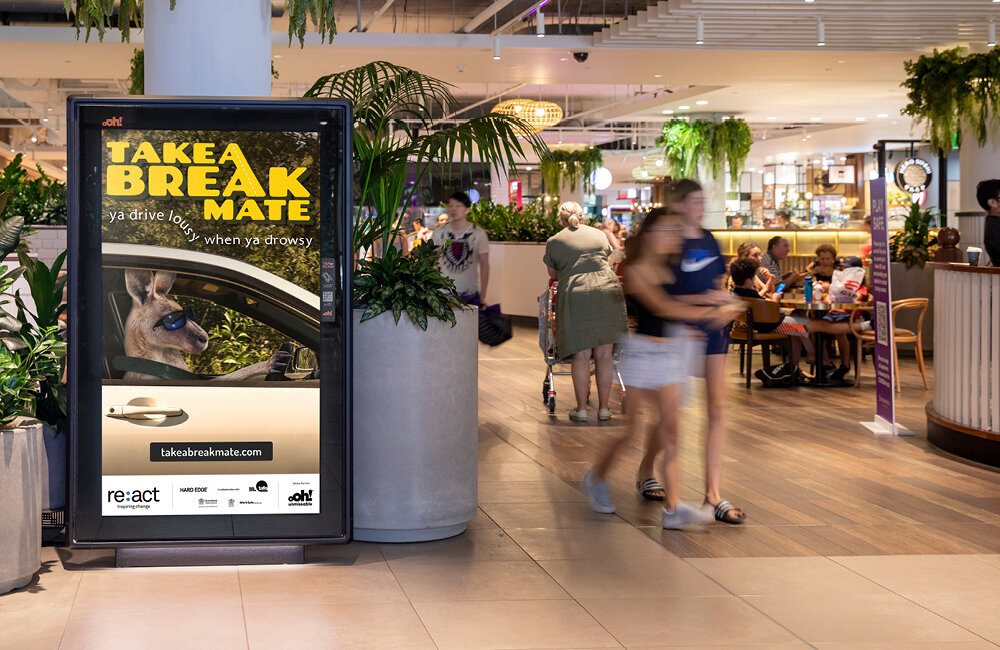
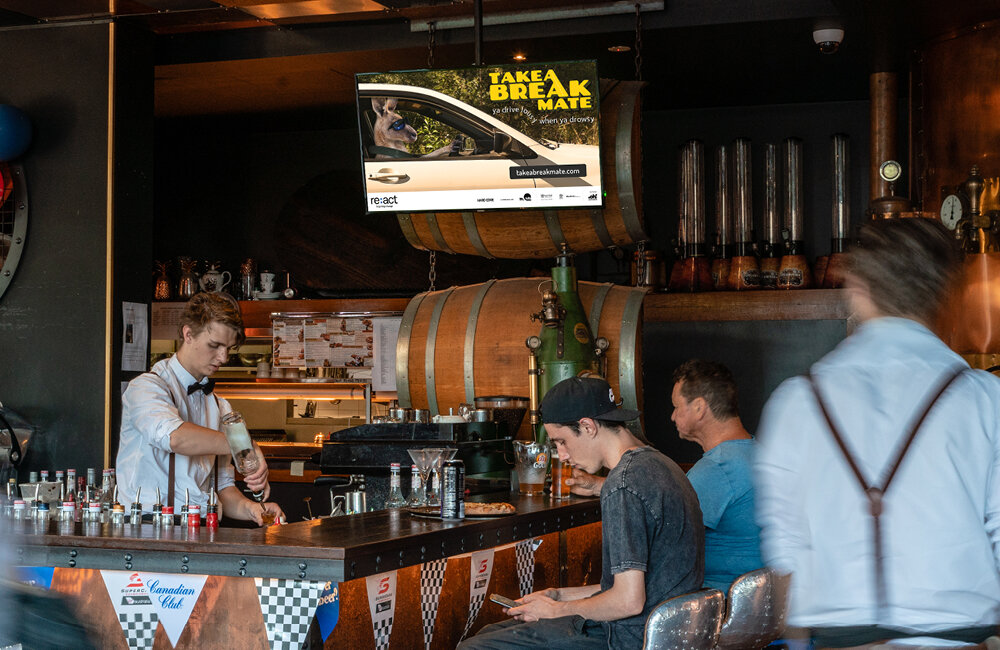
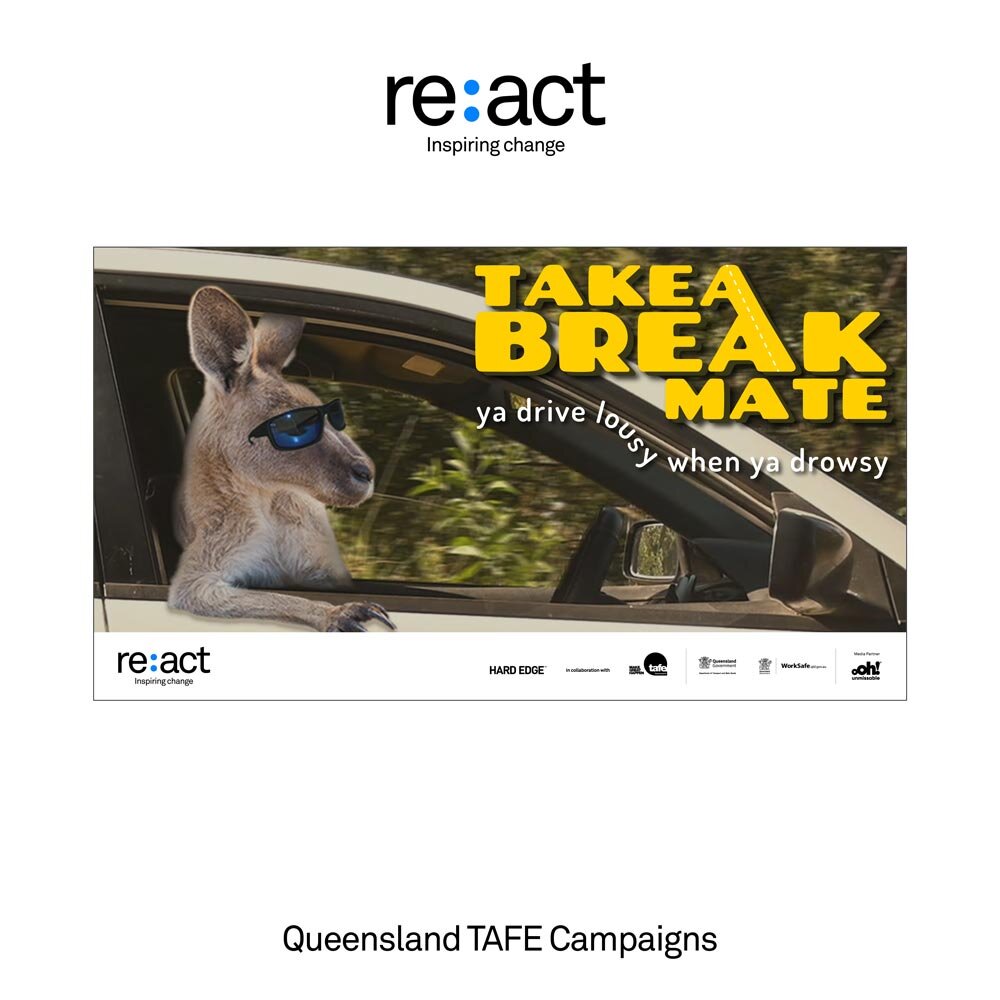
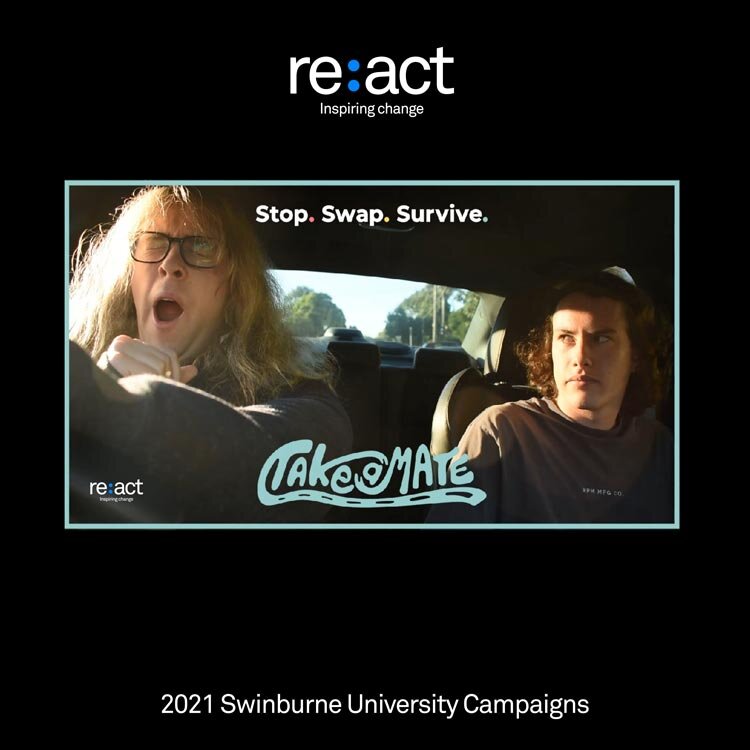
Queensland Transport and Main Roads Minister Mark Bailey and Minister for Training Dianne Farmer were on hand to release ‘Kev the Kangaroo’ onto Queensland’s streets, launching the ‘Take a break mate’ road safety campaign, in mid-August. The Re:act TAFE campaign was created by Queensland TAFE student Tori Sharpe to raise awareness among her peers of the risks of ‘driving tired’. To find out more or stay up to the date with her campaign, head to takeabreakmate.com


selected campaign

A sunglass-clad kangaroo behind the wheel, colloquial phrasing and rhyming messaging – how else would a road safety campaign educate young drivers about the risks of driving fatigued?

Created by Queensland TAFE student Tori Sharpe, ‘Take a Break Mate – You Drive Lousy When Ya Drowsy’ is the Re:act TAFE Queensland selected campaign for 2021.

QLDTAFE+2.jpg
 

campaign presentations

More amazing ideas and inspiring creative from students at Queensland TAFE today. 2021 is the first year Re:act has run in TAFE colleges, and everybody involved should be incredibly proud of their contribution and the standard of work produced.


digital assets


2022


live campaign

‘Safety comes in all shapes & prices’, say Curtin University students Indiana Connor, Tannisa Hermansyah, Gia Portelli, Amy Riordan, Nikki Singh and Taje Singh.
Head to their campaign to find out more.


digital assets


2016

Safer use of mobiles in vehicles

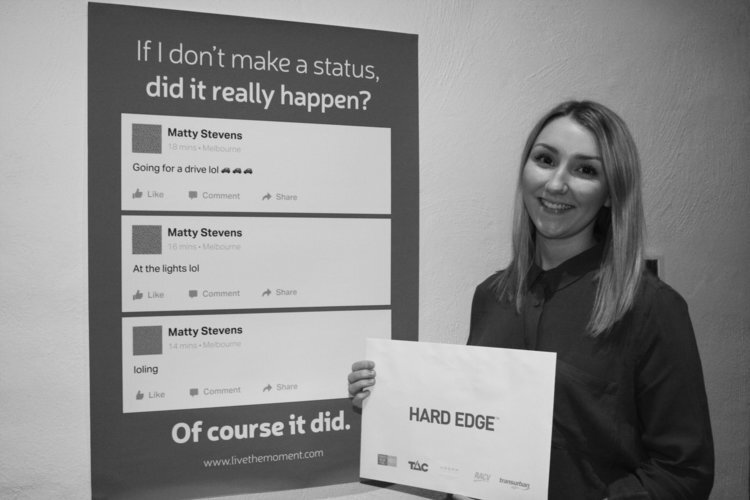
The 2016 brief was to create a safe driving campaign that generated awareness among 18-25 year olds of the dangers of mobile phone use while driving and influence behaviour change. As safe driving campaigns are often depicted using harsh and negative imagery, this campaign focused on including the audience rather than isolating them, and aimed to make mobile phone use at the wheel socially unacceptable.

 
Re-act_Partner_Logos-Negative-Melbourne_Blk_2016.png


2016-LR.jpg


Your risk of crashing is 6x greater if you text while driving


the pitch


The inaugural Re:act pitch day saw an impressive bunch of tomorrow's design leaders descend on Hard Edge to present some great thinking and creative concepts to our panel. Chloë Young’s ‘Live the Moment’ campaign, which encouraged young drivers to take their eyes off their phones and keep them on the road, was the selected campaign.


resources


The following resources from our partners provide valuable insight into the issue of the Safer Use of Mobile Phones in Vehicles and formed an important part of the creative brief. 


2022


live campaign

The ‘Same safety, different price tag’ campaign was created by Connor Grant, Oliver Harrington and Zoey Portilla. Head to their campaign website to find out more, including the inspiration behind the campaign.


digital assets


2024

Mobile phones and distraction

The 2024 Re:act Regional program challenged TAFE graphic design students at six regional TAFE institutions across Australia to create positive campaigns that educated their peers about not being distracted by mobile phones in different road users environments, including in their personal lives, at work, or during their commute to study or work.

Students could focus on distraction as a driver or a pedestrian, with campaigns aiming to change behaviour around a serious road safety risk for our 17-25 year old target audience.


2025

Regional

Seatbelt Use

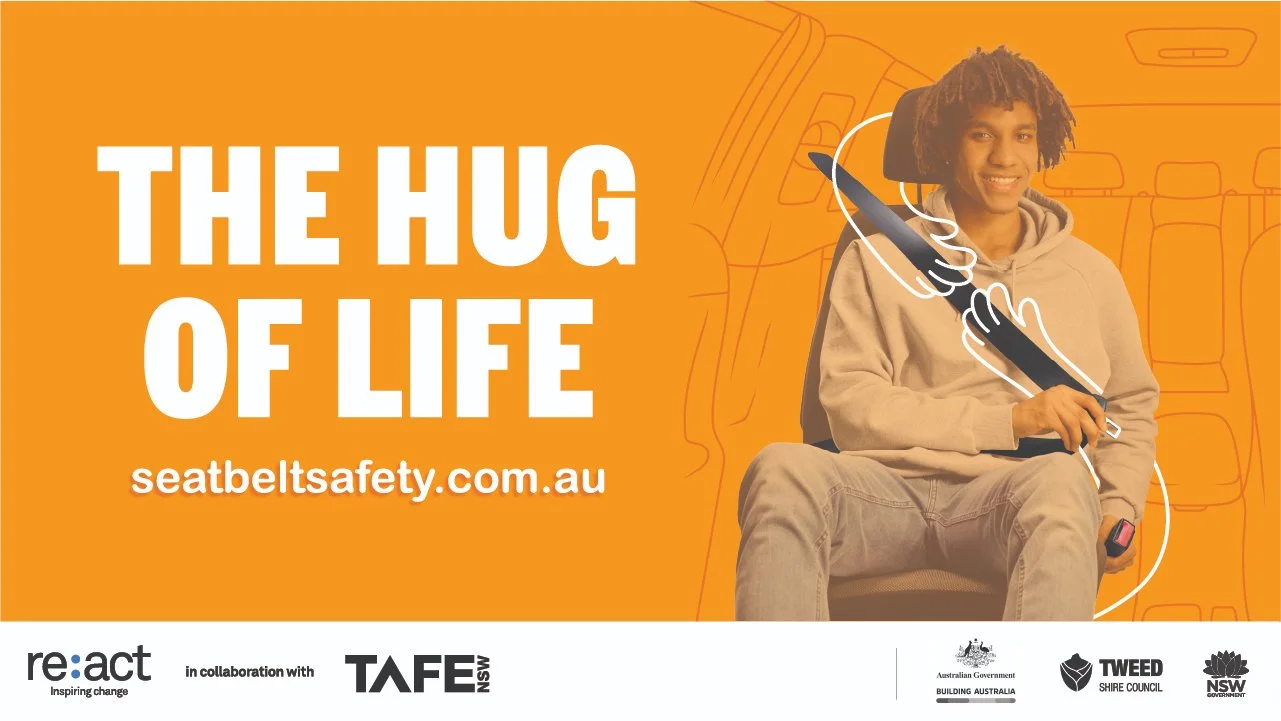
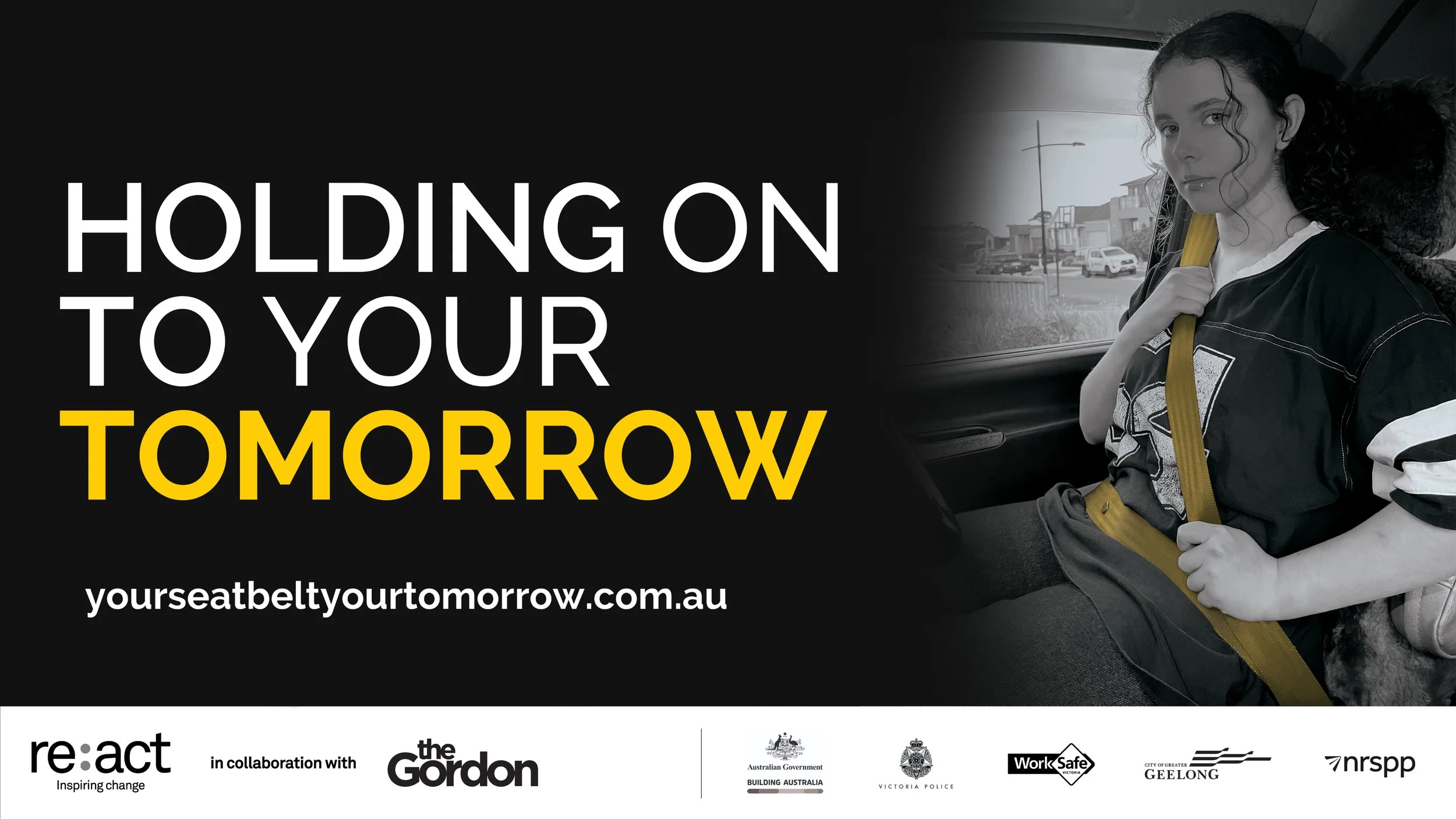
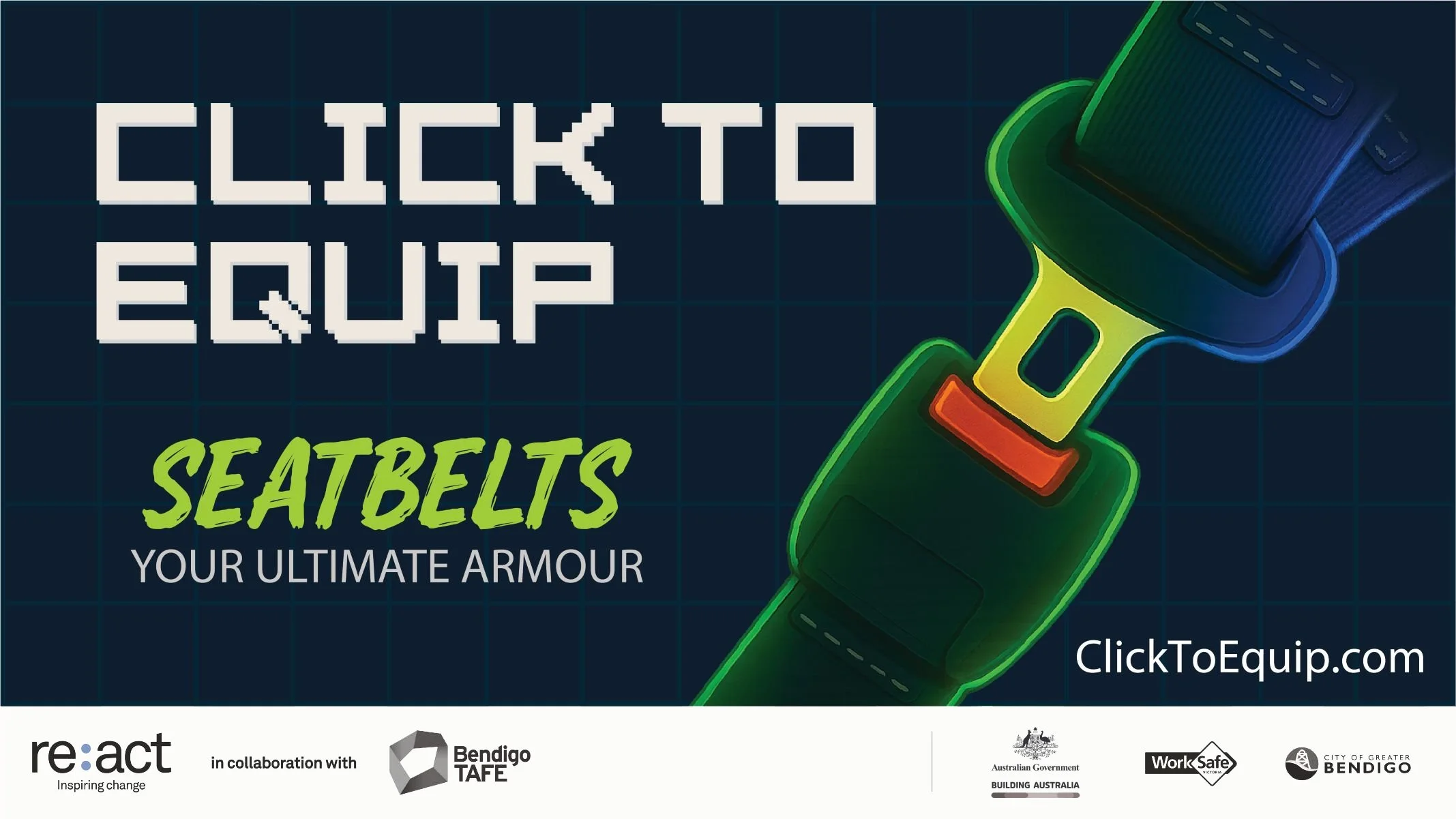
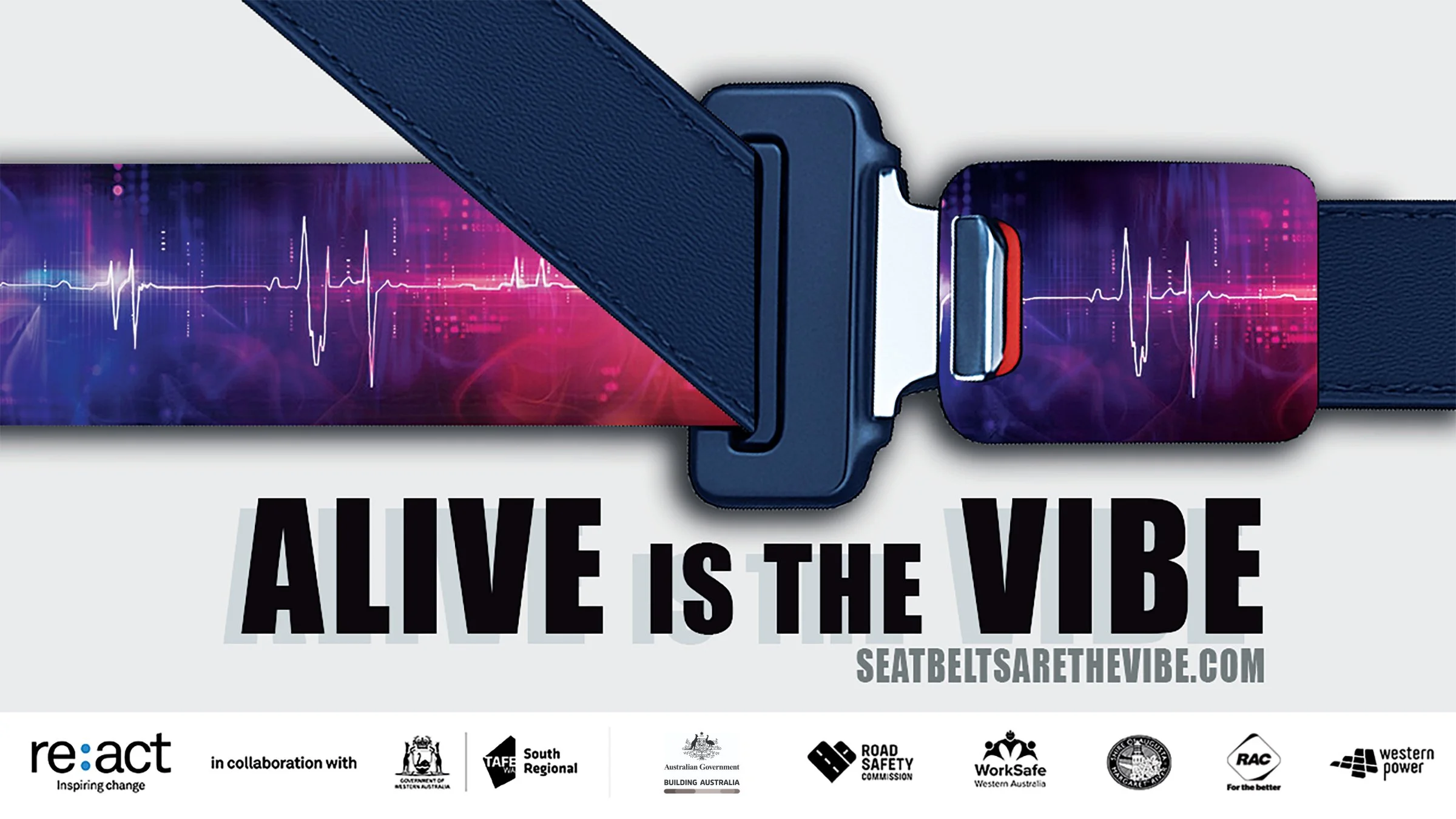
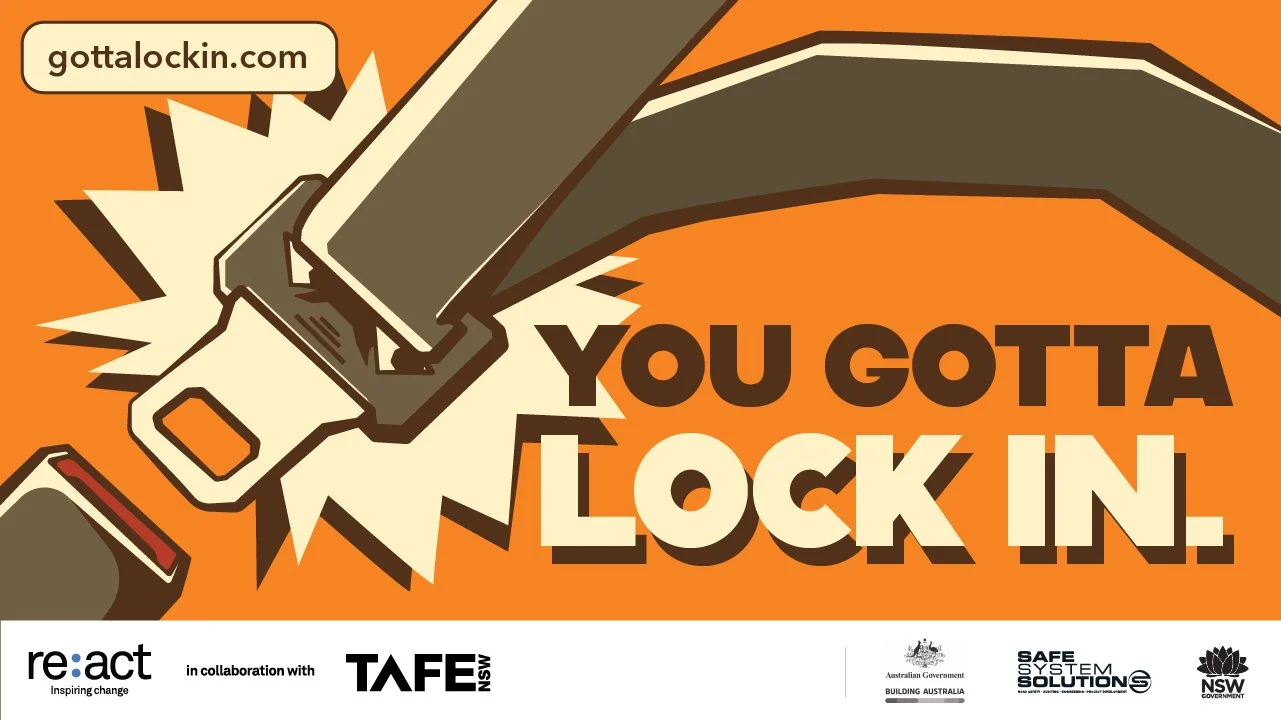
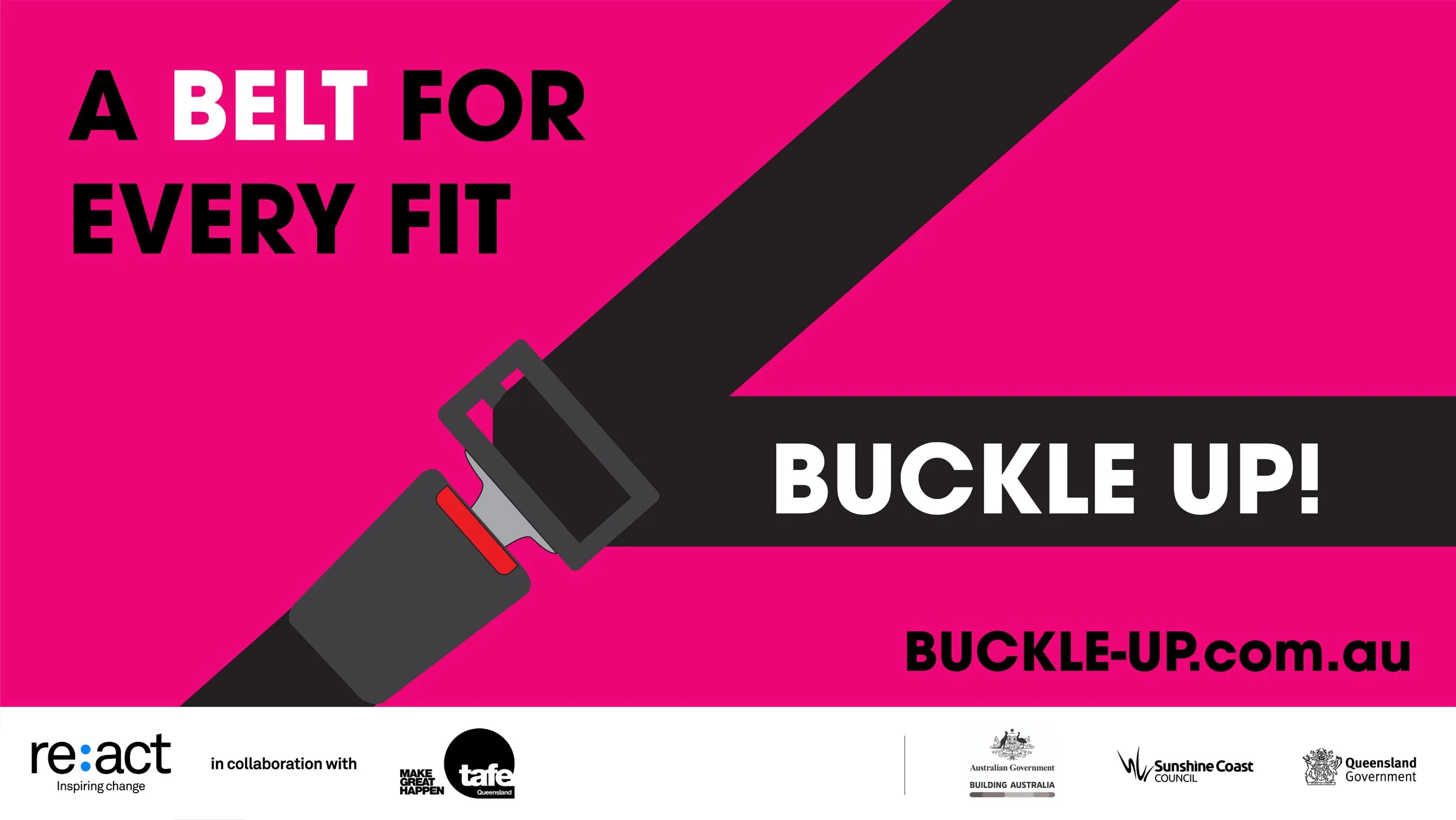
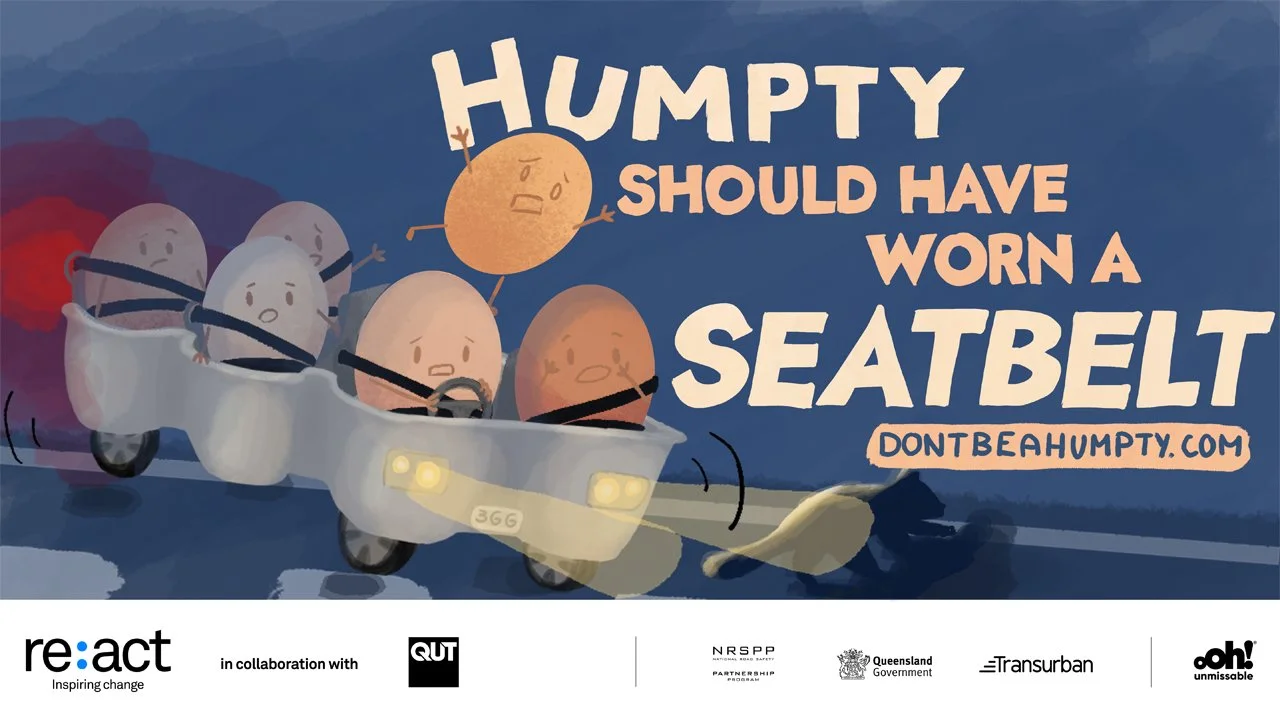
The 2025 Re:act Regional program challenged TAFE graphic design students at six regional TAFE institutions across Australia to create positive campaigns that raised awareness in their peers of wearing seatbelts, and wearing them correctly, as a driver or passenger.

Students were asked to focus on why it’s important all vehicle occupants wear a seatbelt, and wear it correctly, at all times, with campaigns aiming to promote safe behaviours around a serious road safety risk for our 17-25 year old target audience.


Institution Partners


Program Partners

2022


live campaign


University of Technology Sydney student Emelia Ferreira’s ‘More stars for safer cars’ campaign aimed to deliver the message that safer cars can be affordable. Head to their campaign to find out more.


digital assets


2021

MELBOURNE.png
 
Re-act_Partner_Logos-Negative-Melb_TAFE_Blk.png


live campaign

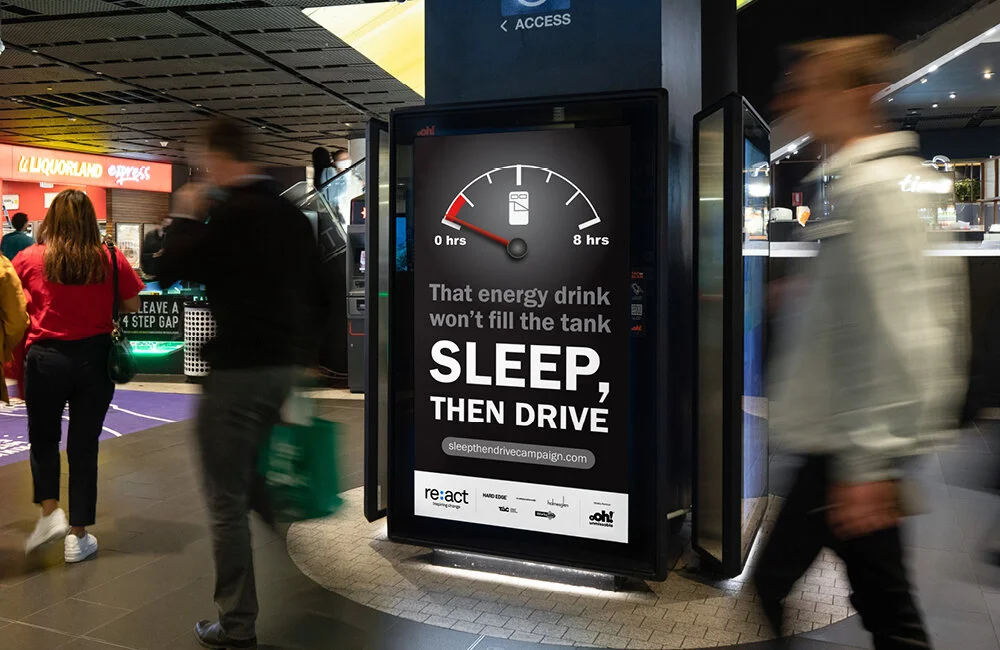
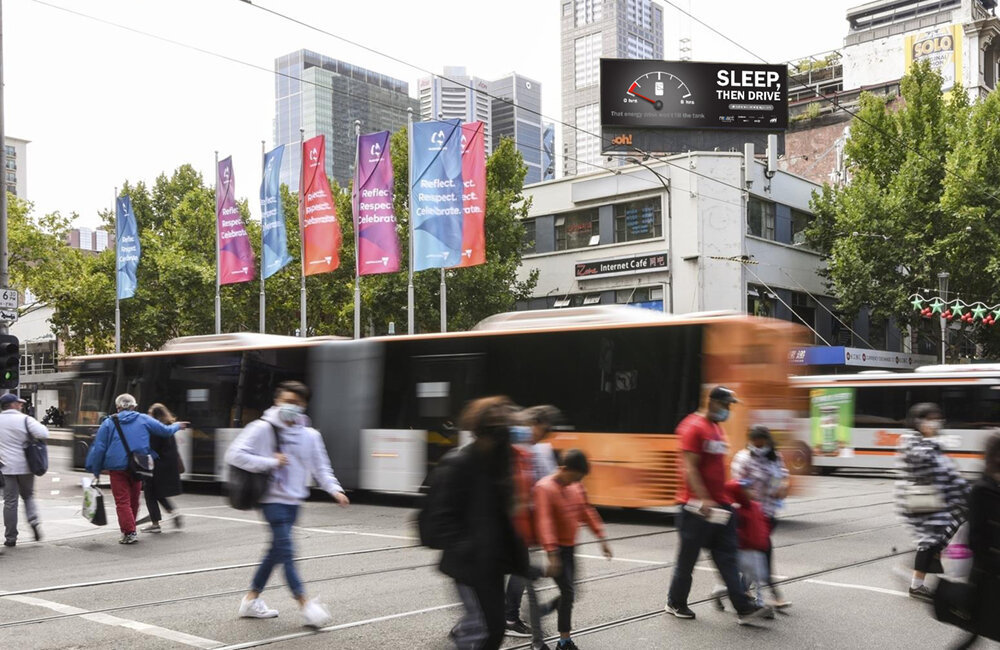
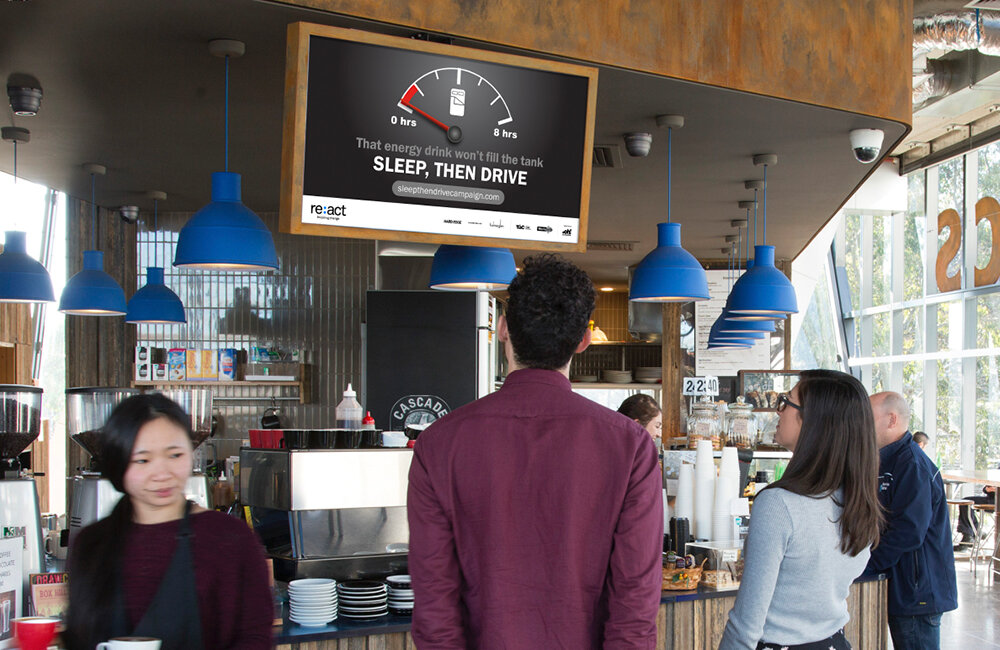
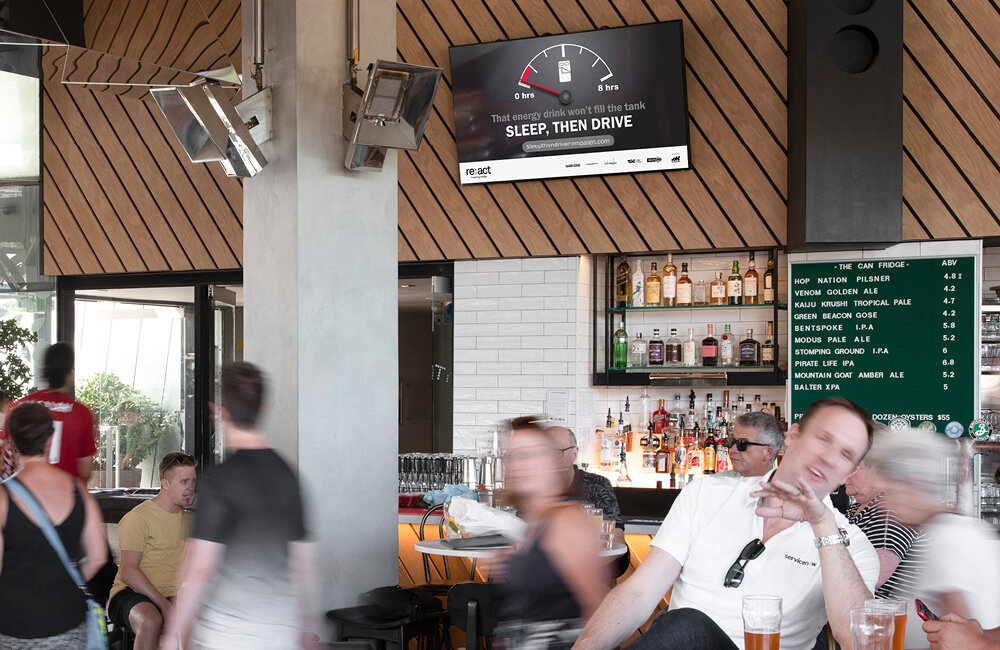
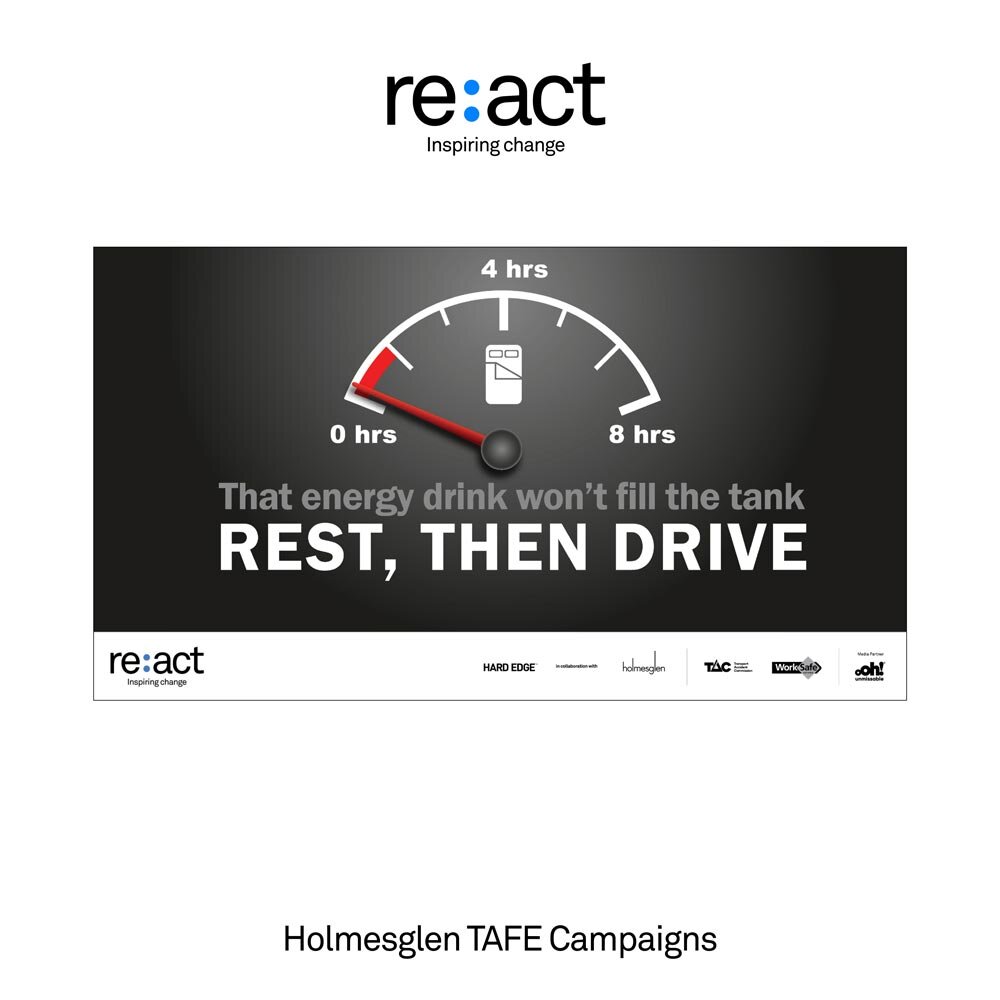
‘Sleep, then drive’. Holmesglen TAFE graphic design students Sasha Price and Carly Diep’s clever ‘drowsy driving’ road safety campaign is live online and across 250 roadside, retail and campus digital sites across Victoria. To find out more and stay up to the date with their campaign, head to sleepthendrivecampaign.com


selected campaign

A thought-provoking road safety campaign, which puts a clever twist on the need to ‘fill your tank’ before you drive, is the selected Re:act TAFE 2021 campaign in Victoria.

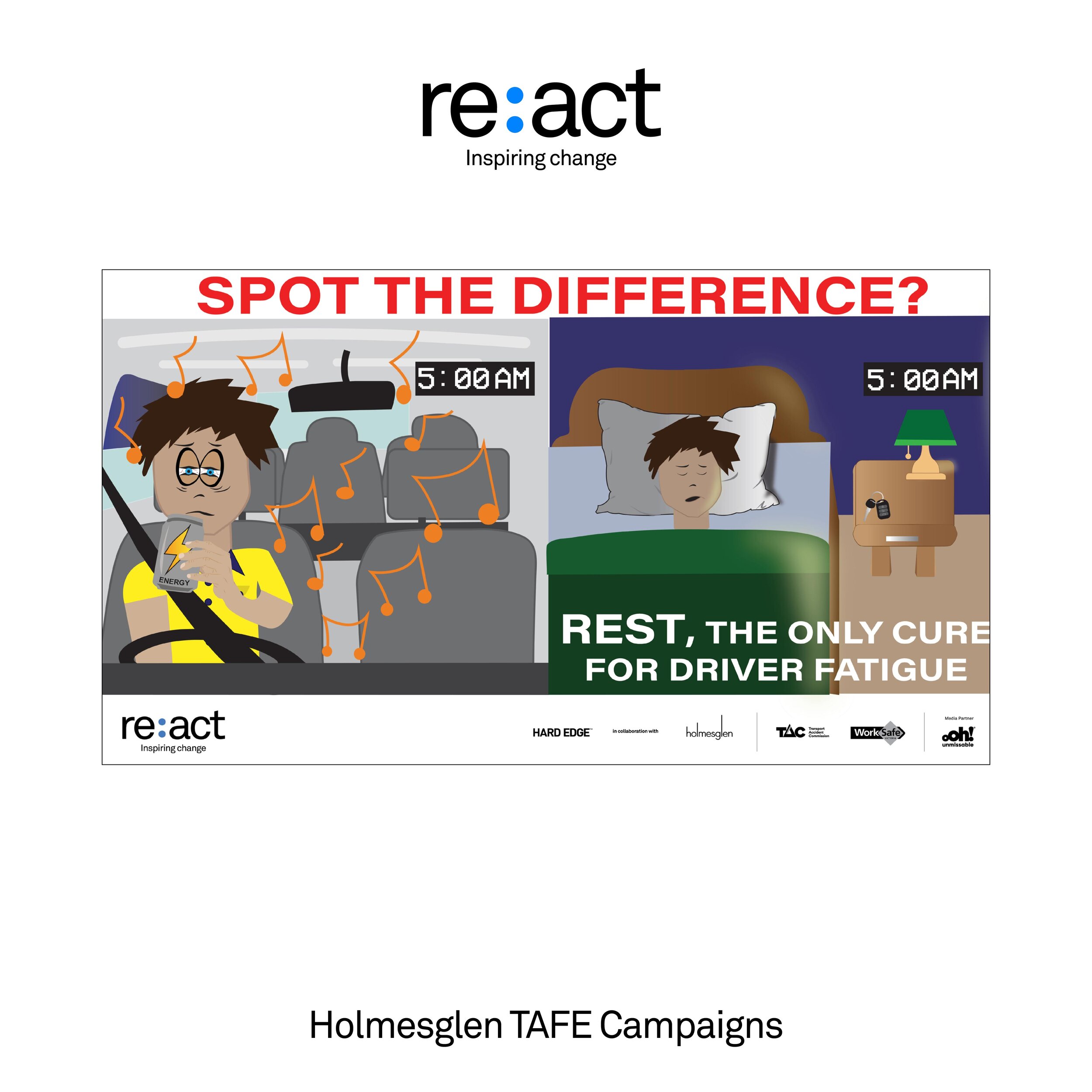
The ‘Rest, then drive – that energy drink won’t fill the tank’ message was devised by Holmesglen TAFE graphic design students Sasha Price and Carly Diep to raise awareness among young drivers of drowsy driving.


campaign presentations

Insightful research and brilliant thinking combined for inspiring road safety messages from students at Holmesglen TAFE in Melbourne today. Huge thanks to all involved for your contribution to Re:act TAFE 2021.


digital assets


2021

BRISBANE.png
 
Re-act_Partner_Logos-Negative-Brisbane_Blk TBC.png


live campaign

The ‘Even The Best Rest’ campaign, created by Queensland University of Technology students Isobel Dembrey-West, Campbell Glaves, Saskia Harper, Austin Harvey, Alexander Sartori and Laura Tran, challenged young drivers’ perception that driving fatigued is normal. To find out more or stay up to the date with the campaign, head to DontDriveTired.com.


selected campaign

An intelligent and inspired campaign highlighting that even those at the ‘top of their game’ need sleep to perform at their best is the selected Re:act 2021 campaign in Queensland.

Created by Queensland University of Technology students Isobel Dembrey-West, Campbell Glaves, Saskia Harper, Austin Harvey, Alexander Sartori and Laura Tran, ‘Even The Best Rest’ educates young drivers about the risks of driving fatigued.


digital assets


2021

MELBOURNE.png
 
Re-act_Partner_Logos-Negative-Melbourne_Blk.png


live campaign

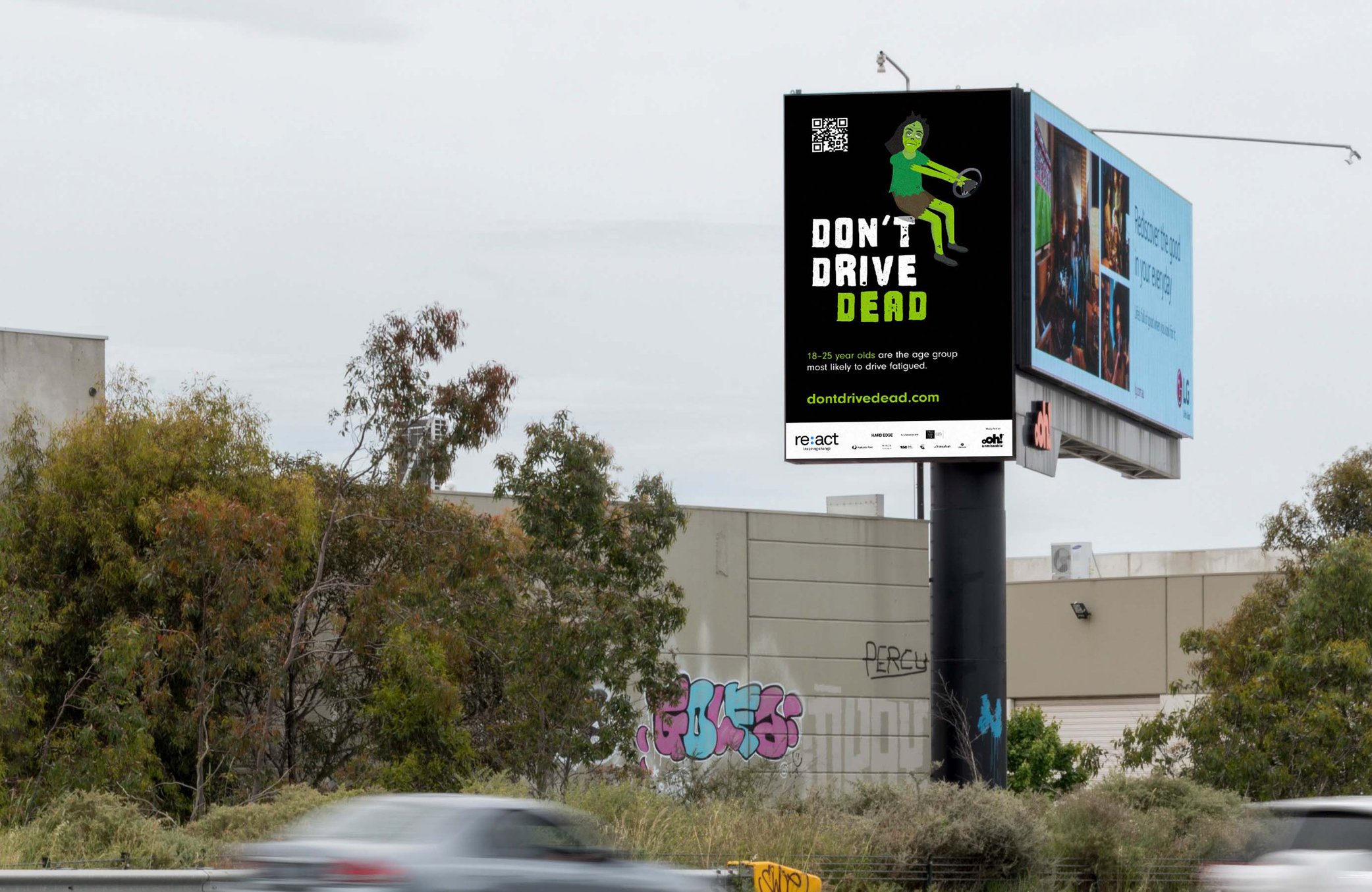
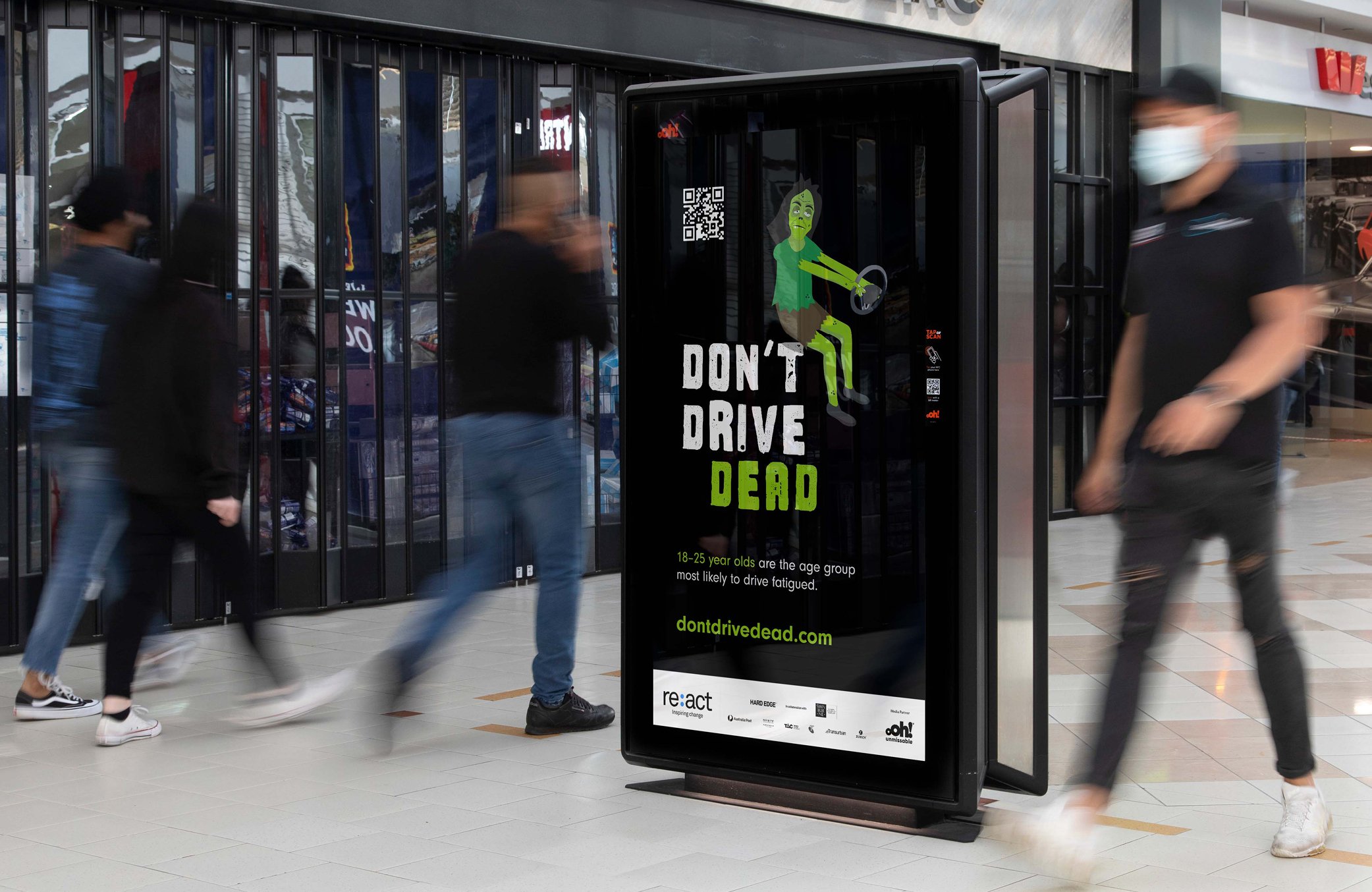
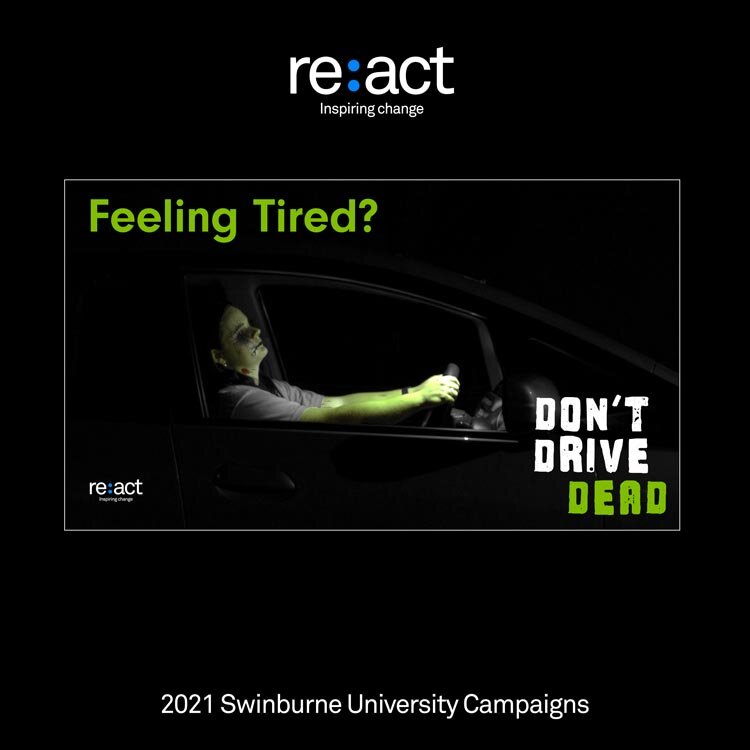
The striking ‘Don’t Drive Dead’ campaign, created by Swinburne University students Eve Uittenbosch, Lulu Nicholls, Charlotte Tiong and Gabrielle Versace, ‘unleashes’ zombies to educate young drivers about the risks of driving fatigued. To find out more or stay up to the date with the campaign, head to dontdrivedead.com.


selected campaign

A striking and straight to the point campaign, that ‘unleashes’ zombies to educate young drivers about the risks of driving fatigued, is the selected Victorian campaign for Re:act 2021.

Created by Swinburne students Eve Uittenbosch, Lulu Nicholls, Charlotte Tiong and Gabrielle Versace, the campaign uses zombies and the ‘Don’t Drive Dead’ tagline to create awareness of the risks of drowsy driving for young people.

Swinburne_Campaign.jpg
 

Campaign Presentations

What a way to start the Re:act 2021 student campaign presentations - brilliant research, thinking and ideas from students at Swinburne. A big congratulations to lecturers, program partners and especially the students. You should be very proud of your work.


digital assets


2020


LONDON.png
 
 
Re-act_Partner_Logos-Negative-London_Blk_2020.png


selected campaign


A simple road safety message, delivered clearly and at the crucial moment. Congrats to Reana Kerai from UAL for this year’s Re:act UK selected campaign.


campaign presentations


Fantastic campaigns presented from the other side of the world. UAL students showed great thinking and beautiful design in their campaigns to wow the partner panel.


check-in session


UAL students presented their research, insights, and concepts. Partners giving their knowledge and experience to guide their campaign development.


q&a session


The collaborative approach of Re:act among students, lecturers, and partners remained strong in London's Q&A session. Proving we can adapt and keep things moving, just in a different way, not necessarily with compromise.


digital assets


Artwork Specs (UAL 2022)

Artwork Specs (UAL 2020)

2021

SYDNEY.png
 
Re-act_Partner_Logos-Negative-Sydney_Blk.png


live campaign

UTS communication student Matilda Martin’s ‘me time’-inspired campaign is live online and across Sydney and regional NSW. To find out more or stay up to the date with her campaign, head to revivebeforeyoudrive.com.


selected campaign

A humorous road safety campaign, inspired by the growth of ‘me time’ during COVID, is the selected Re:act campaign in New South Wales for 2021.

The ‘Revive before you drive. Don’t drive sleep deprived’ message was devised by University of Technology Sydney (UTS) student Matilda Martin to raise awareness among young drivers of drowsy driving.


campaign presentations

It’s easy to forget Re:act campaigns are created by students, not experienced industry professionals. The quality of campaigns UTS students presented was outstanding. Congrats to everybody involved.


digital assets


2021

Perth Curtin2.png
 
Re-act_Partner_Logos-Negative-Perth_Blk.png


live campaign

The ‘Counting Sheep’ road safety campaign, which added a twist to the idea of counting sheep to get to sleep, was created by Curtin University students Aisha Derrick, Ashlin Macintyre, Sajeda Mohammadi and Stephanie Pacia. To find out more or stay up to the date with the campaign, head to CountingSheepCampaign.com


selected campaign

An inspired student road safety campaign, adding a twist to the notion of counting sheep to get to sleep, is the selected campaign in the inaugural Re:act program for Western Australia.

Created by Curtin University students Aisha Derrick, Ashlin Macintyre, Sajeda Mohammadi and Stephanie Pacia, the eye-catching ‘The road is no place for counting sheep’ campaign creates awareness of fatigued driving among young people.

Curtin_Uni_Selected_Campaign-LR.jpg
 

campaign presentations


Wow, what amazing ideas and creativity on show today from Curtin students. The standard of Re:act road safety campaign approaches presented is testament to the commitment of the students and their lecturer. Well done all.


digital assets


2020

 
BRISBANE.png
 
Re-act_Partner_Logos-Negative-Brisbane_Blk_2020.png


live campaign


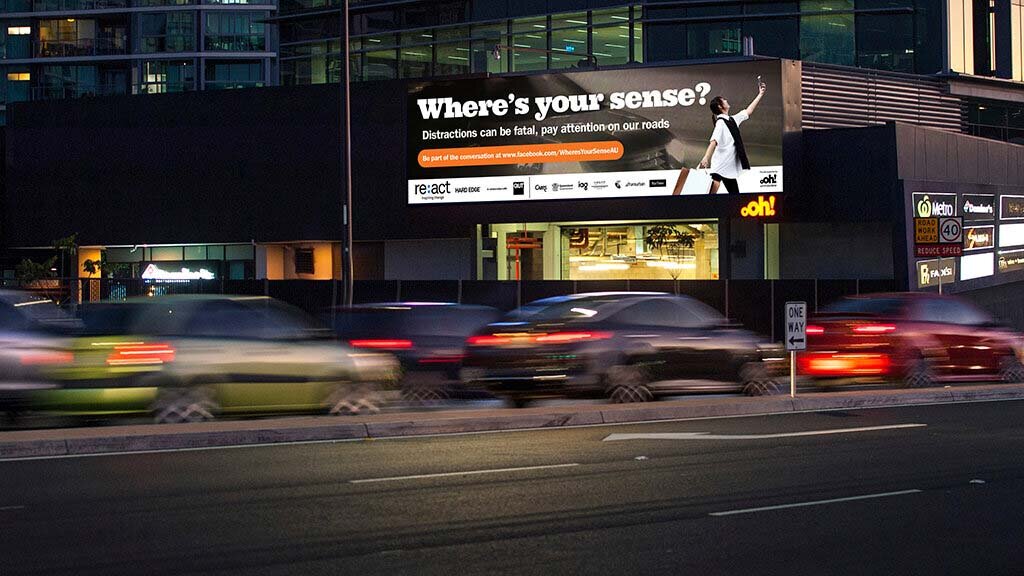
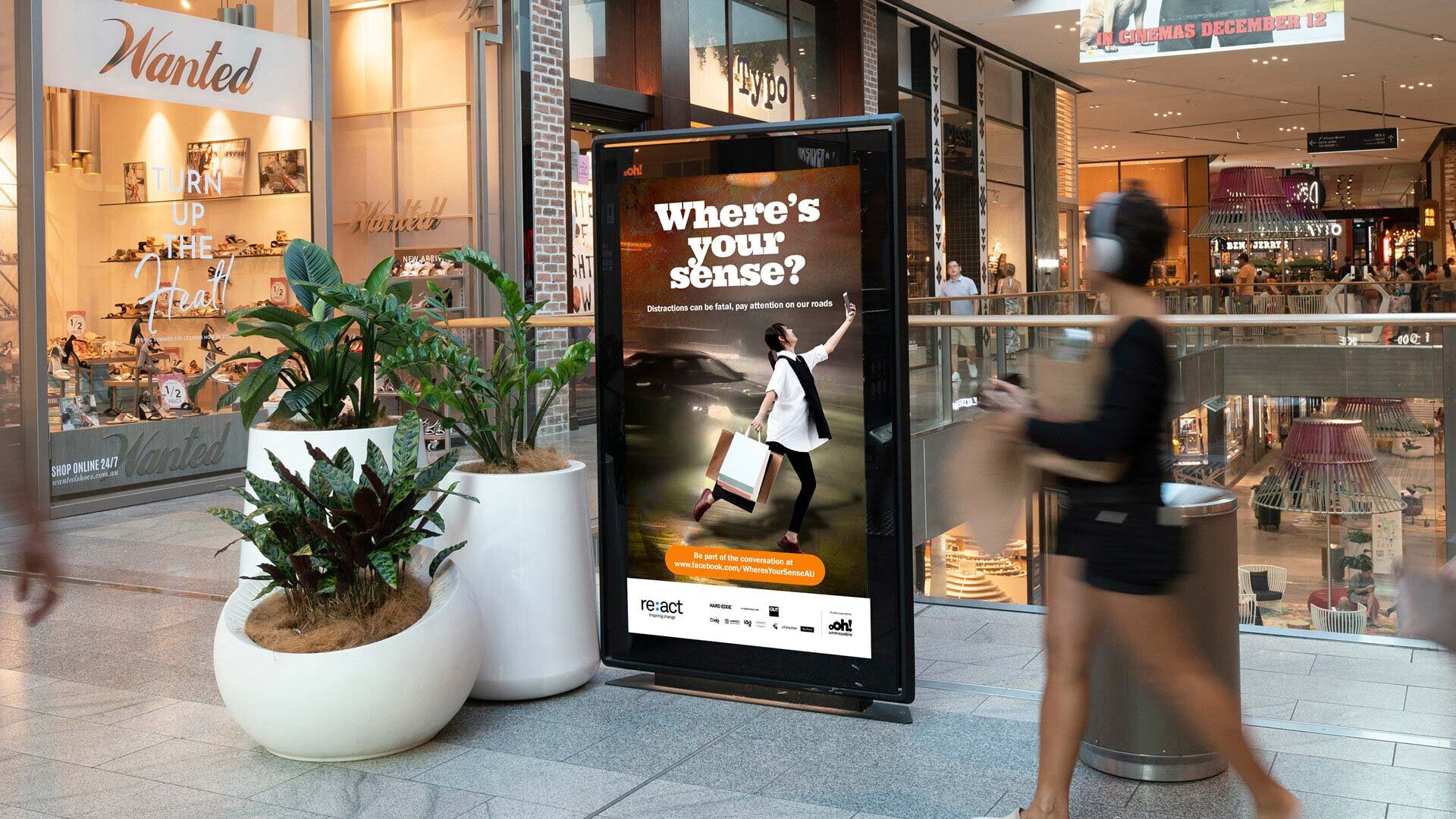
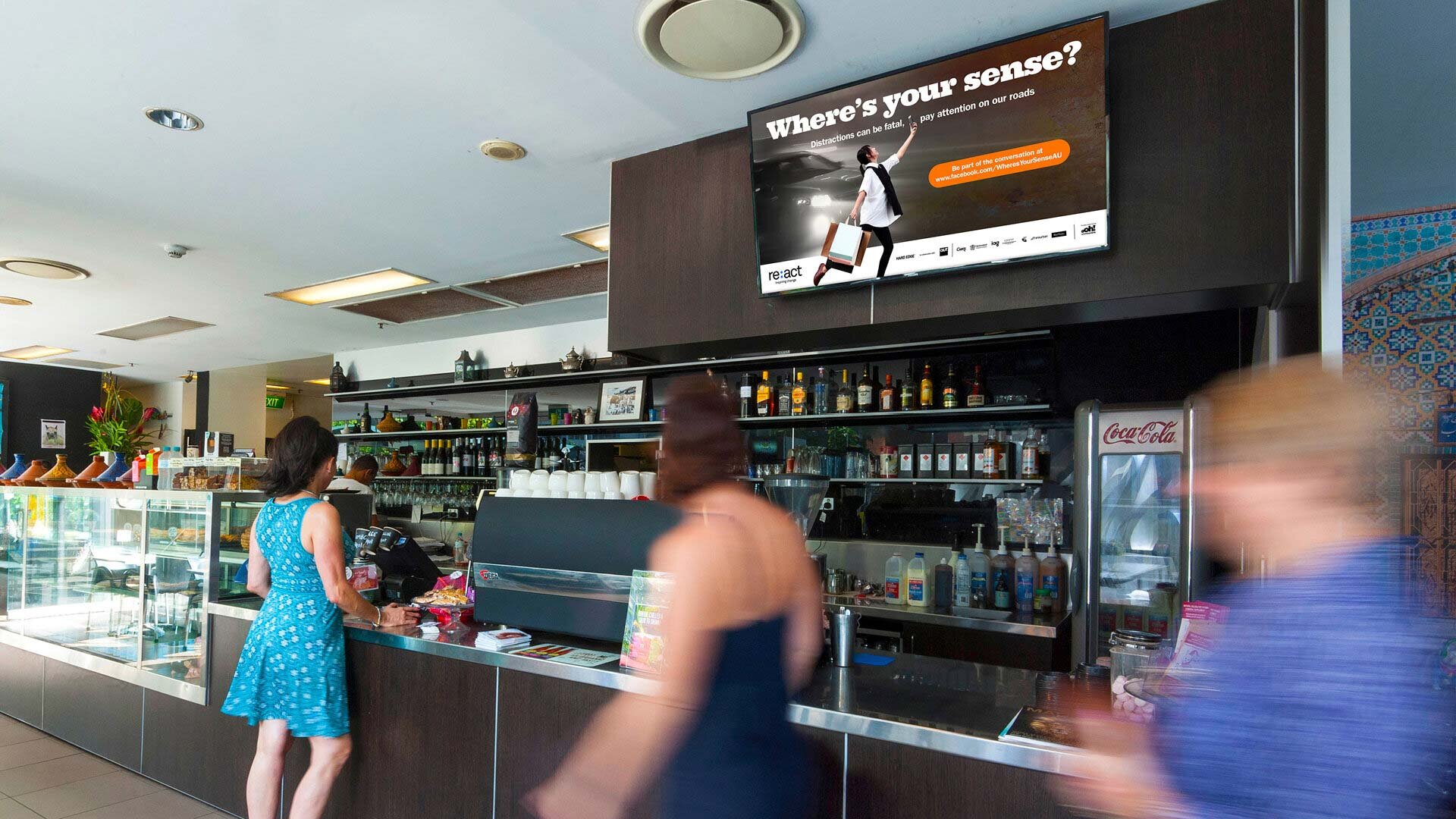
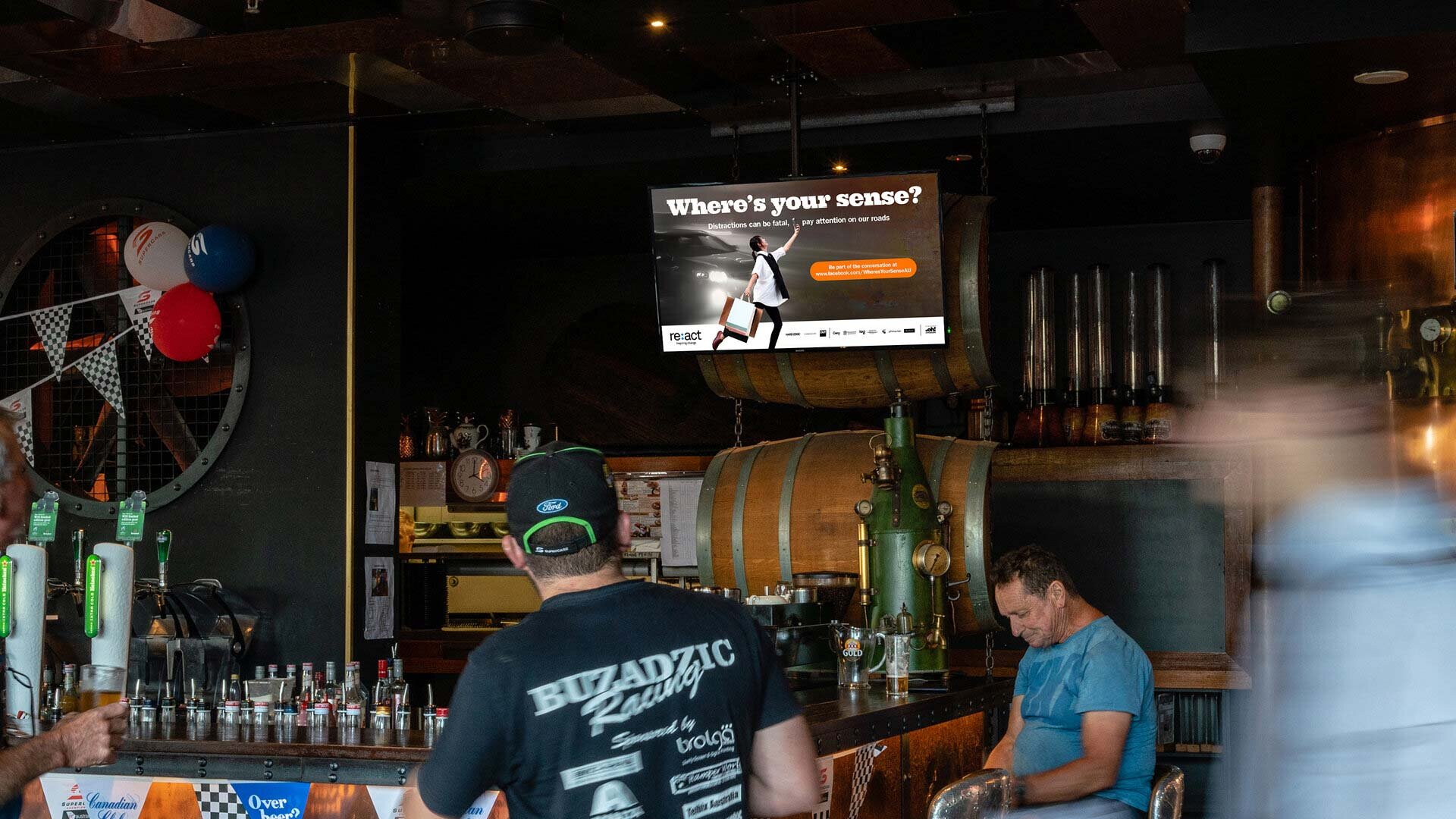
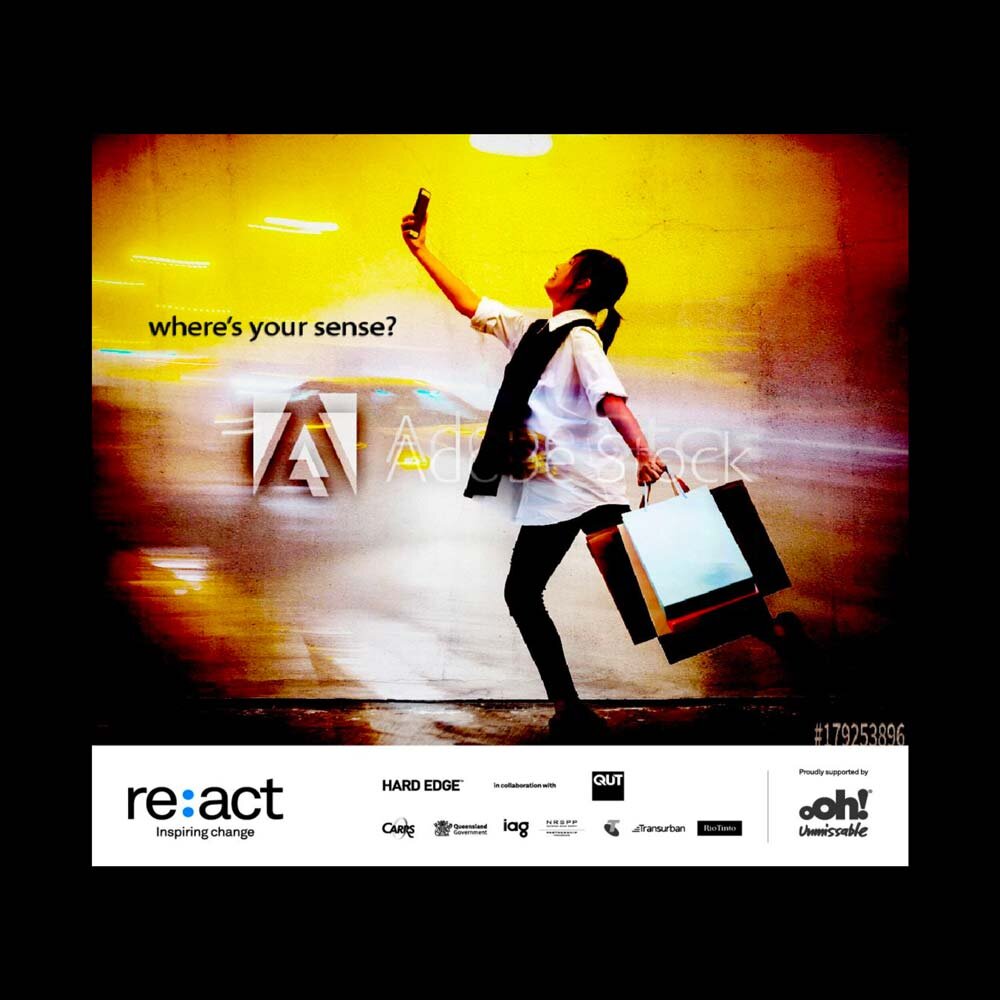
QUT’s student campaign “Where’s your sense?” was launched by Queensland Transport and Main Roads Minister Mark Bailey on August 17th 2020.

To keep up to date with the campaign head over to their facebook page for more info on distraction on our roads.


selected campaign

The 'Where’s Your Sense?' campaign, from the minds of QUT students Kate Walters, Paulus Pearce, Mea Clifford and Macey Robinson-Stewart, was selected for the inaugural Re:act program in Queensland. Tackling the issue of vulnerable road user distraction with clever copy, the campaign will run on the streets of Brisbane this year. oOh!


campaign presentations


Great research and insights by the QUT advertising students in their final presentations. Well done guys!


q&a session


The collaborative approach of Re:act among students, lecturers, and partners remained strong in Brisbane's Q&A session. Proving we can adapt and keep things moving, just in a different way, not necessarily with compromise.


digital assets


2019

 
MELBOURNE.png
 
Re-act_Partner_Logos-Negative-Melbourne_Blk_2019.png


the pitch


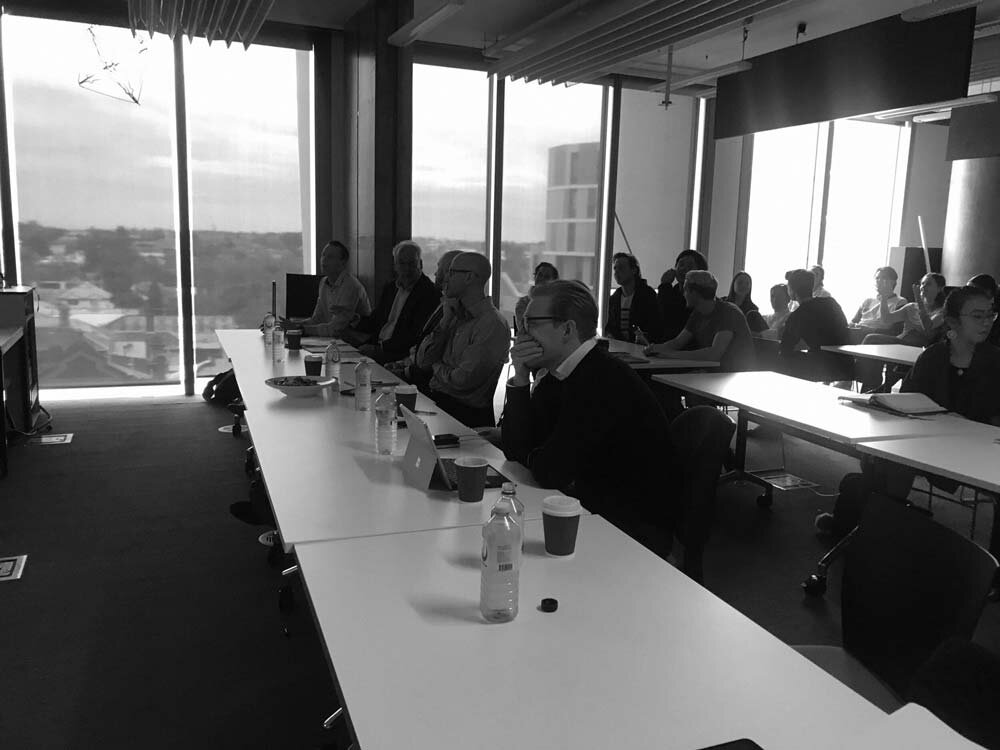
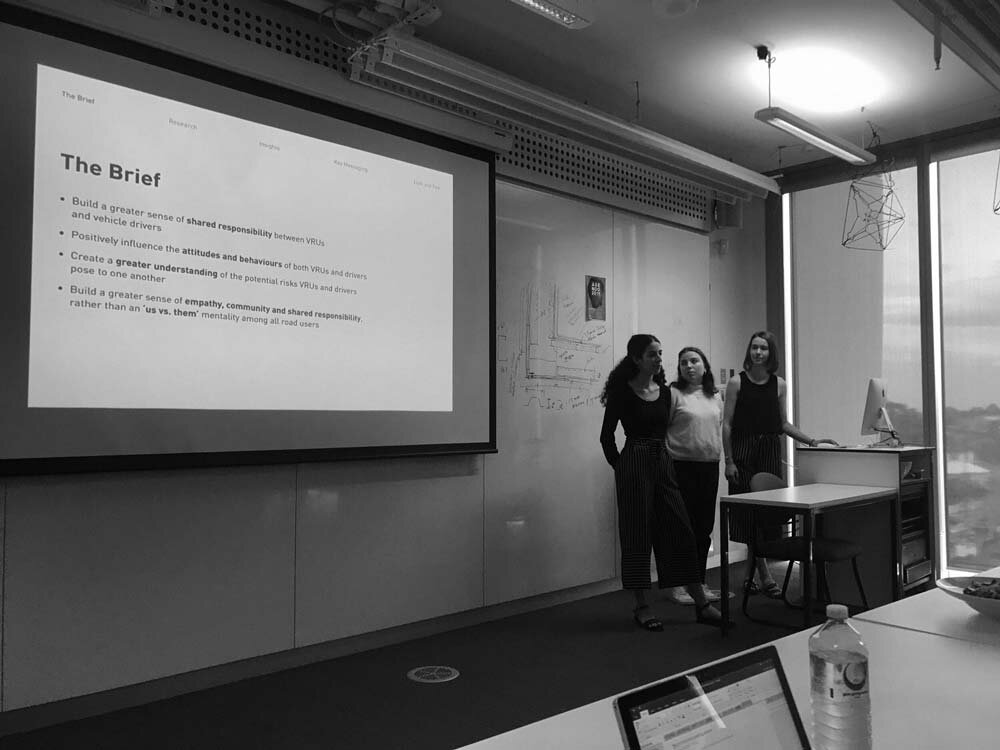
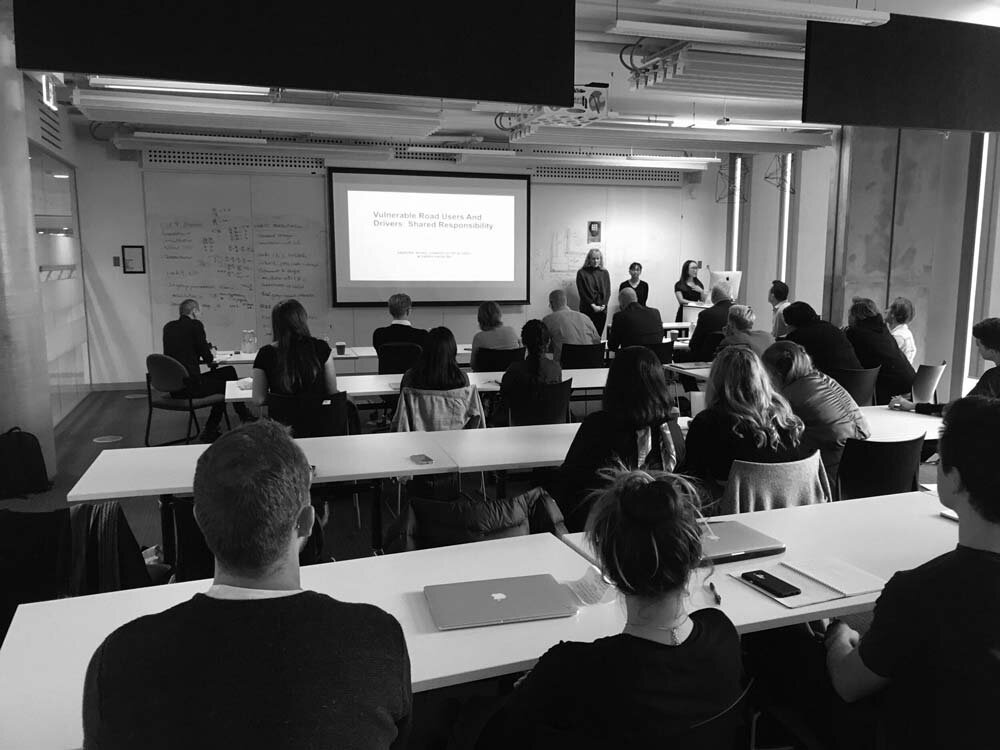
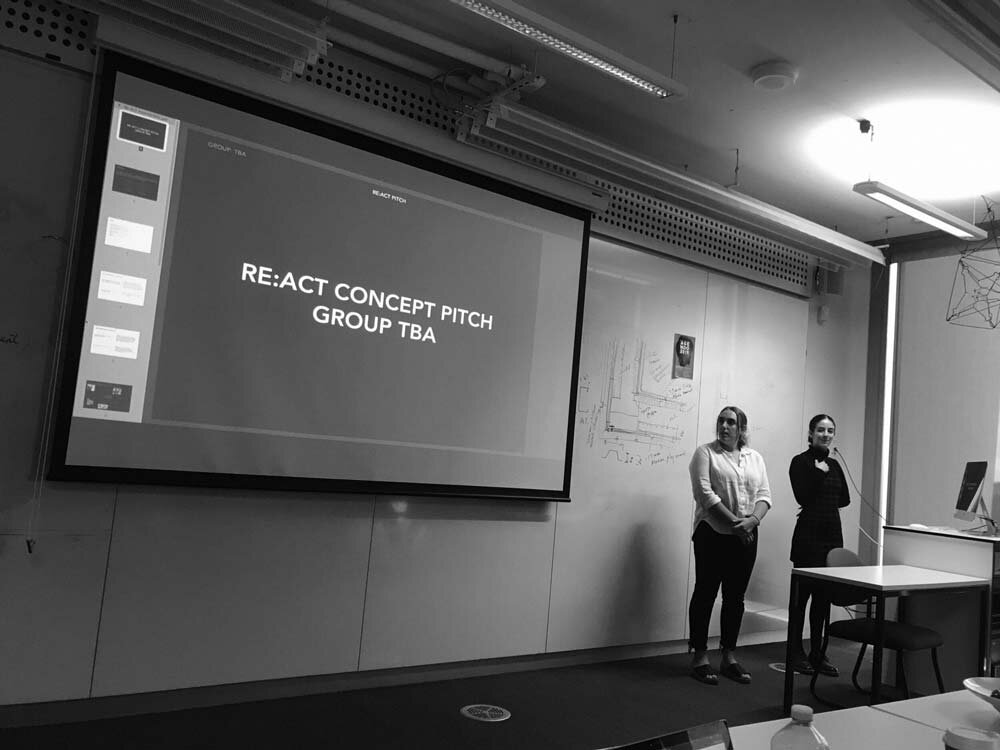
In 2019, Swinburne communication design students gathered to pitch their creative concepts to a very impressed Re:act panel of judges. 


selected campaign


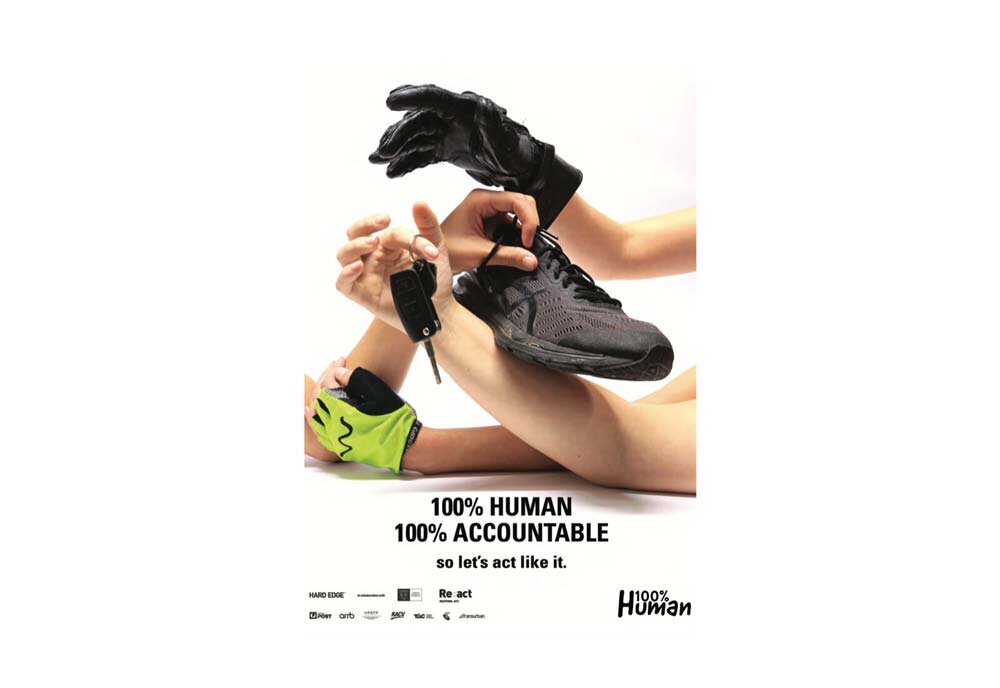
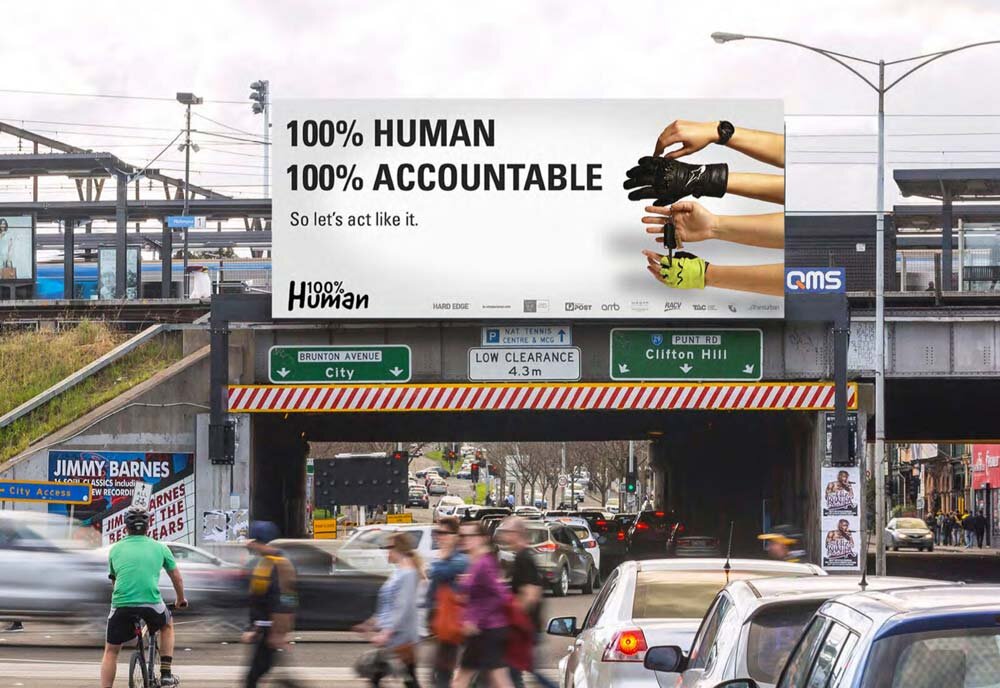
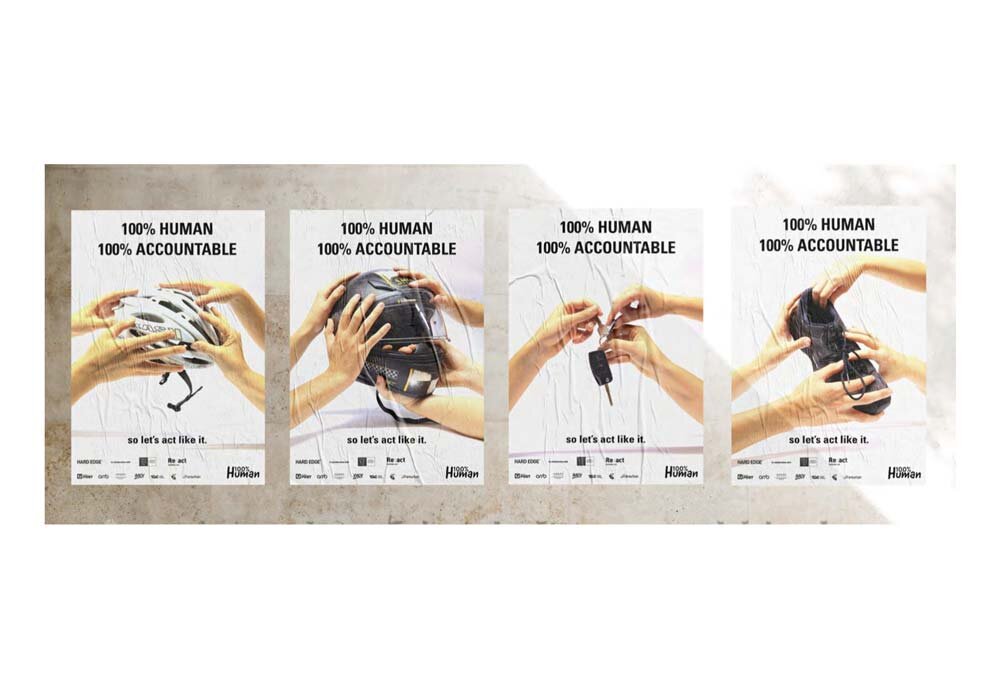
Communication Design students Max Bufardeci, Riley van Ingen, Felicity Lemke
and Caitlin Gmehling created the '100% Human' road safety campaign.


check in

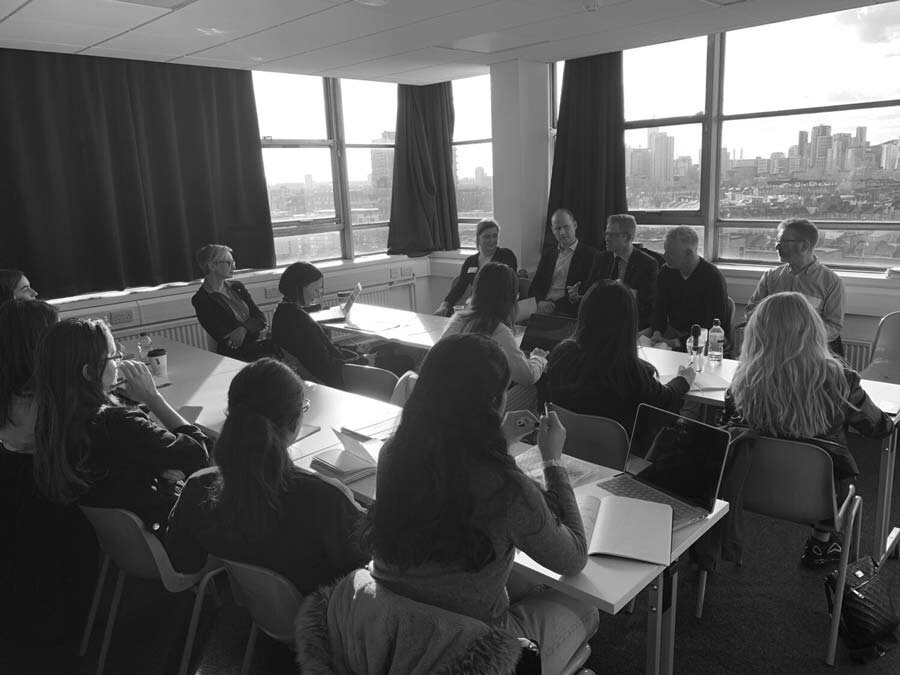
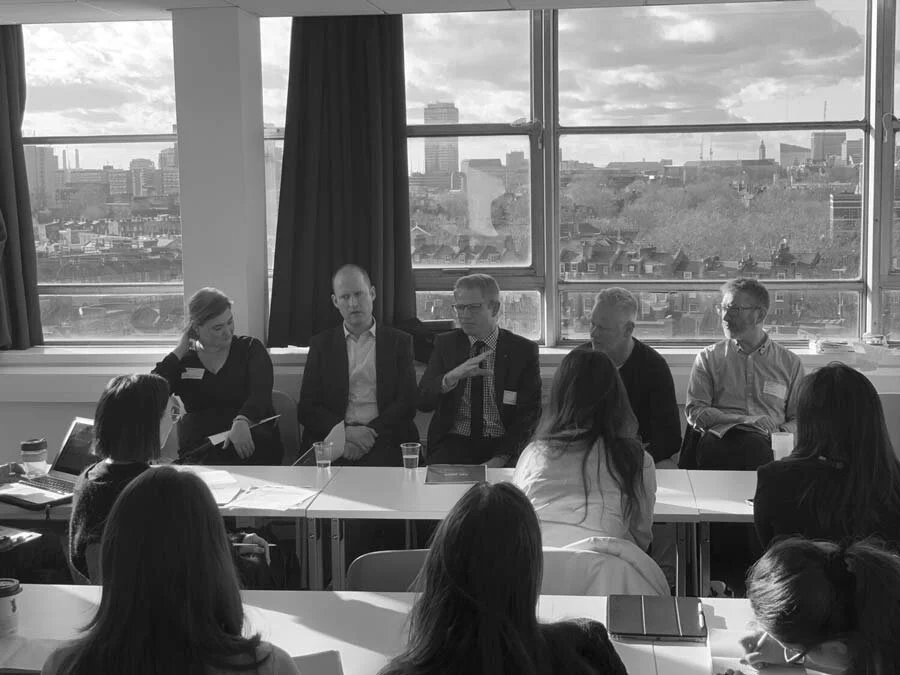
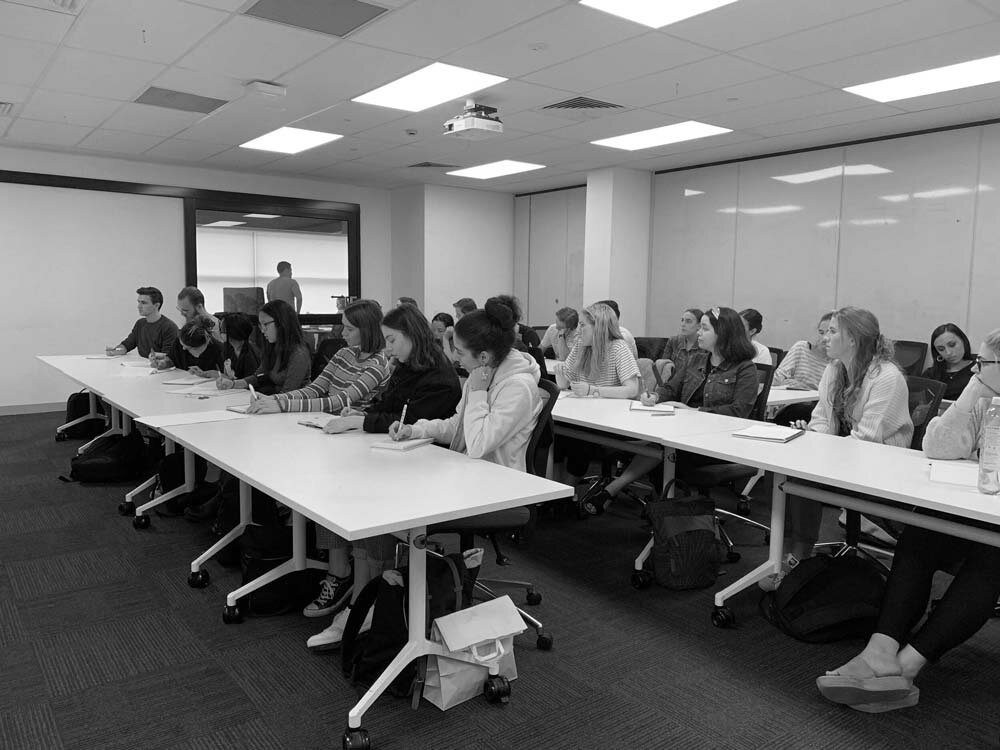
Professional guidance from program partners helps students turn
ideas into real-world campaigns.


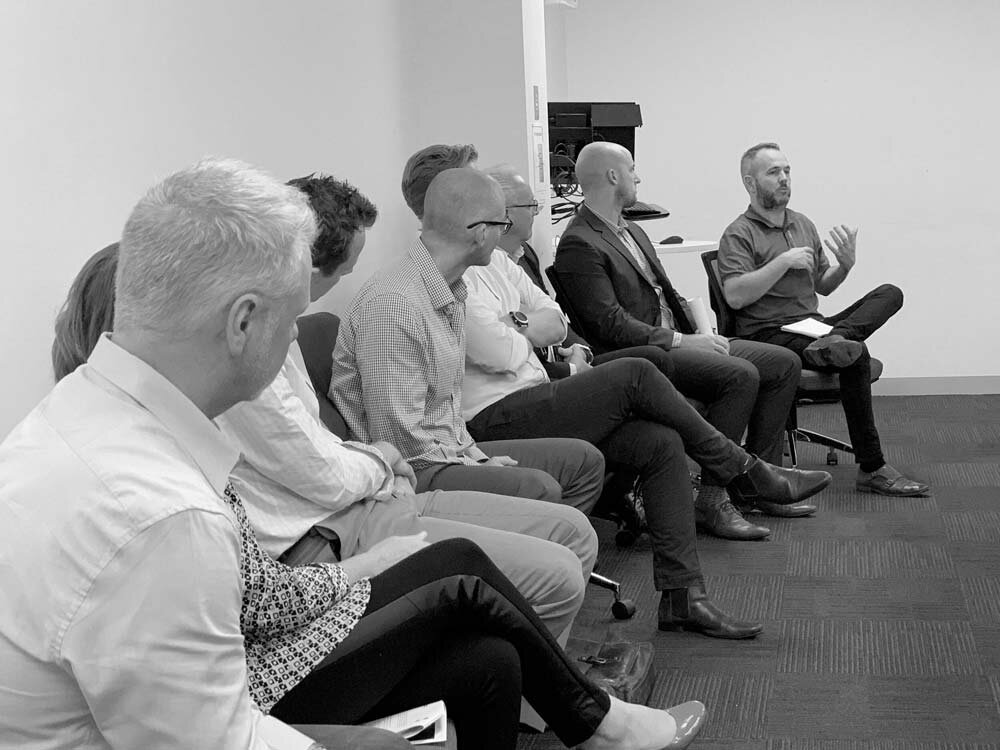
q&a session

Clarifying expectations for Re:act participants and providing
the chance to learn from industry experts.


digital assets


2025

Seatbelt Use

The 2025 Re:act program in Australia challenged Design Communication students from University and TAFE across nine metropolitan locations nationally to create positive campaigns that raise awareness in their peers of wearing seatbelts, and wearing them correctly, as a driver or passenger.

Students were asked to focus on why it’s important all vehicle occupants wear a seatbelt, and wear it correctly, at all times, with campaigns aiming to promote safe behaviours around a serious road safety risk for our 17-25 year old target audience.


Institution Partners


Program Partners


National Media Partner


2020


SYDNEY.png
 
 
Re-act_Partner_Logos-Negative-Sydney_Blk_2020.png


live campaign


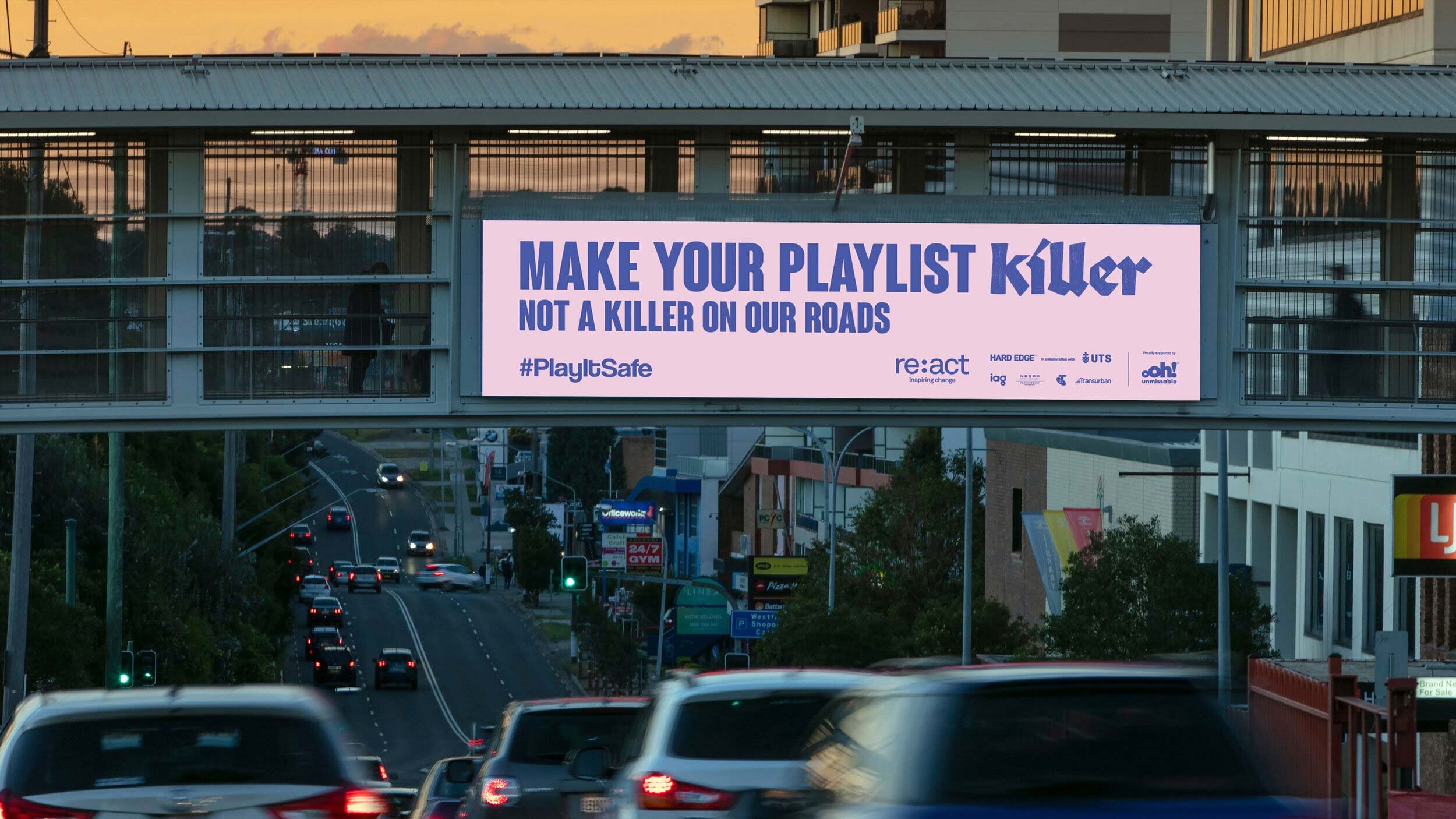
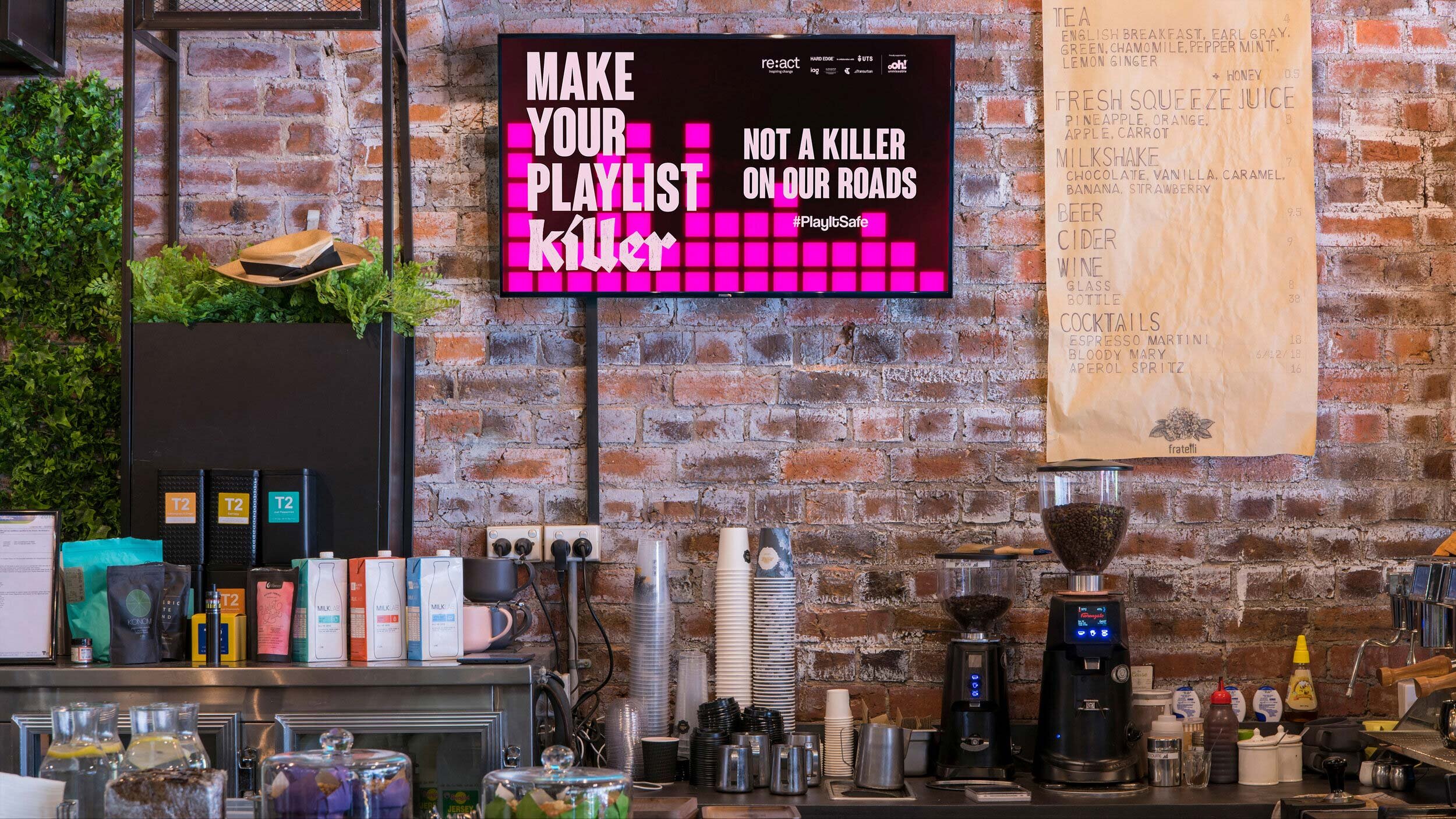
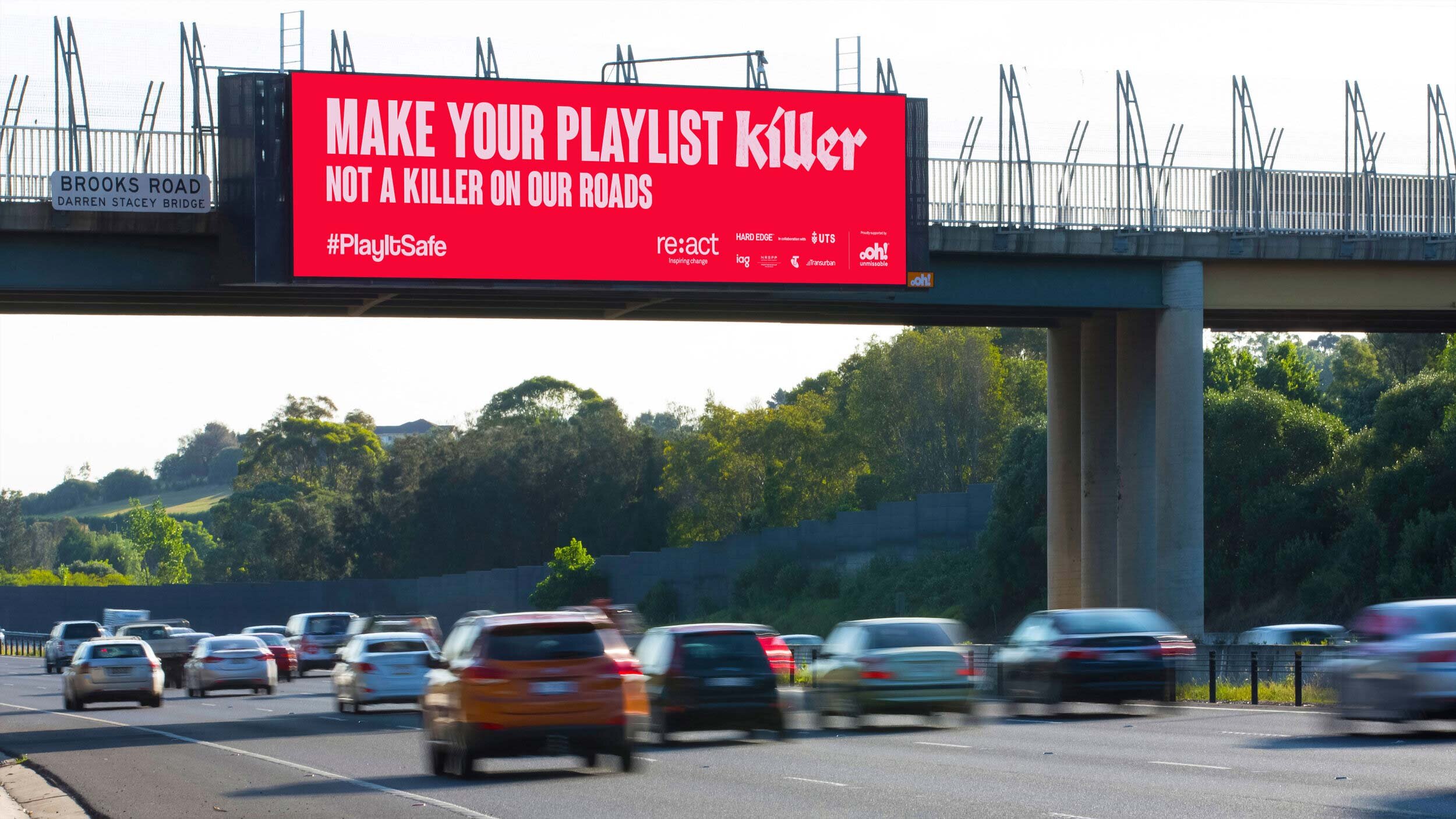
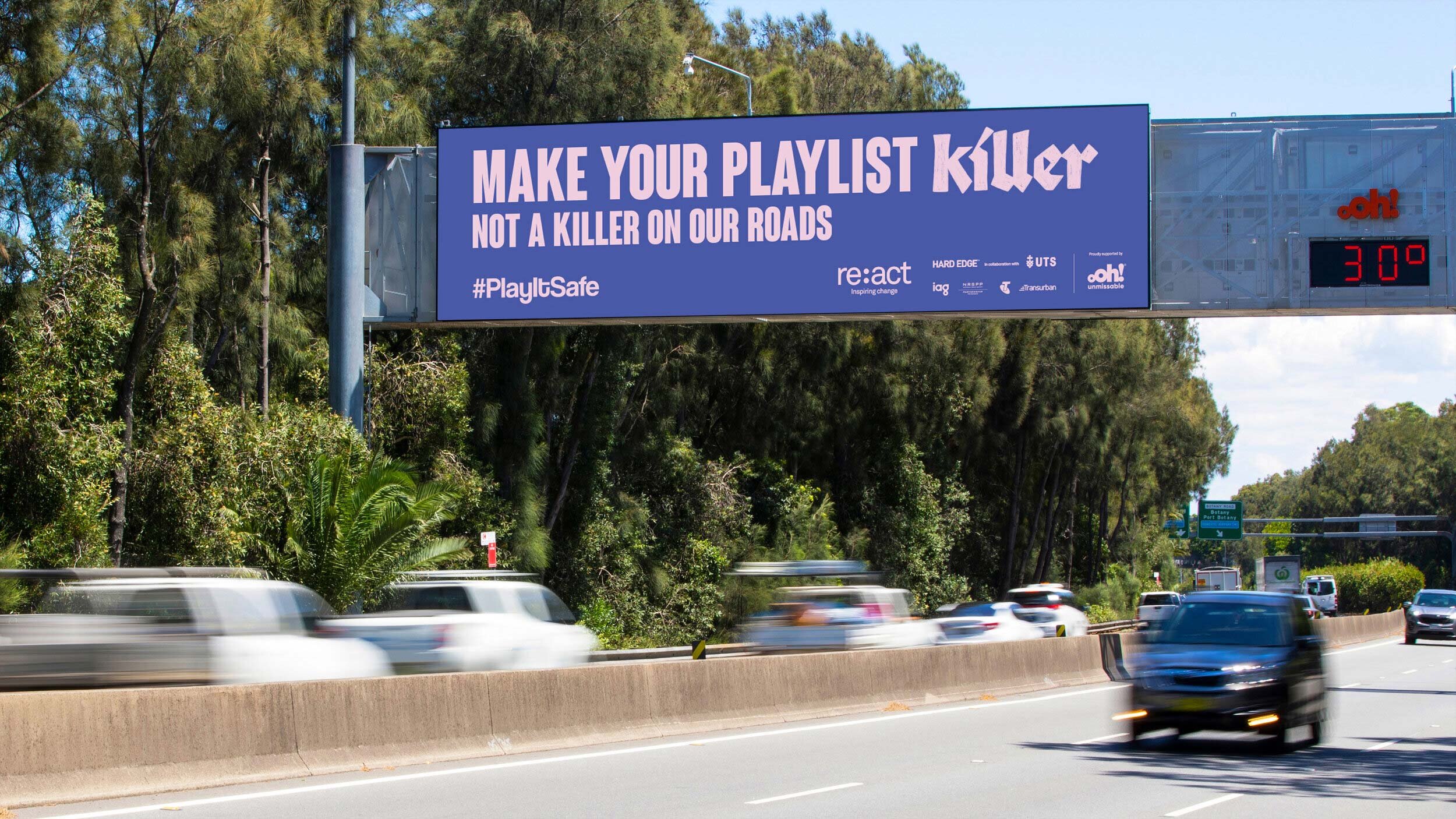
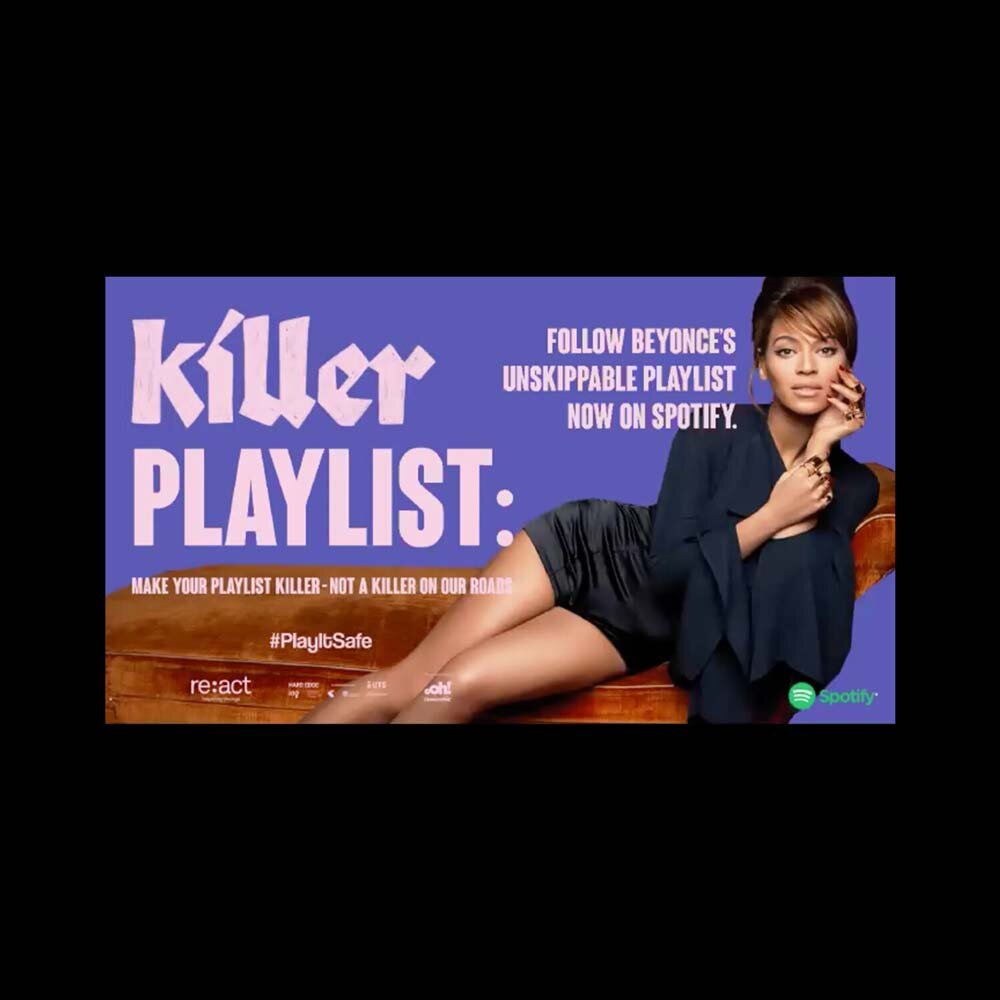
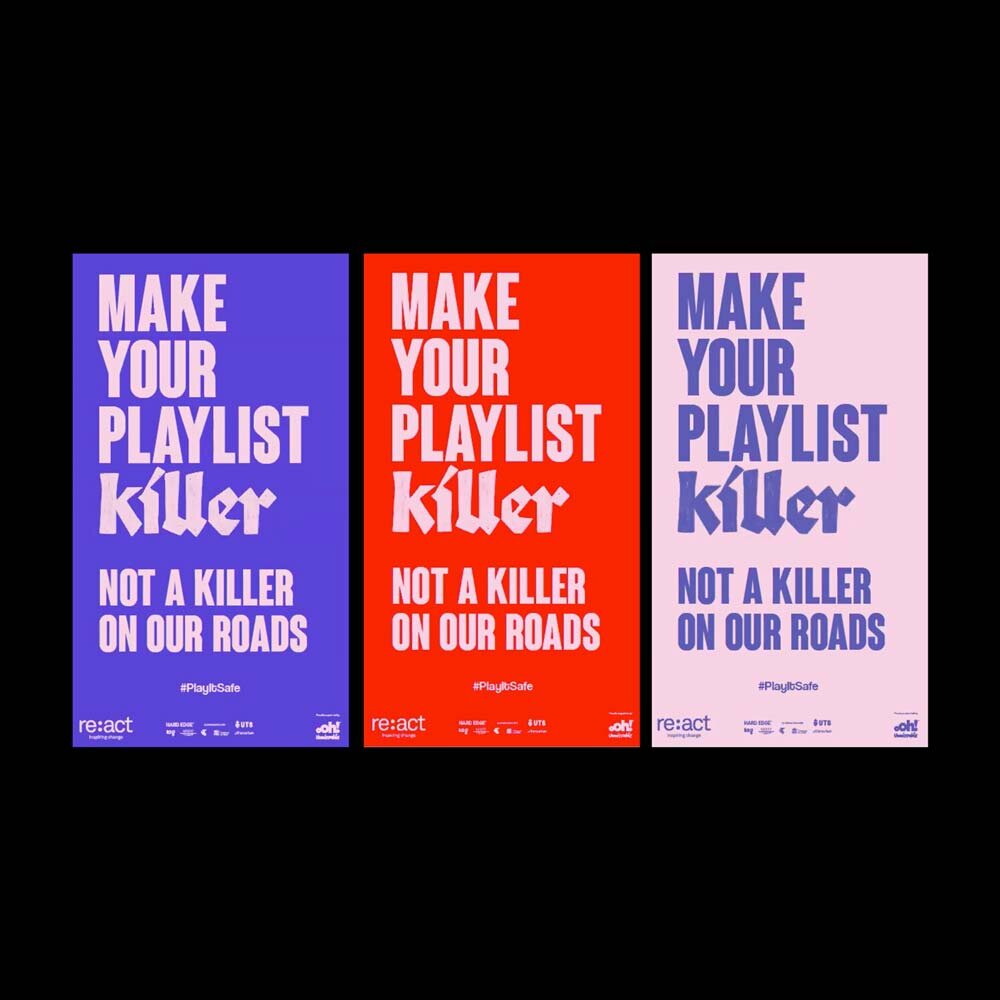
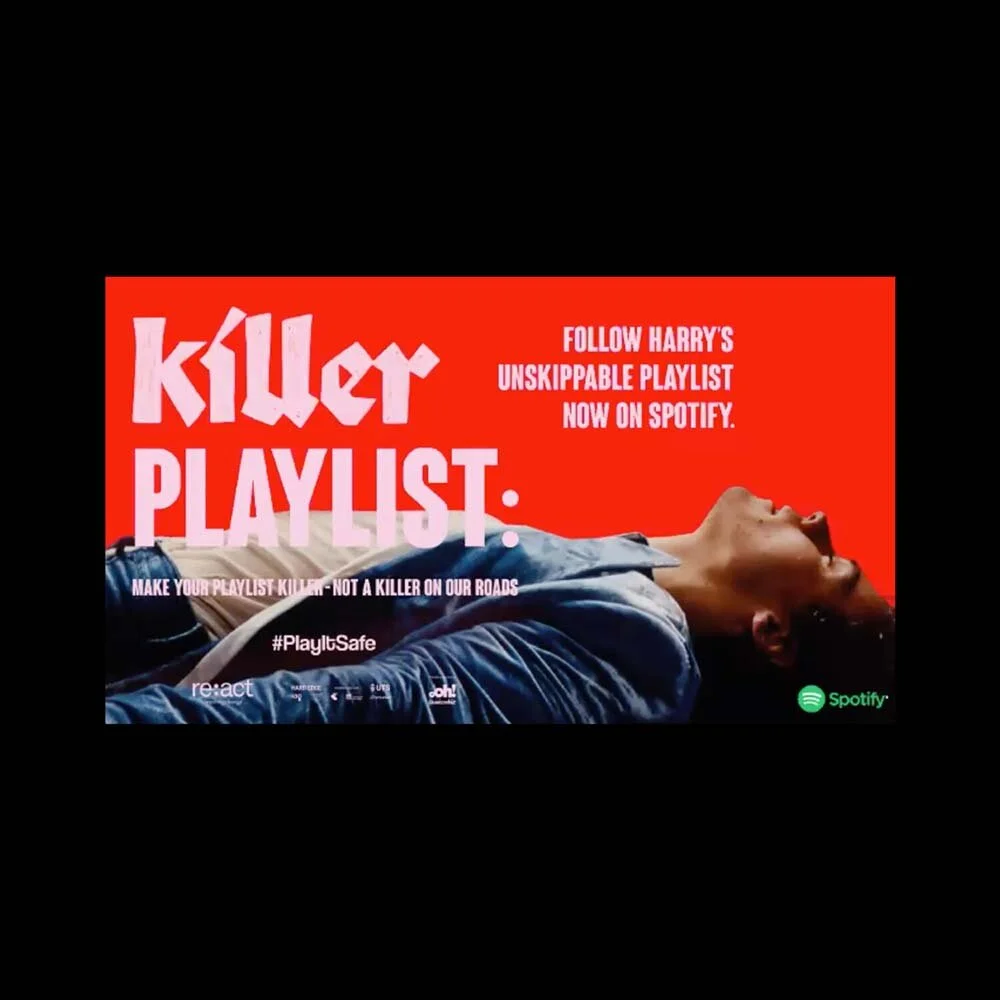
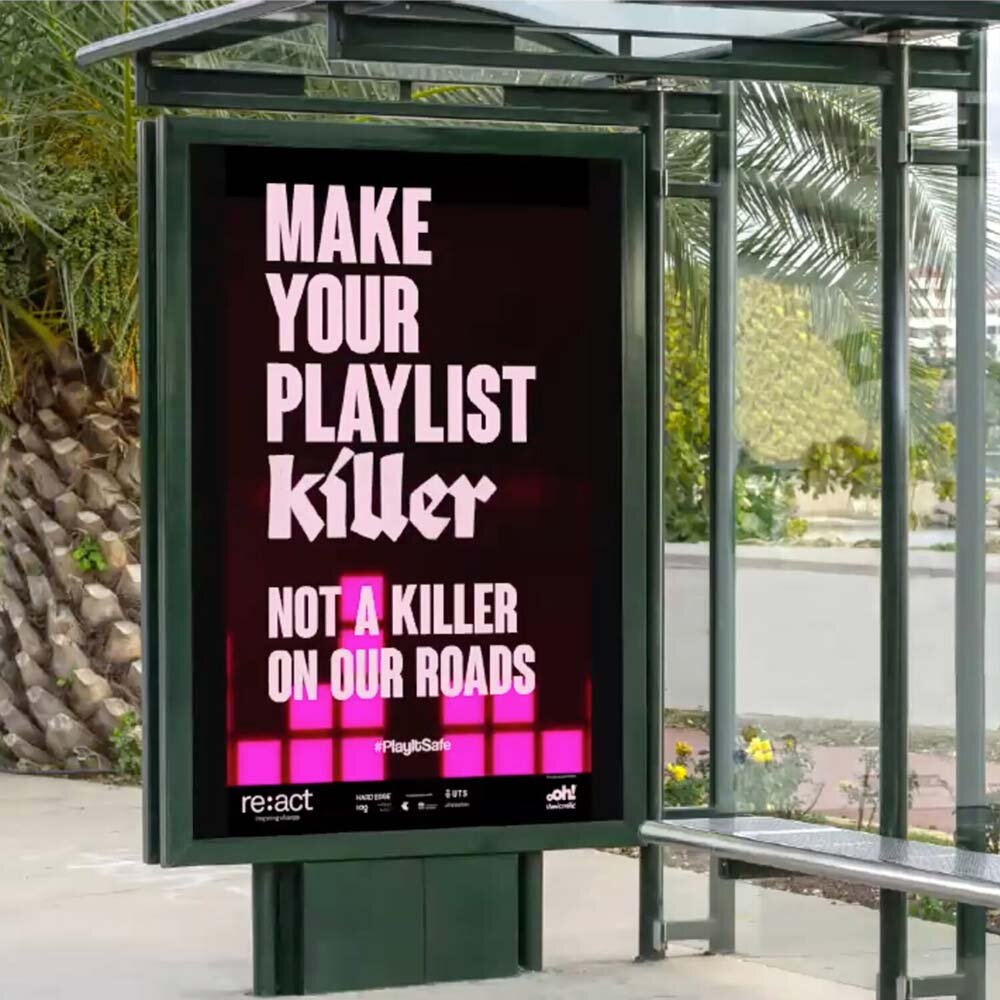
Ella Mander-Jones from UTS in Sydney’s campaign “Killer Playlist” was launched on August 31st 2020.

To keep up to date with the campaign head over to her campaign for more info on distraction on our roads.


selected campaign


Ella Mander-Jones’ awesome campaign around killer playlists was selected from a class act of 16 great campaigns from UTS this year. Watch out for them on the streets of Melbourne, Sydney and Brisbane in the coming months.


campaign presentations


UTS you didn’t fail to WOW us!
So many great campaigns by a very talented group of people.


digital assets


2020

 
MELBOURNE.png
 
Re-act_Partner_Logos-Negative-Melbourne_Blk2020.png


live campaign


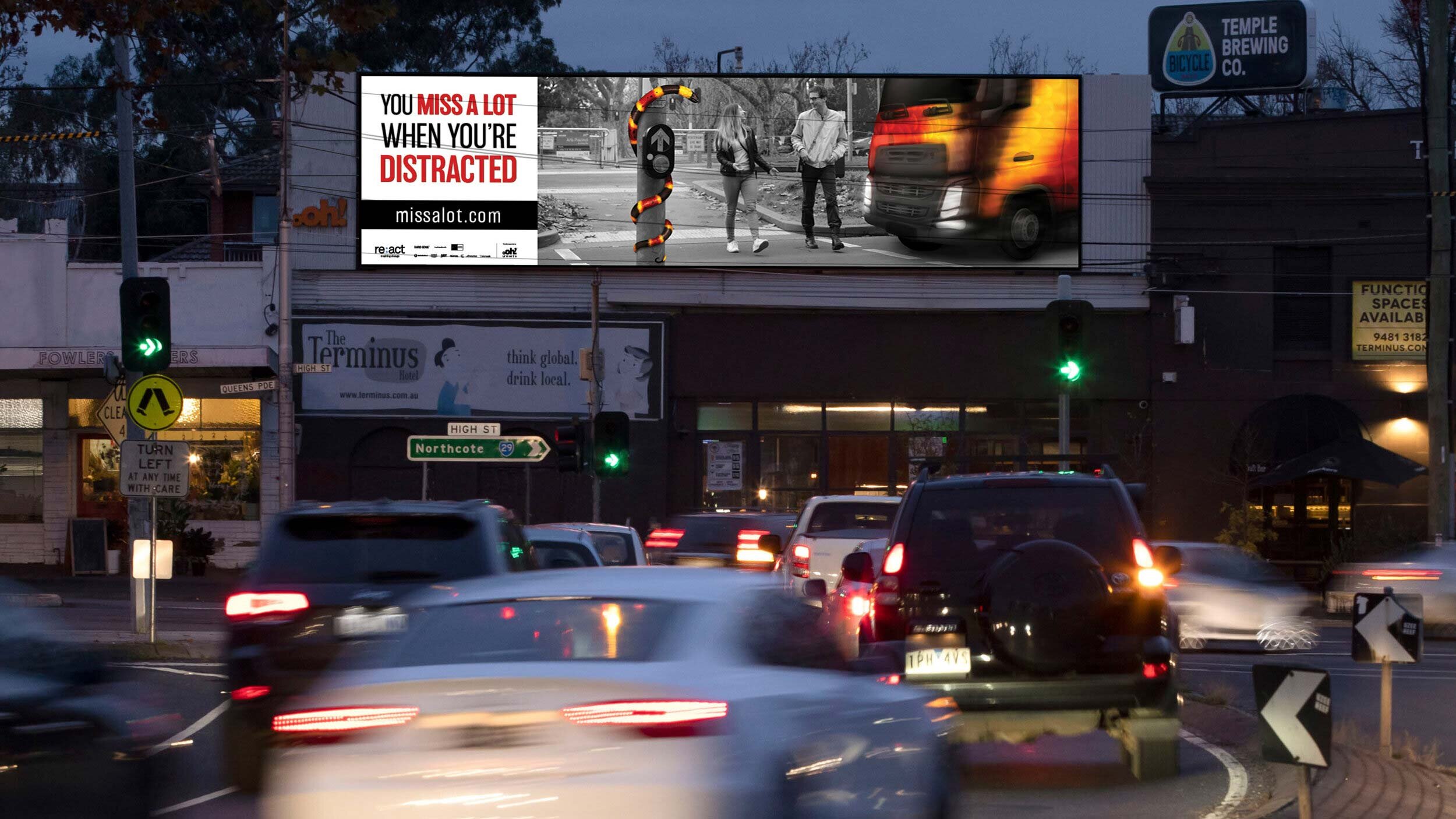
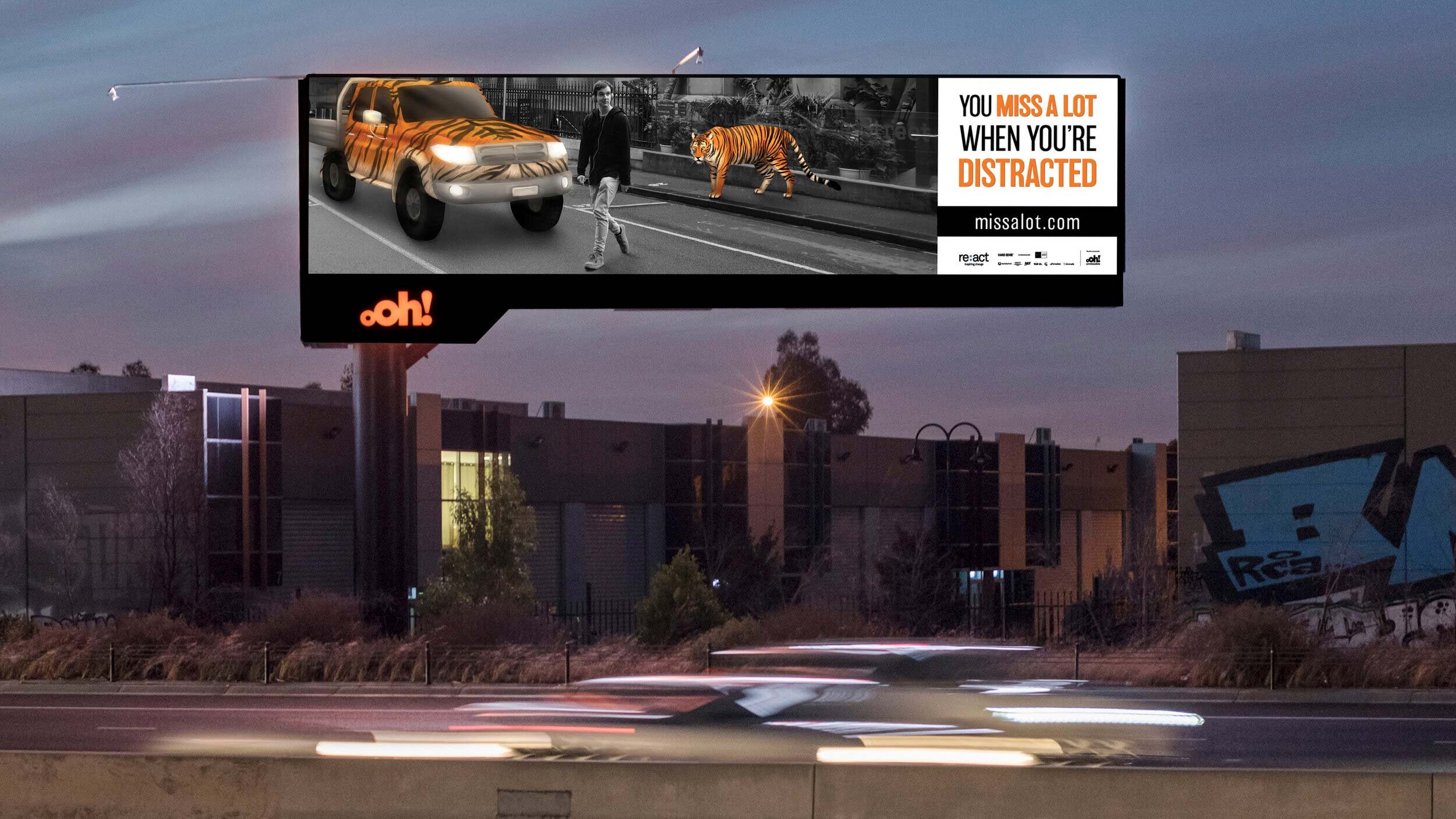
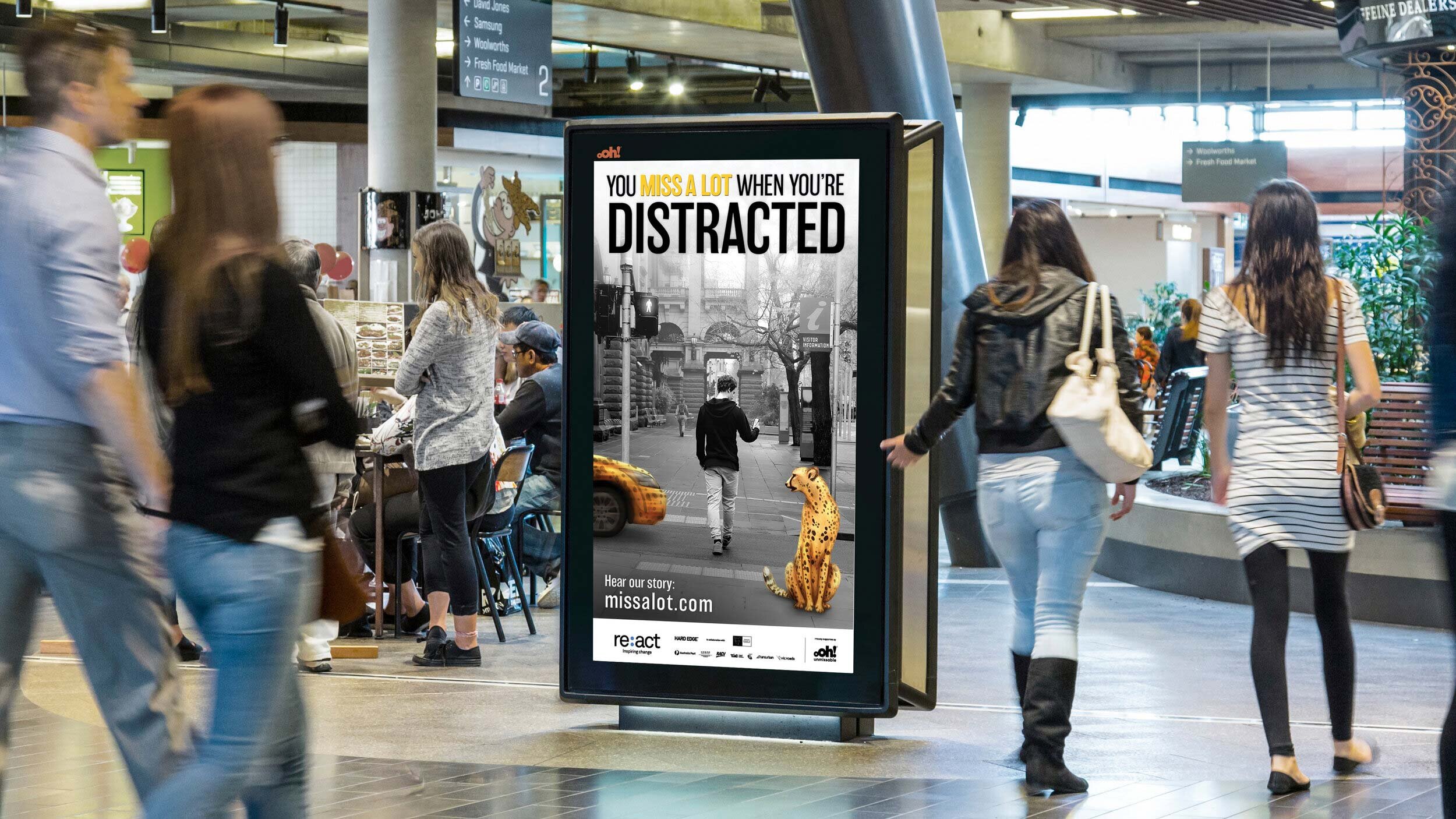
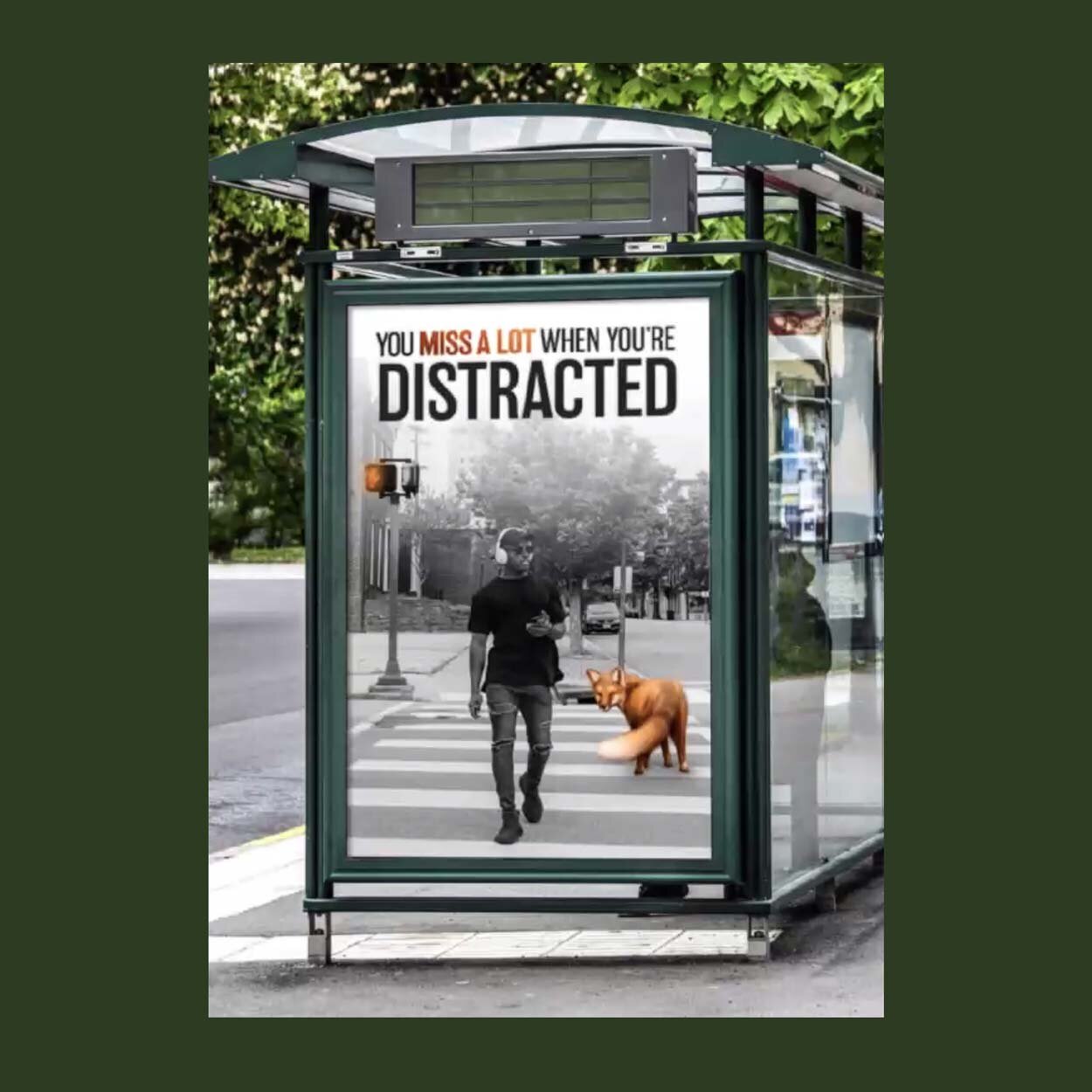
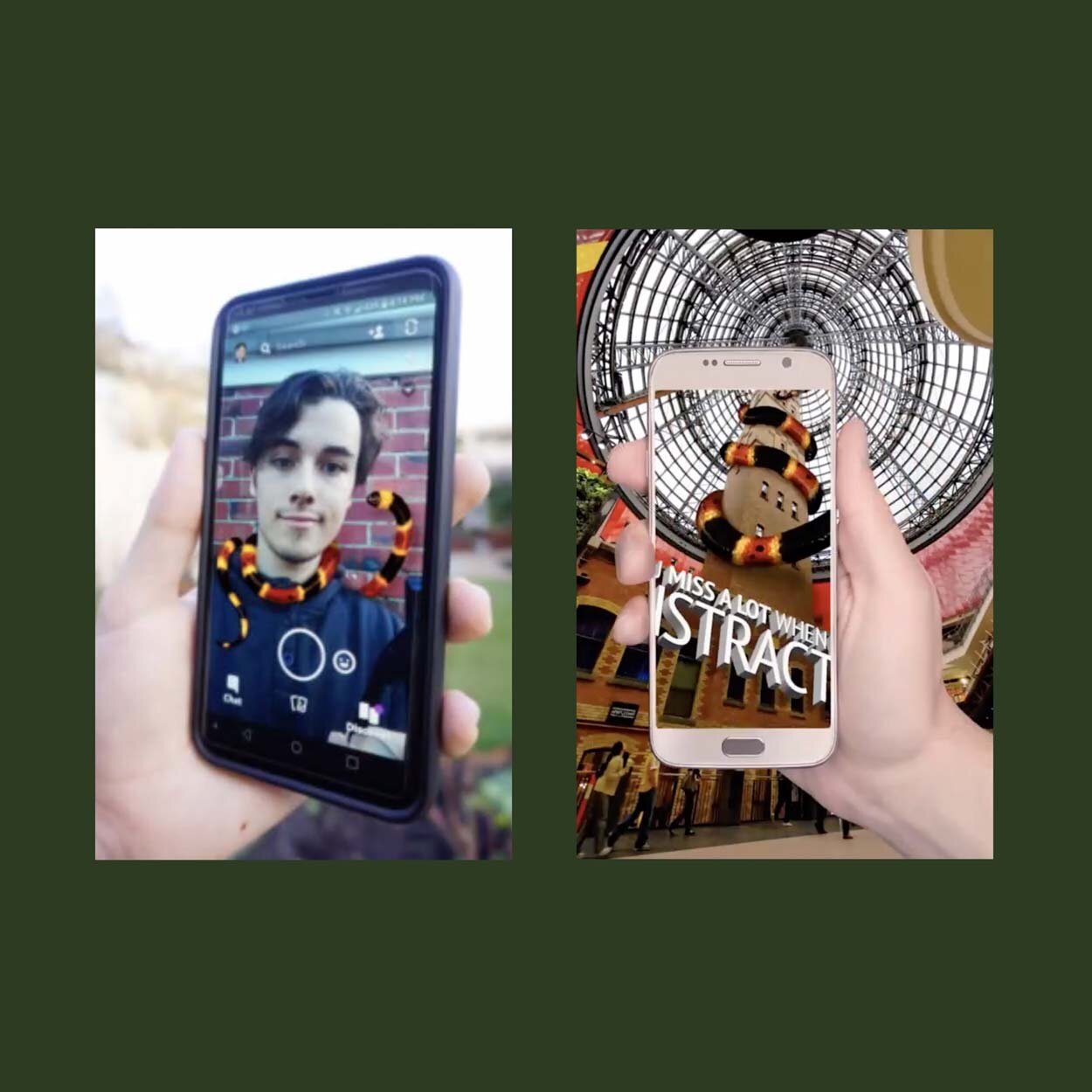
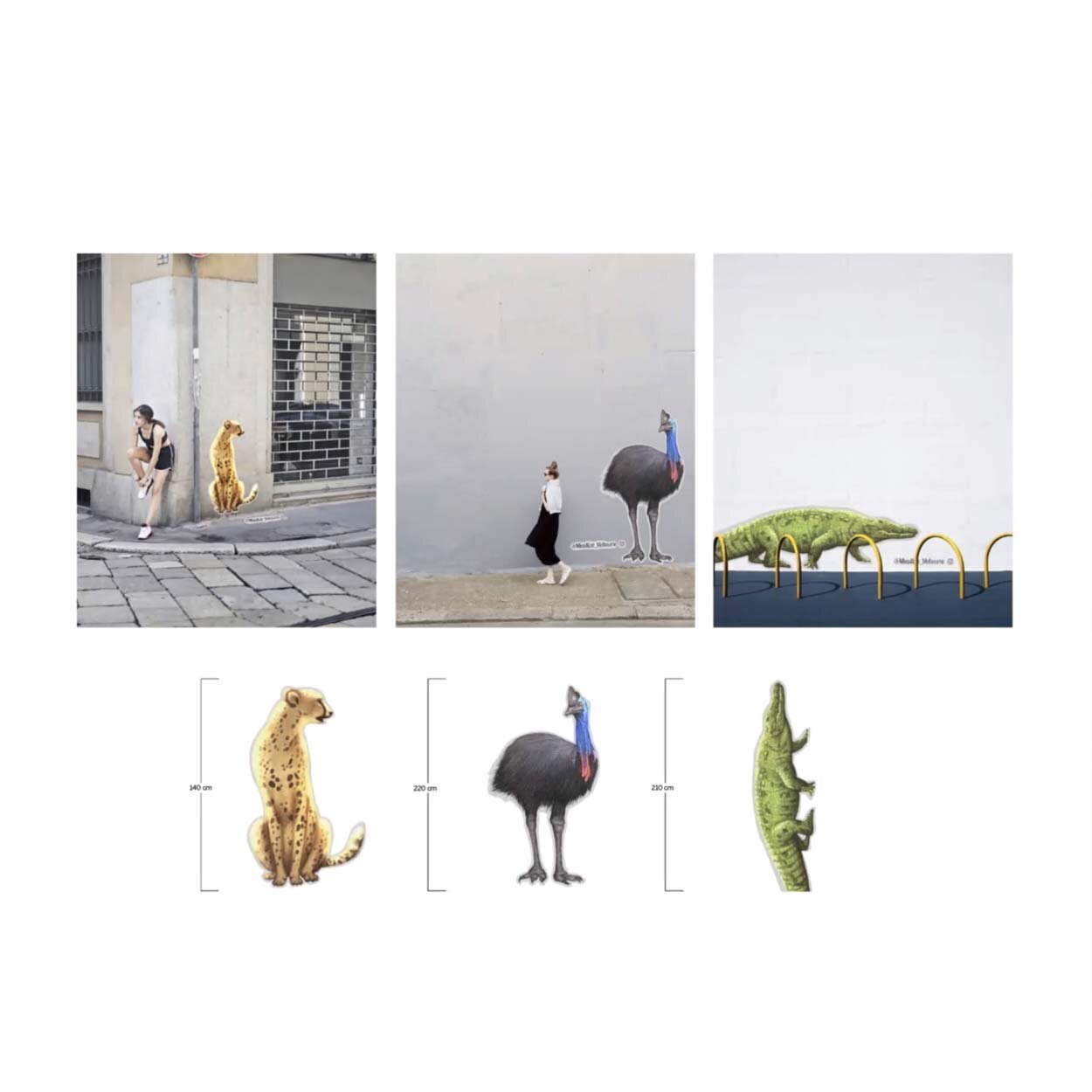
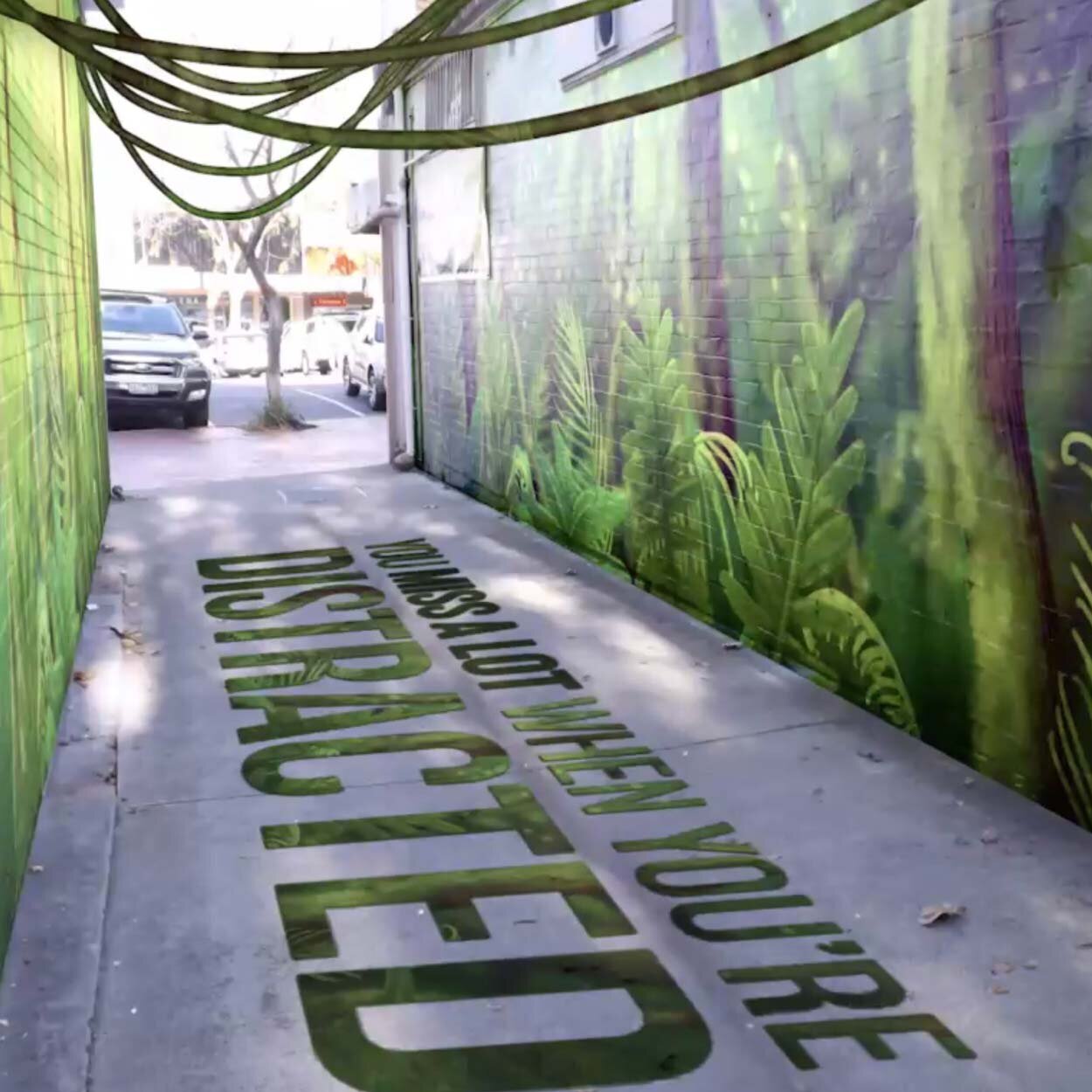
Laura Hughes, Caitlin Xavier, Stephanie Powell and Thomas Pritchard from Swinburne in Melbourne’s campaign “Miss A Lot” which was launched on October 5th 2020.

To keep up to date with the campaign head over to their campaign for more info on distraction on our roads.


selected campaign


Fantastic Melbourne-centric campaign on Vulnerable Road User distraction takes out this year’s selected campaign for Swinburne. Well done Stephanie Powell, Thomas Pritchard, Caitlin Xavier & Laura Hughes. We can’t wait to see this campaign activated in Melbourne oOh!media.


campaign presentations


The final campaigns presented by Swinburne students. Fantastic research, thinking, and insights. Well done by all but especially the students. They delivered quality work without blinking an eyelid in spite of today’s challenging times.


q&a session


The collaborative approach of Re:act among students, lecturers, and partners remained strong in Melbourne's Q&A session. Proving we can adapt and keep things moving, just in a different way, not necessarily with compromise.


digital assets


2023

Safer Speeds

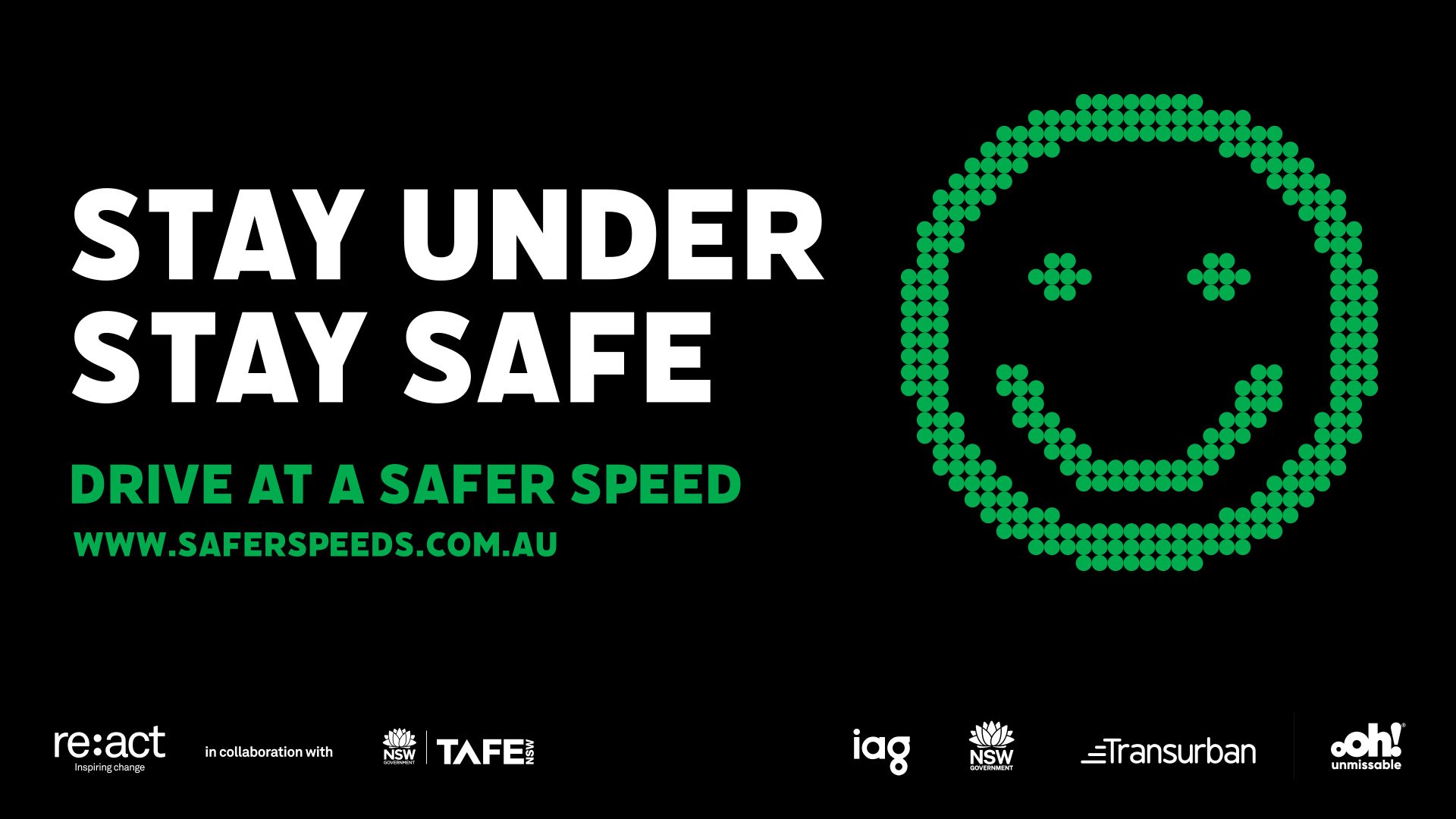
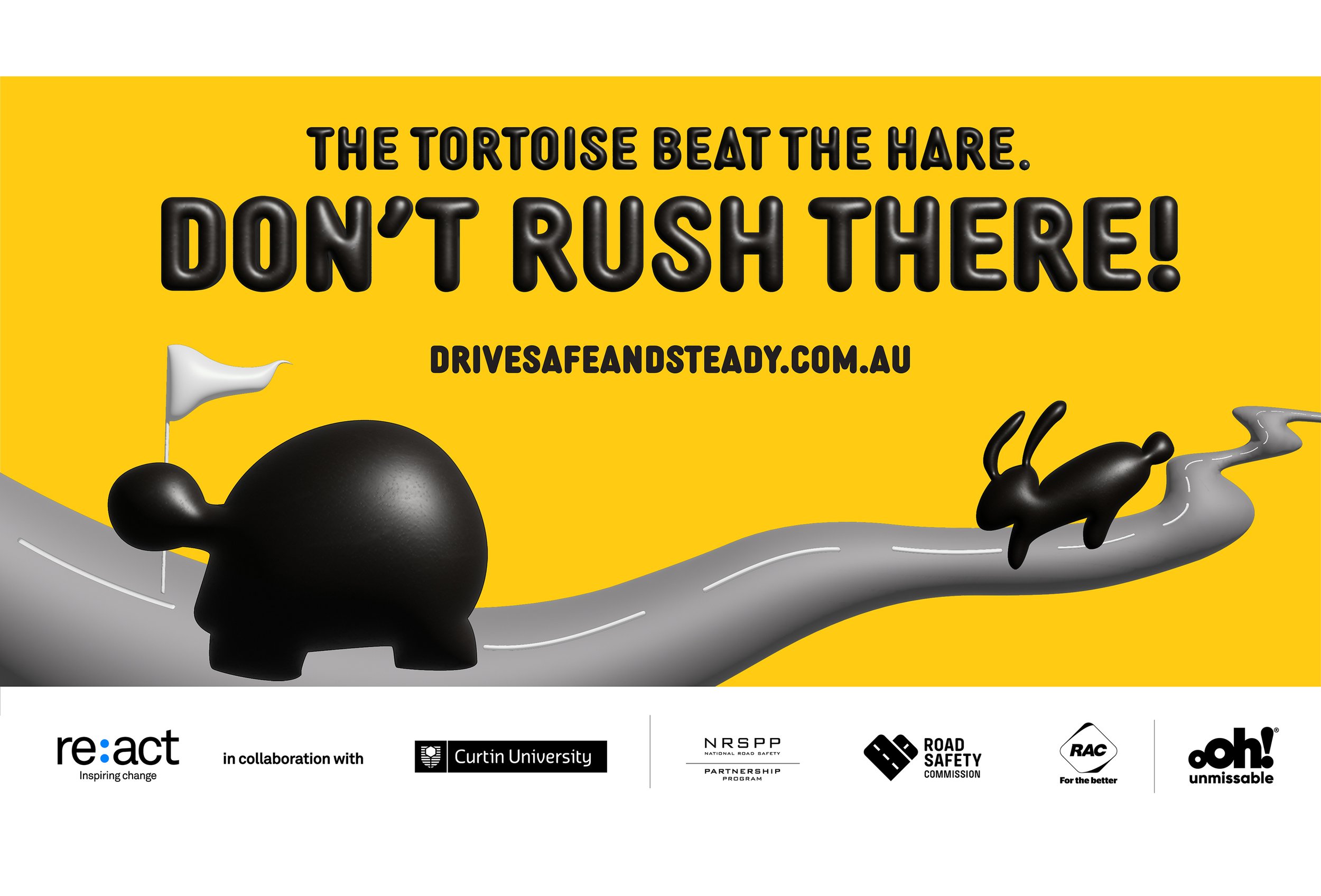
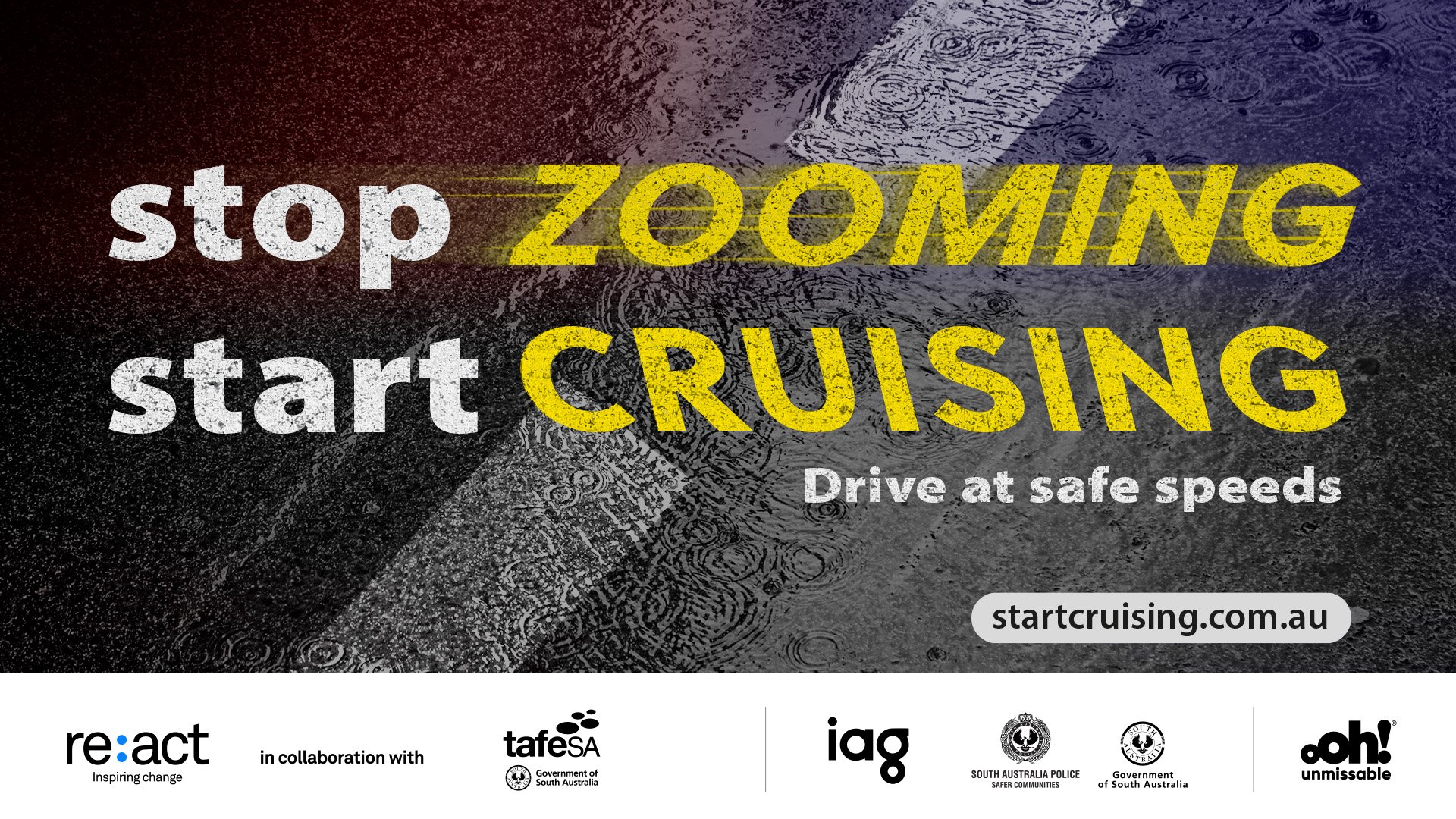
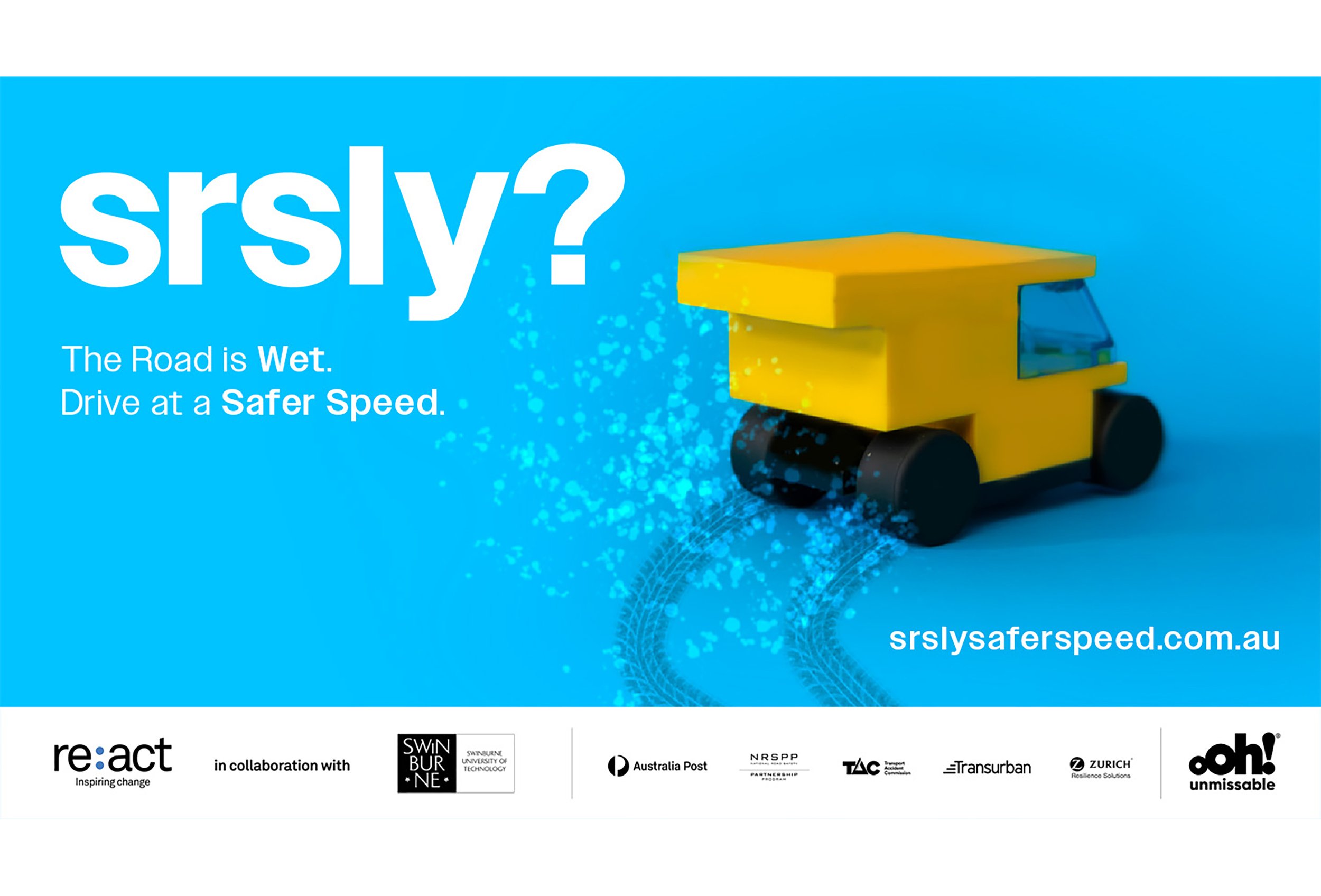
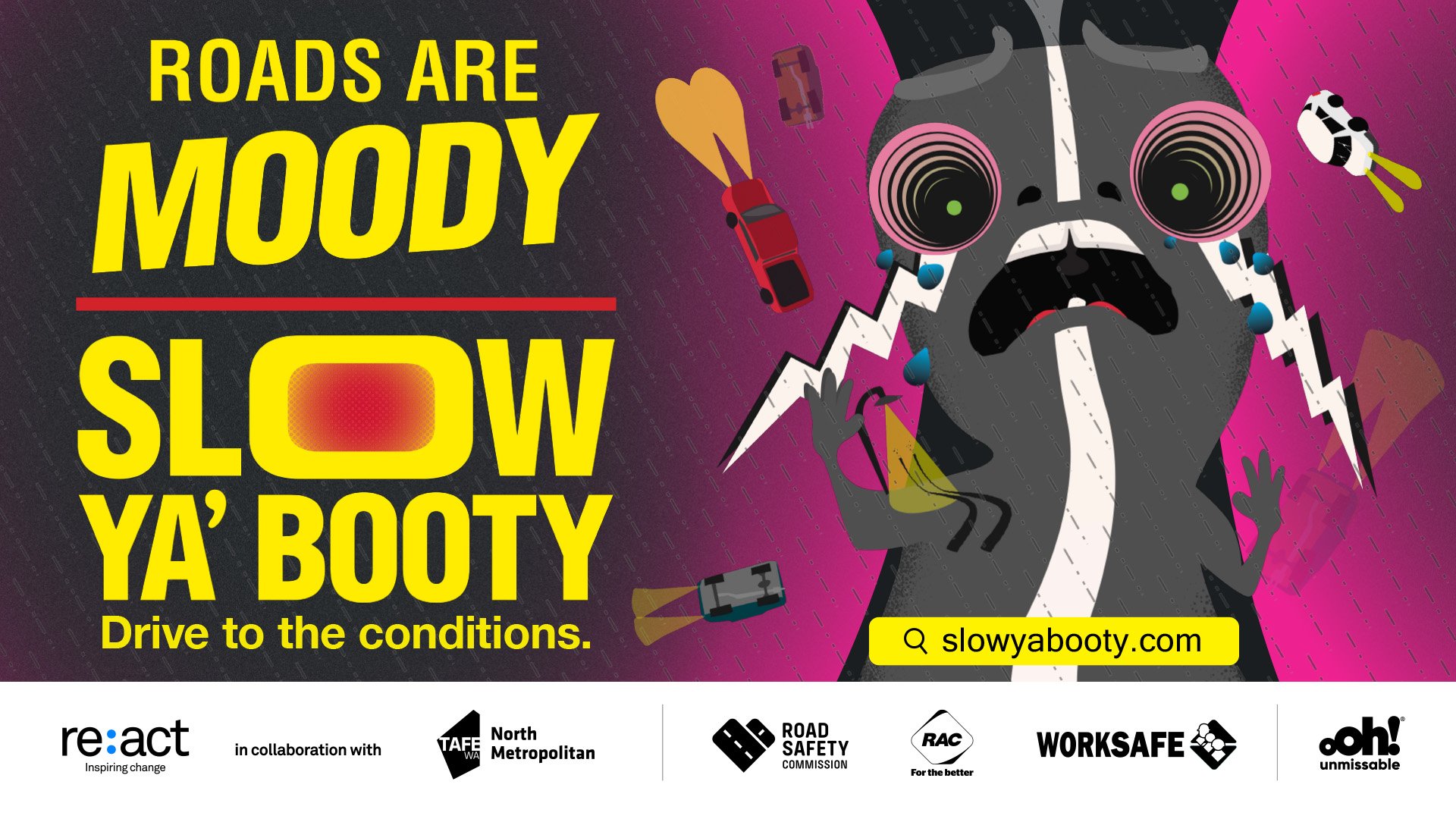
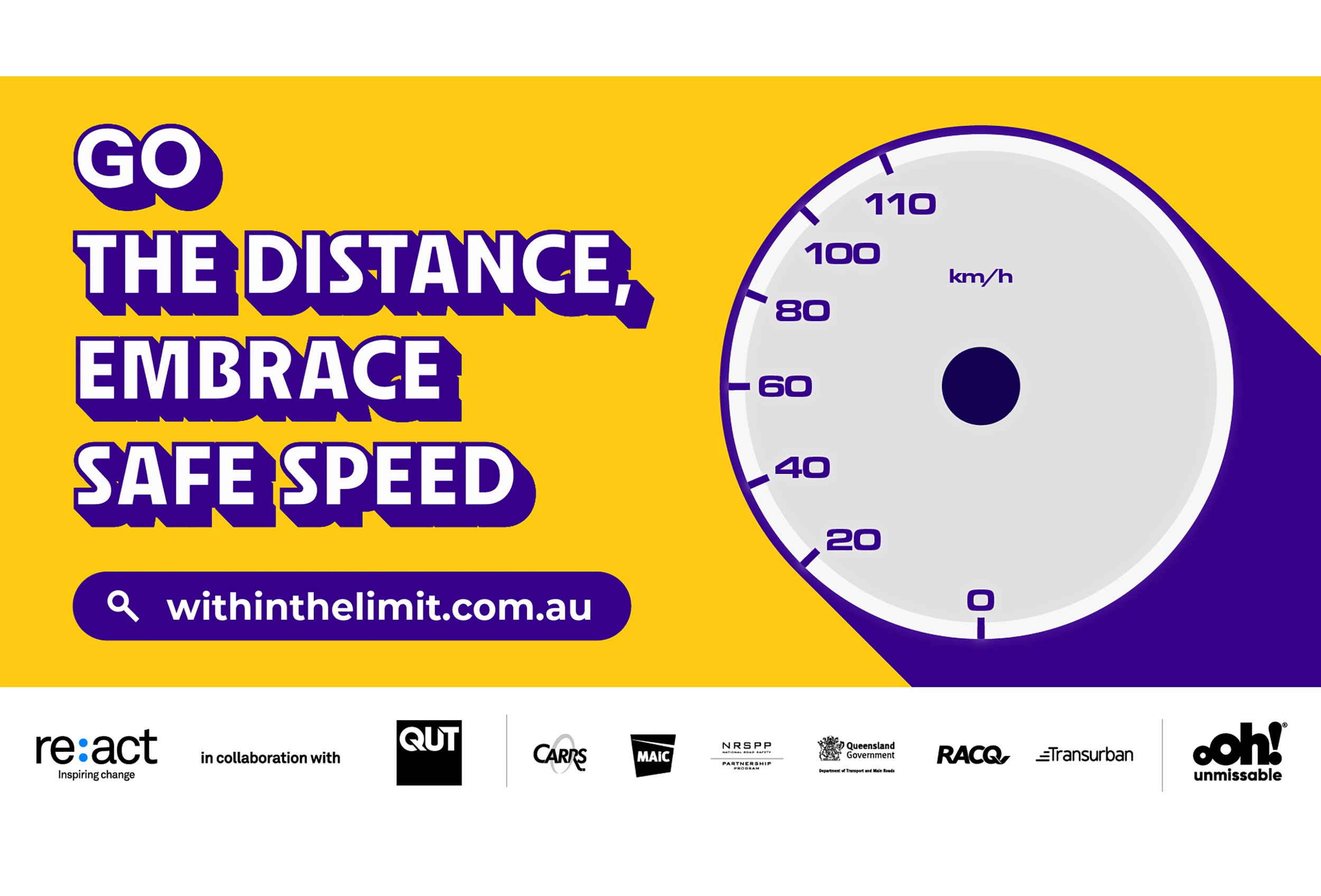
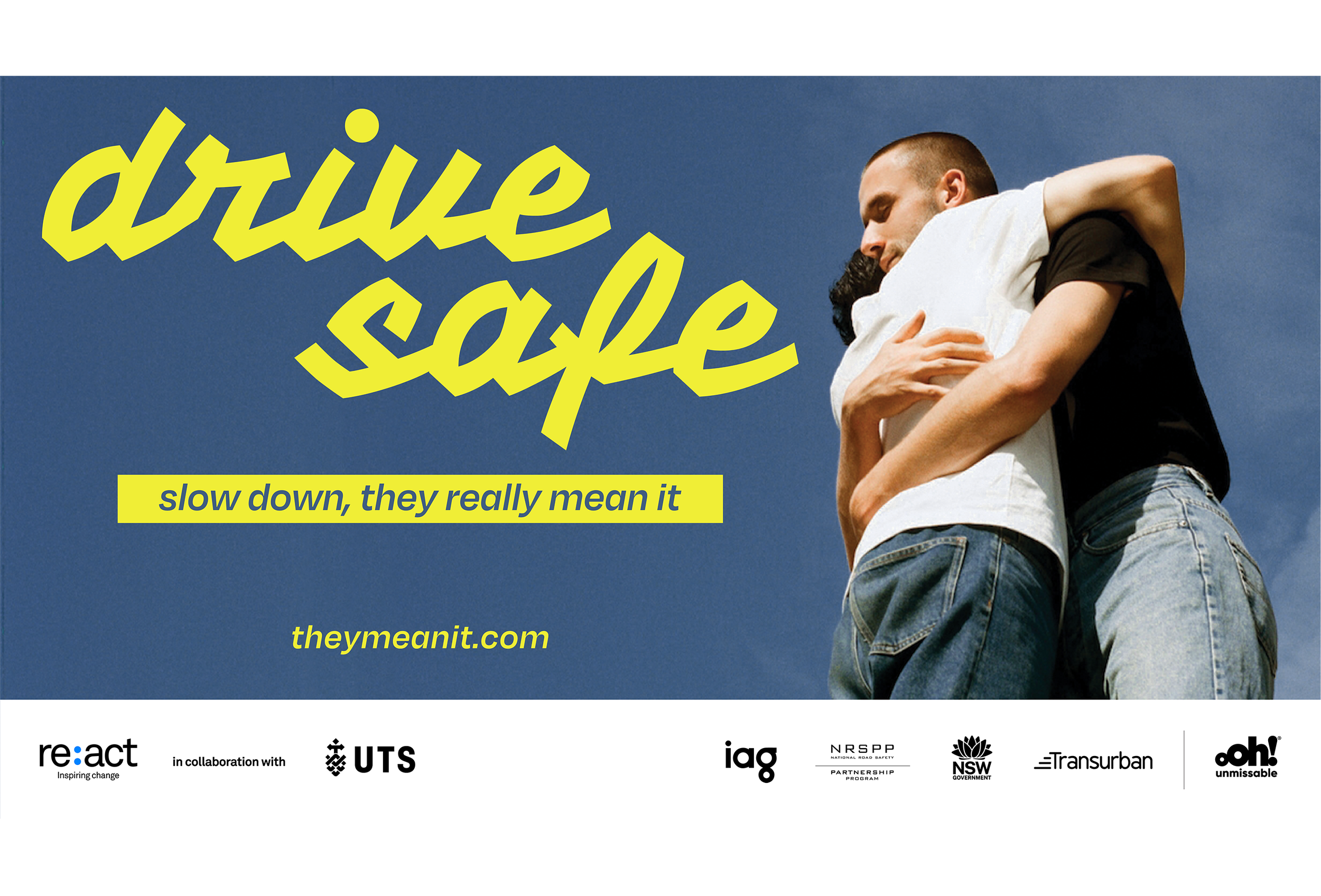
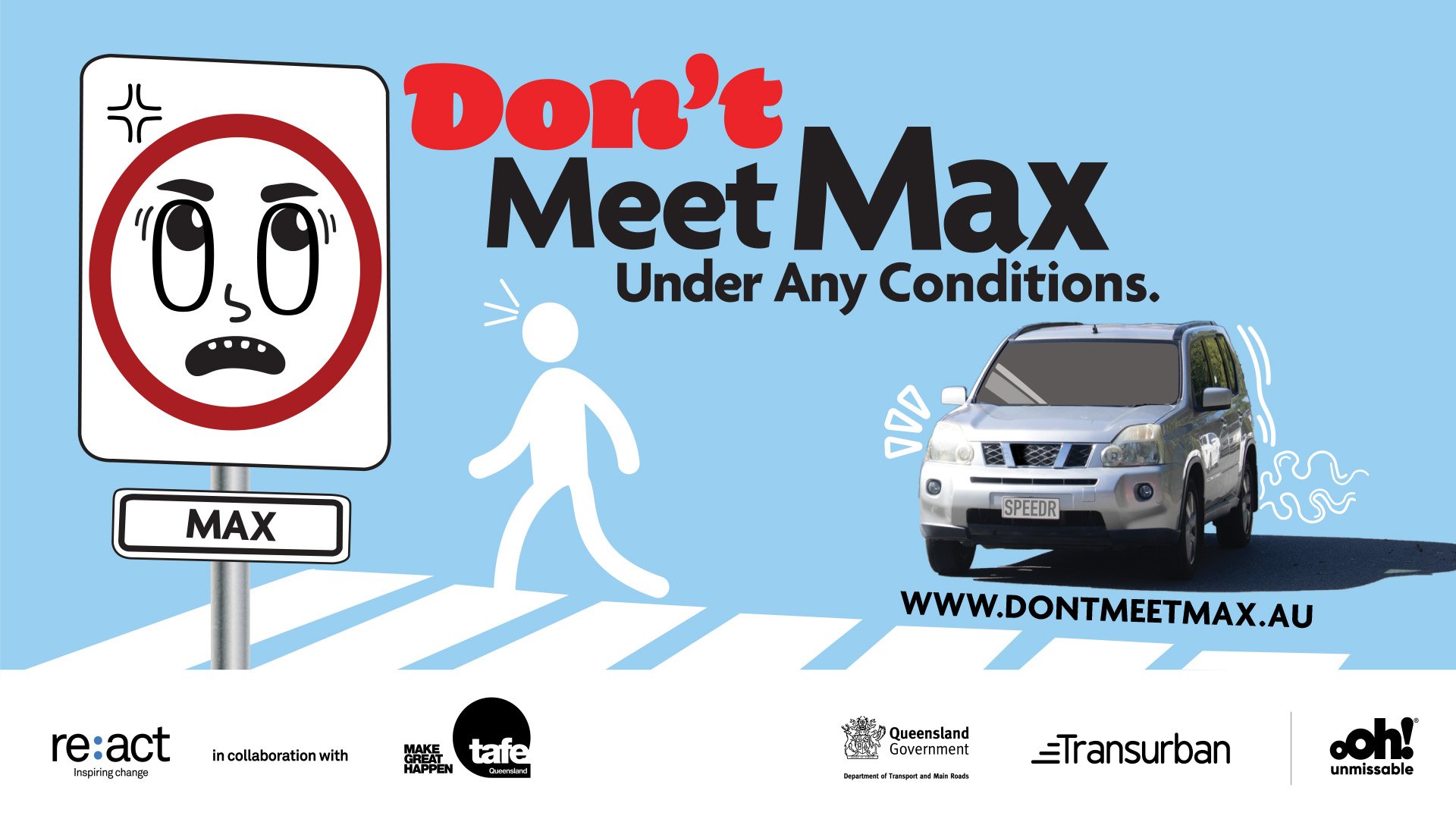
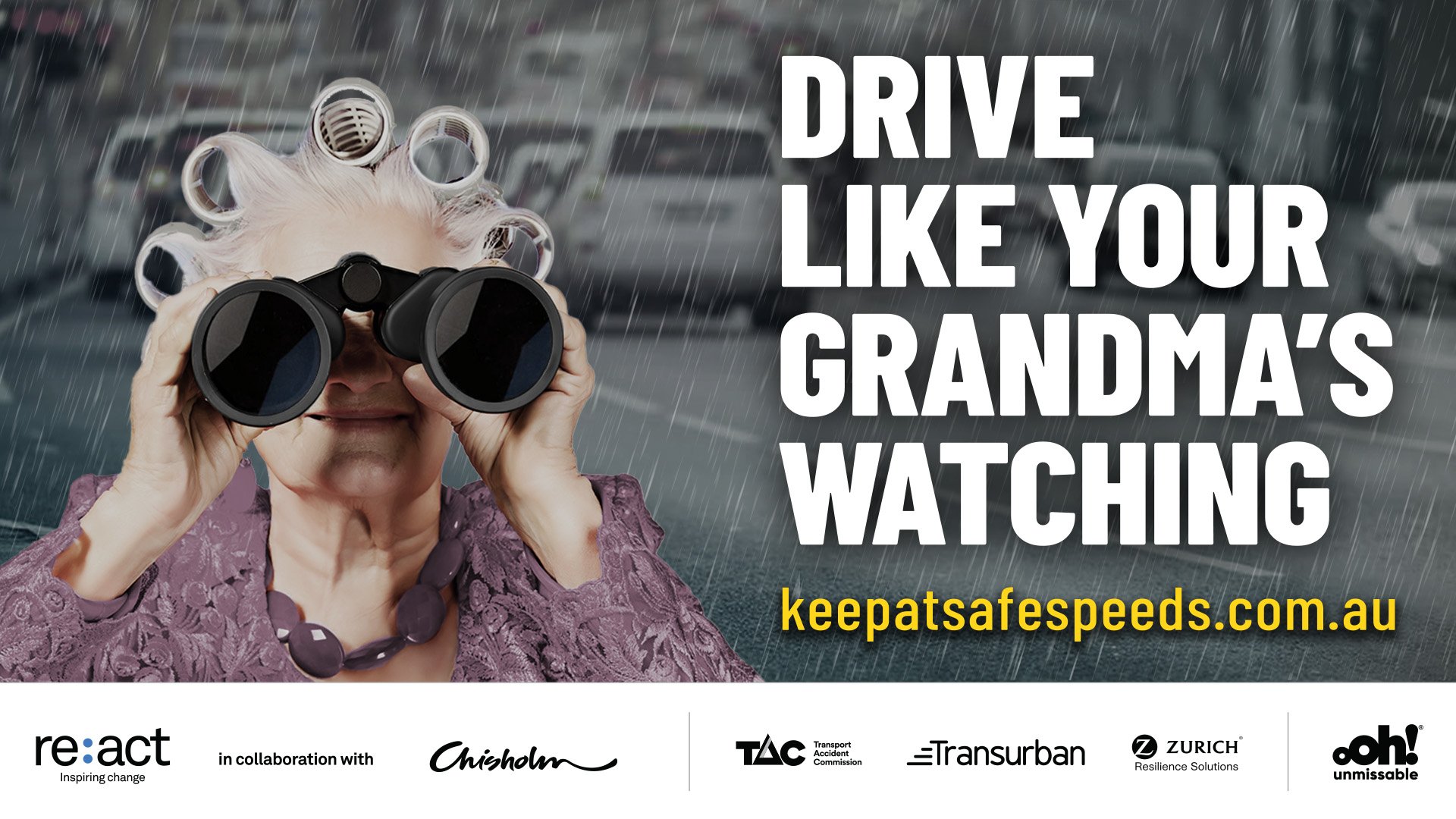
The 2023 Re:act program in Australia challenged university communication and TAFE graphic design students at nine tertiary institutions to create campaigns that educated their peers about safer speeds. 

Campaigns took a fresh and positive approach to increasing young drivers’ awareness that speed limits are set as a maximum for the protection of all road users and that speed impacts crash risk and severity of outcomes, encouraging young drivers to choose ‘safer speeds’.


Institution Partners


Program Partners


National Media Partner


2017

The morning after alcohol

Many of us enjoy a good night out with a few drinks and good company. Heavy drinking and/or drinking late into the night can easily leave you with blood alcohol levels that are too high to drive legally or safely. The 2017 brief was to increase awareness of this risk in the 18-25 year old demographic and create a behaviour of considering an alternative mode of transport the morning after alcohol.

 
Re-act_Partner_Logos-Negative-Melbourne_Blk_2017.png


2017.jpg


"So rather than automatically getting behind the wheel, we want this campaign to make young people think about whether they’re still affected by alcohol and shouldn’t be driving."

– Andrew Hardwick, Hard Edge


the pitch


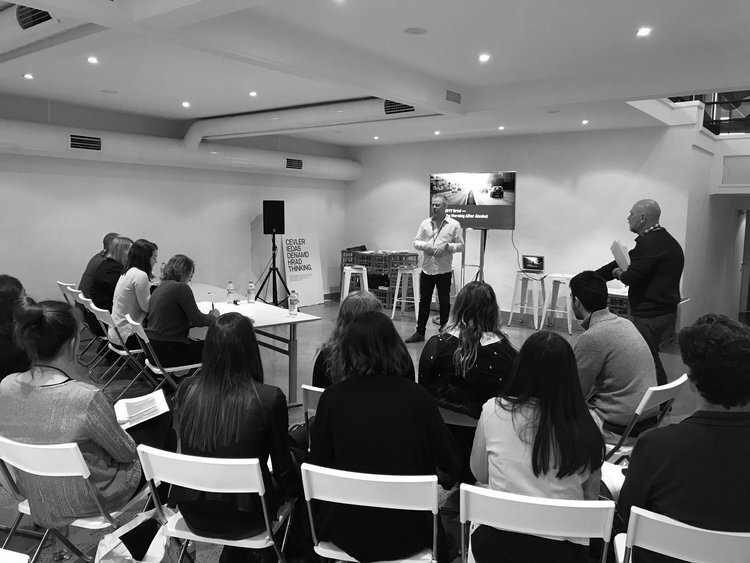
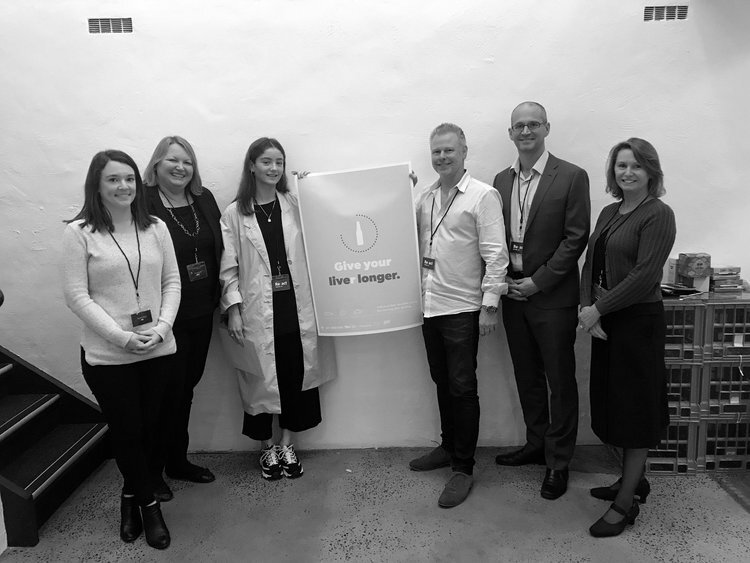
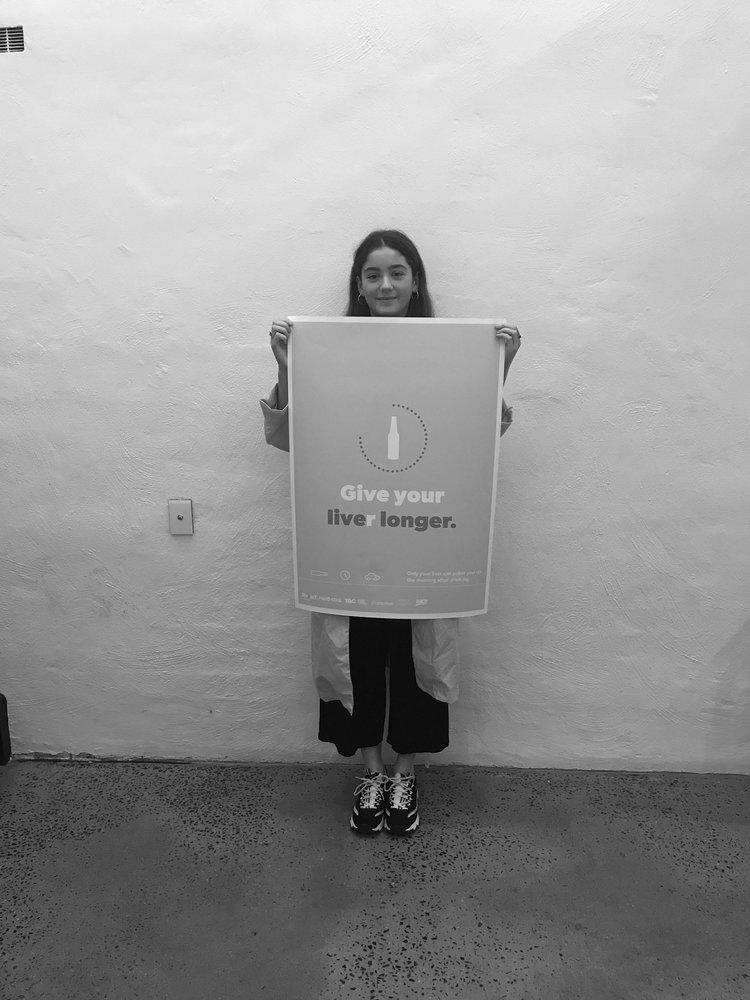
The 2017 Re:act pitch day followed the success of the previous year, with a range of awesome campaigns presented by the students. Lucy Boehme took out top spot with her clever 'Give Your Liver Longer' concept. 


resources


The following resources from our partners provide valuable insight into the issue of Driving the Morning After Alcohol and formed an important part of the creative brief.


2019

Vulnerable road users and drivers: shared responsibility

A vulnerable road user (VRU) is any pedestrian, cyclist or motorcyclist who uses or interacts with the road system. With less protection than motor vehicle occupants, they are more vulnerable in a crash to serious injury or death. With an increase in the number of VRUs on our roads and streets, and in urban traffic density, interactions between VRUs and other vehicles are increasing. Re:act 2019 was all about increasing the sense of shared responsibility between different road user groups and changing behaviour to reduce crashes involving VRUs.


2019.gif


Cyclist deaths on Australian roads in 2017/18 increased by 80% compared to the previous year


changing their behaviours


See the impact Re:act had on participants’ attitudes.


“It is UTS’ first year running the program and it has been such a great opportunity for students to consider real-world problems and to collaborate with industry professionals.”

– Nicola Hardcastle, Lecturer Visual Communication Design, UTS


universities

The universities supporting Re:act 2019.


resources


These resources, shared by re:act 2019 partners, helped shape the creative brief. They provide valuable insights into the issue of vulnerable road users and shared responsibility.


media releases


2025

Chile

Helmet Use

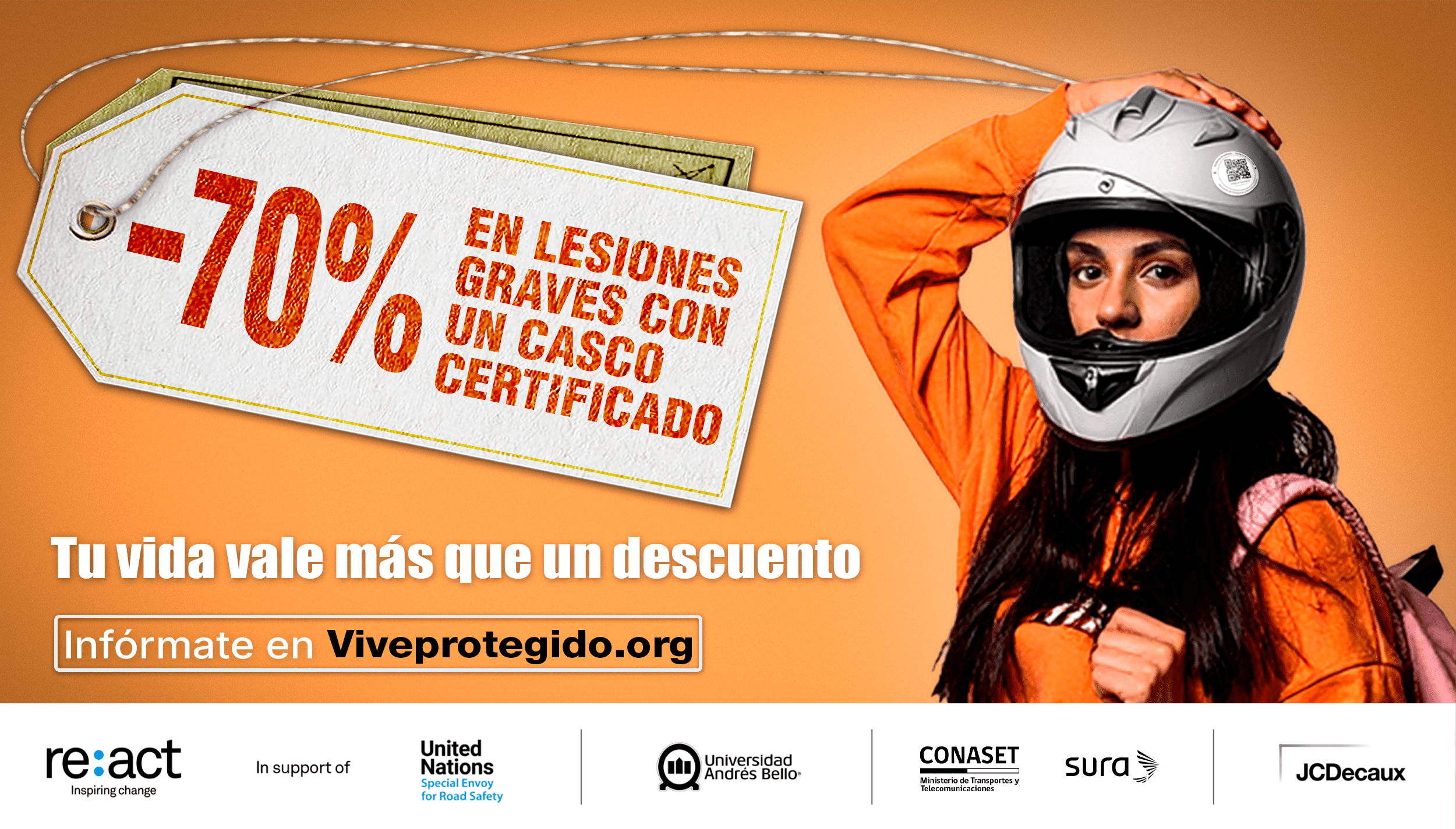
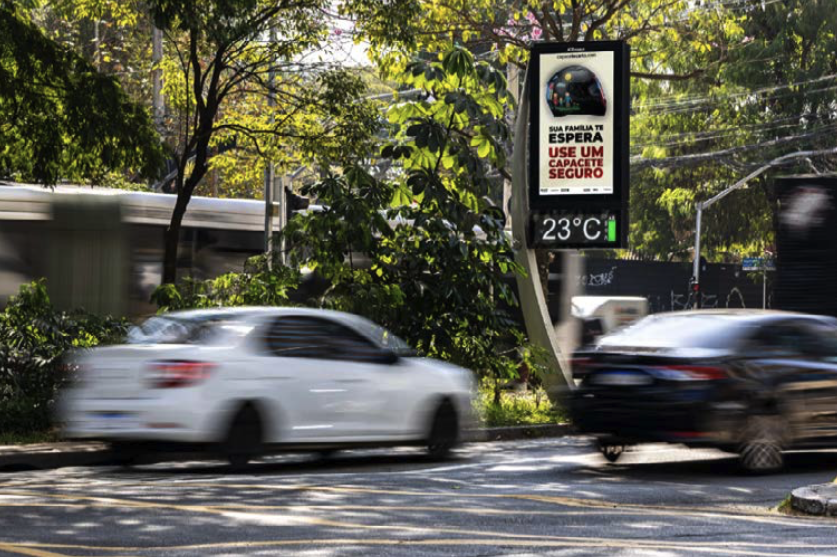
The 2025 Re:act program in Chile challenges university students to create positive campaigns that raise awareness among 17-25 year old motorcyclists of wearing compliant helmets and ensuring their future behaviours are safe.

The 2025 program topic is in support of the activities of the Secretariat of the United Nations Secretary-General’s Special Envoy for Road Safety and the Envoy’s Safe and Affordable Helmets Initiative.


Institution Partner


Program Partners


National Media Partner


2026

Brazil


Helmet Use

Bruno Maranhao, Helio Navarro and Eric Brown

The 2026 Re:act program in Brazil challenged university students to create positive campaigns that raise awareness among 17-25 year old motorcyclists of wearing compliant helmets and ensuring their future behaviours are safe.


Institution Partner


Program Partners

 
Autoliv, Uber
 

National Media Partner

 
JCDecaux


2026


Safe Use of eMobility Vehicles

Leo Owusu

 Leo Owusu

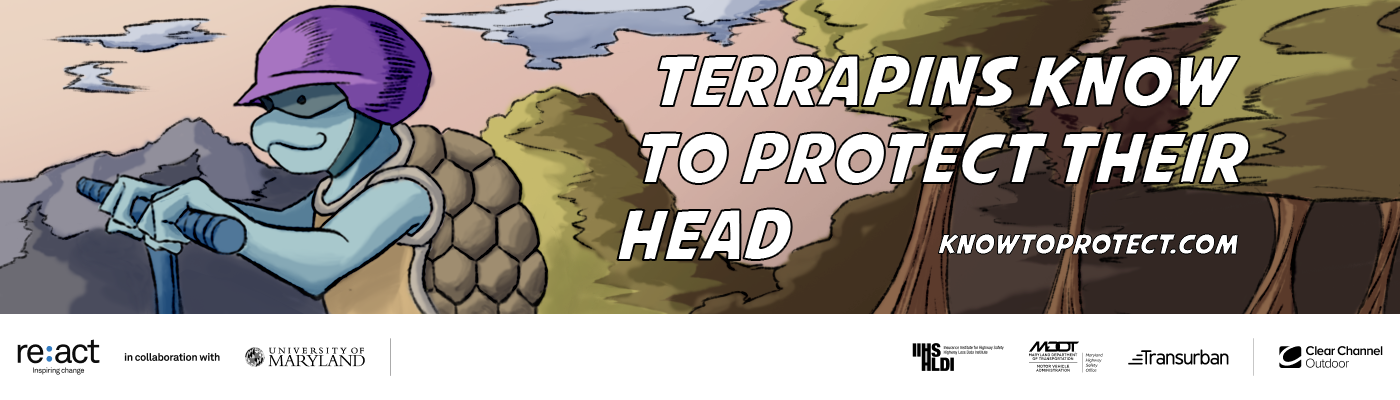
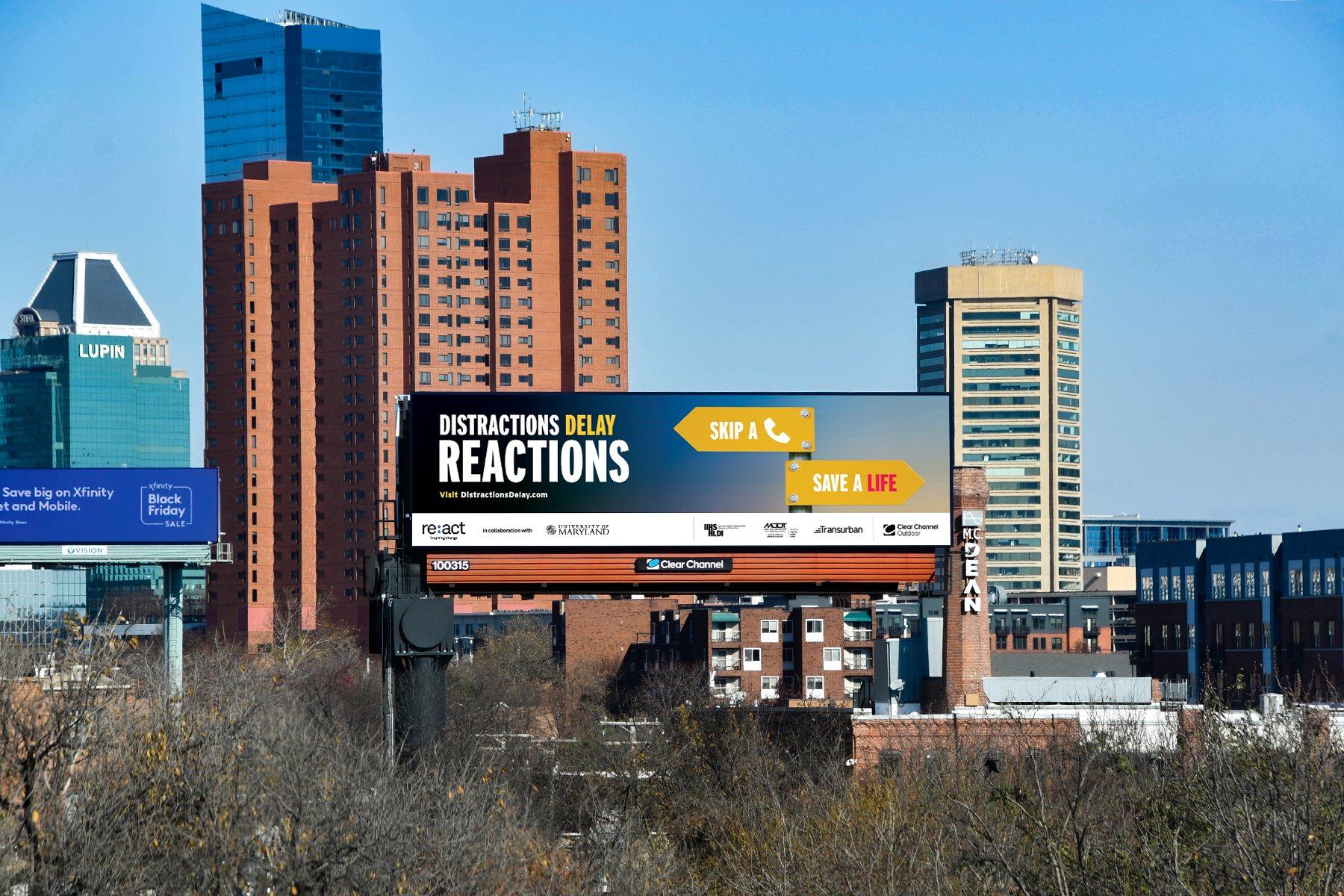
The 2026 Re:act program in the United States challenged Design Communication students to create positive campaigns that raised awareness in their peers of the safe use of eScooters and eBikes.

Students were asked to focus on why it’s important all eVehicle users wear a helmet and the benefits of doing so, with campaigns aiming to promote safe behaviors around a serious road safety risk for our 17-25 year old target audience.


Institution Partner


Program Partners


National Media Partner


2026

Safe following distance

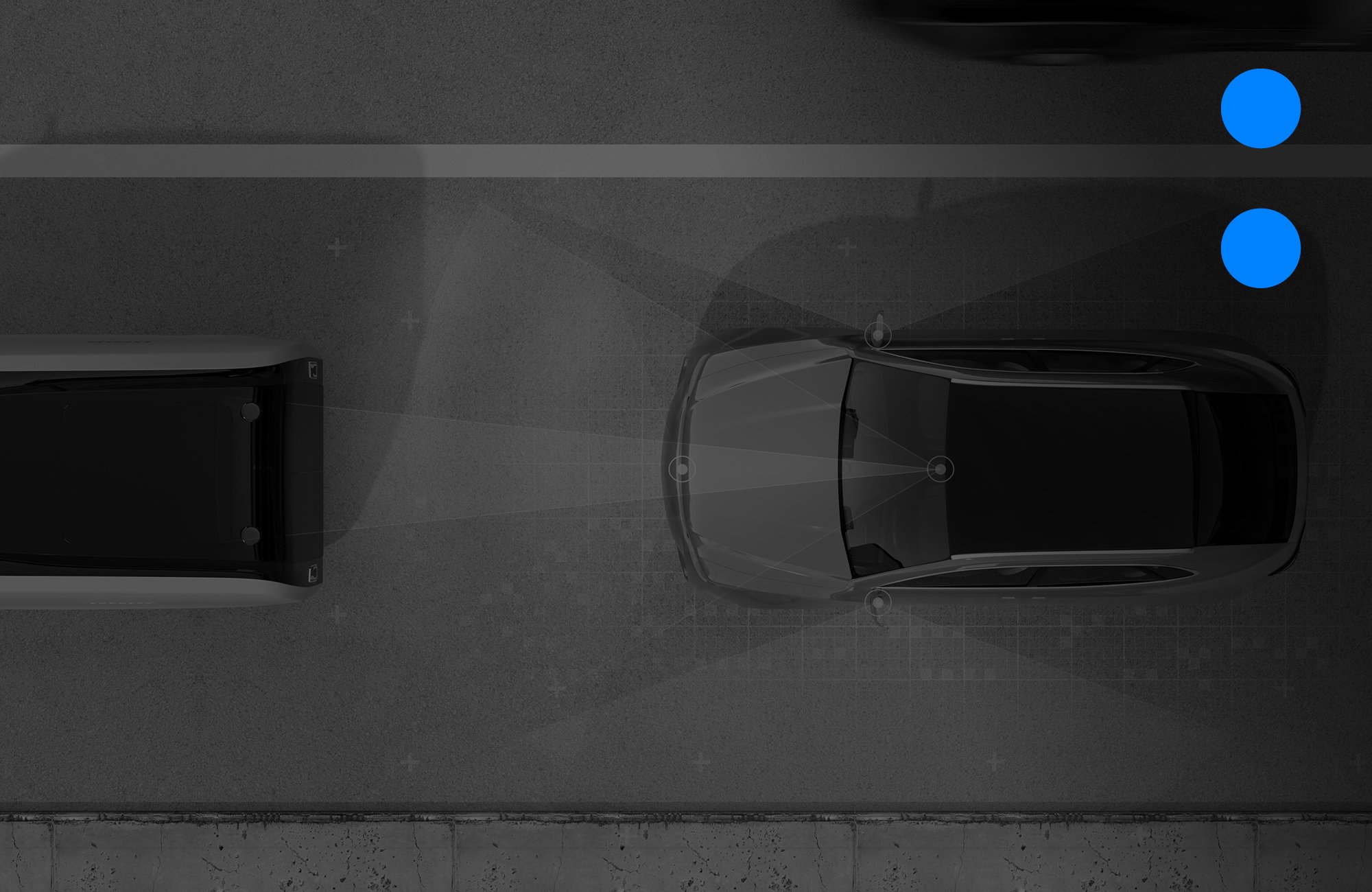
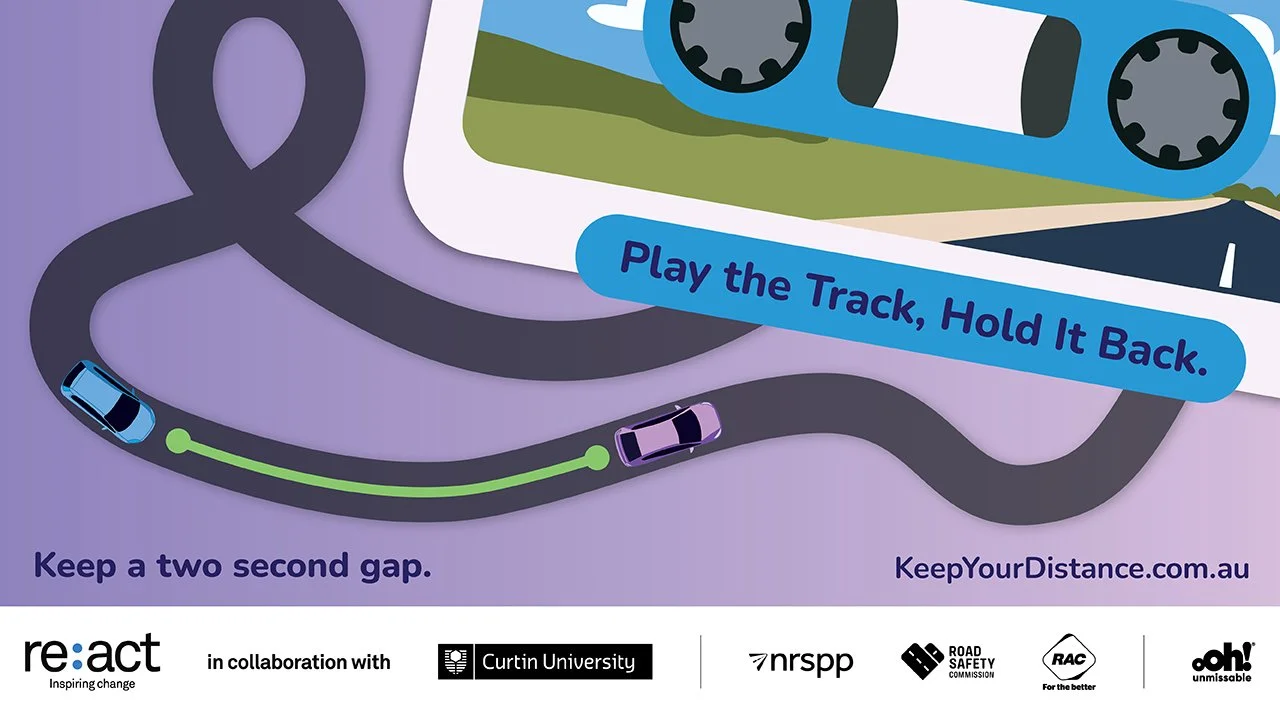
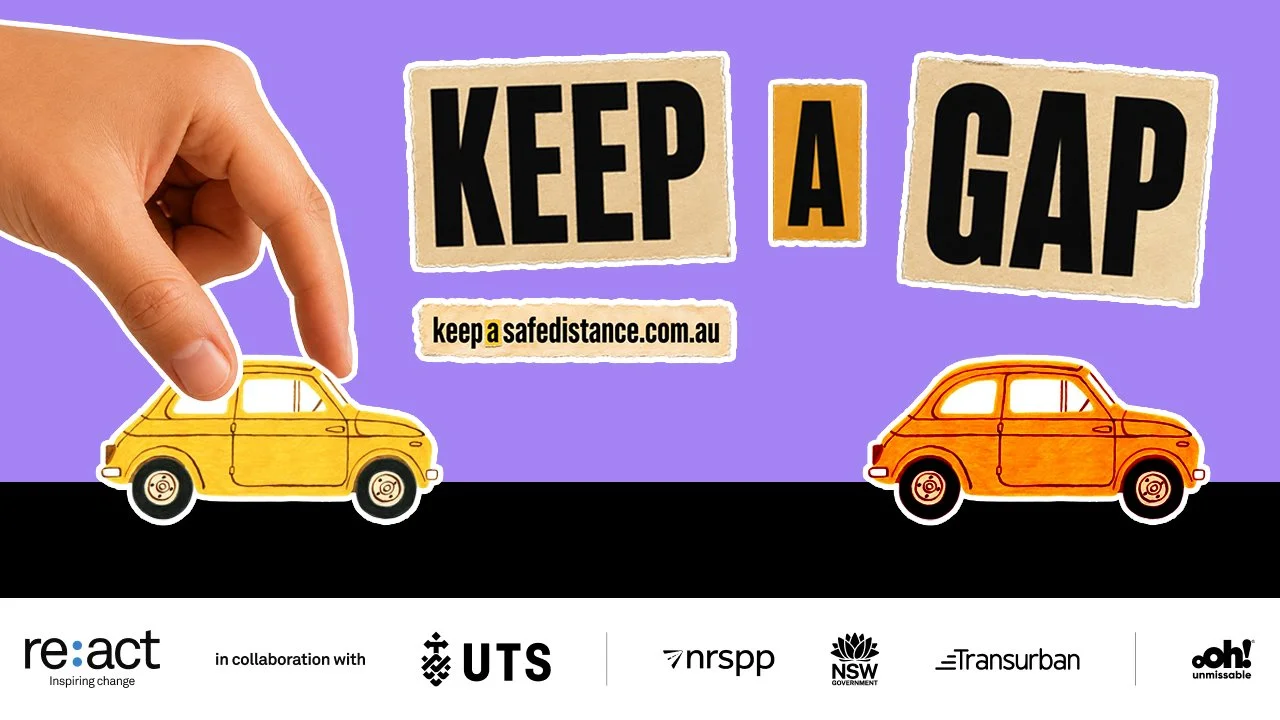
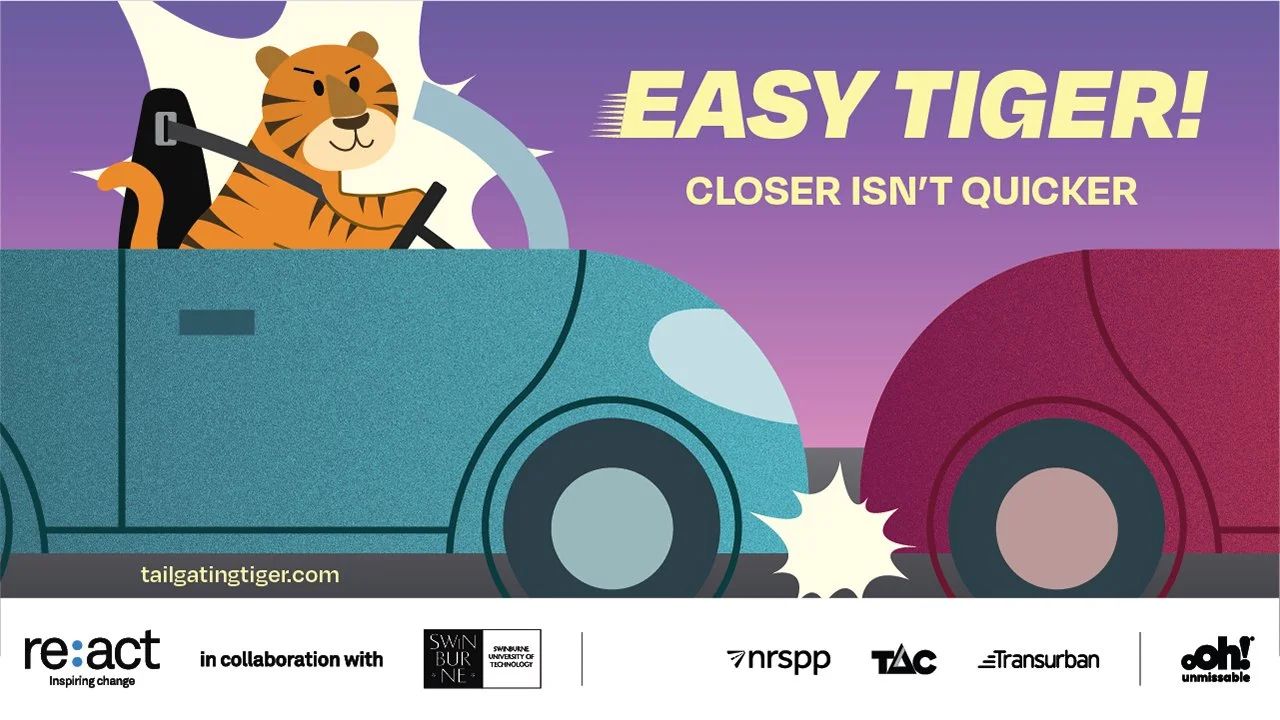
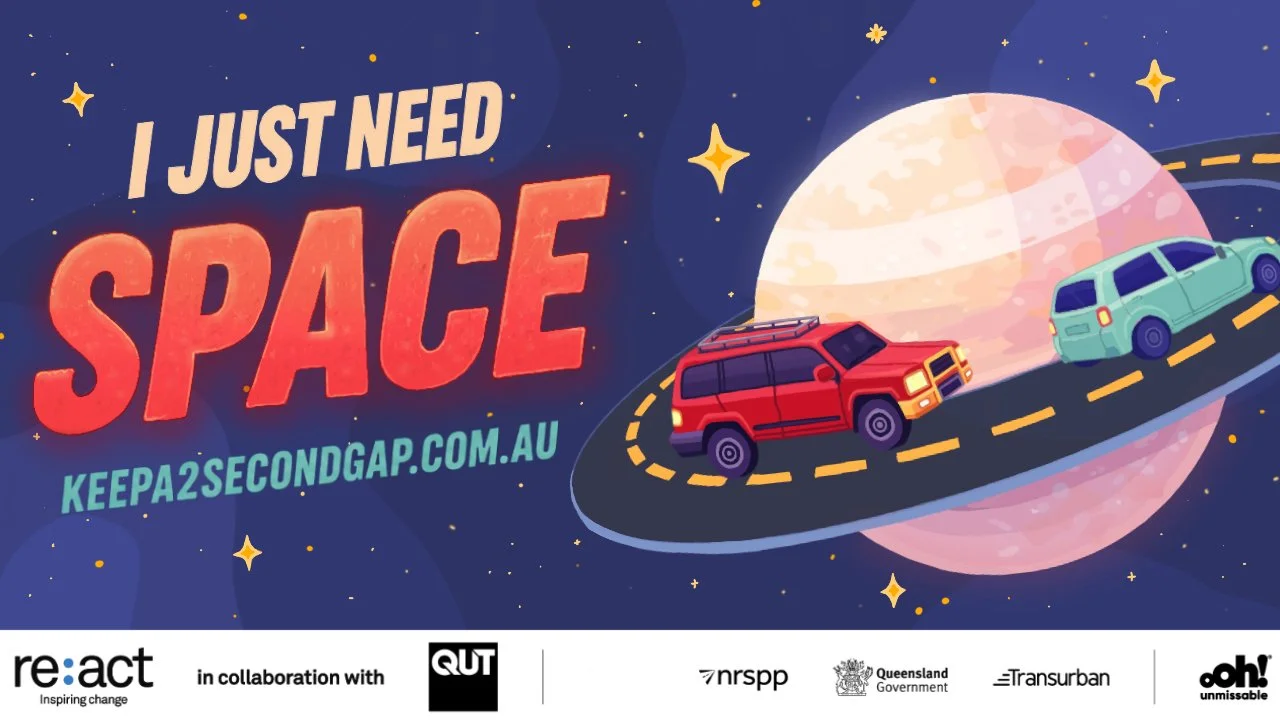
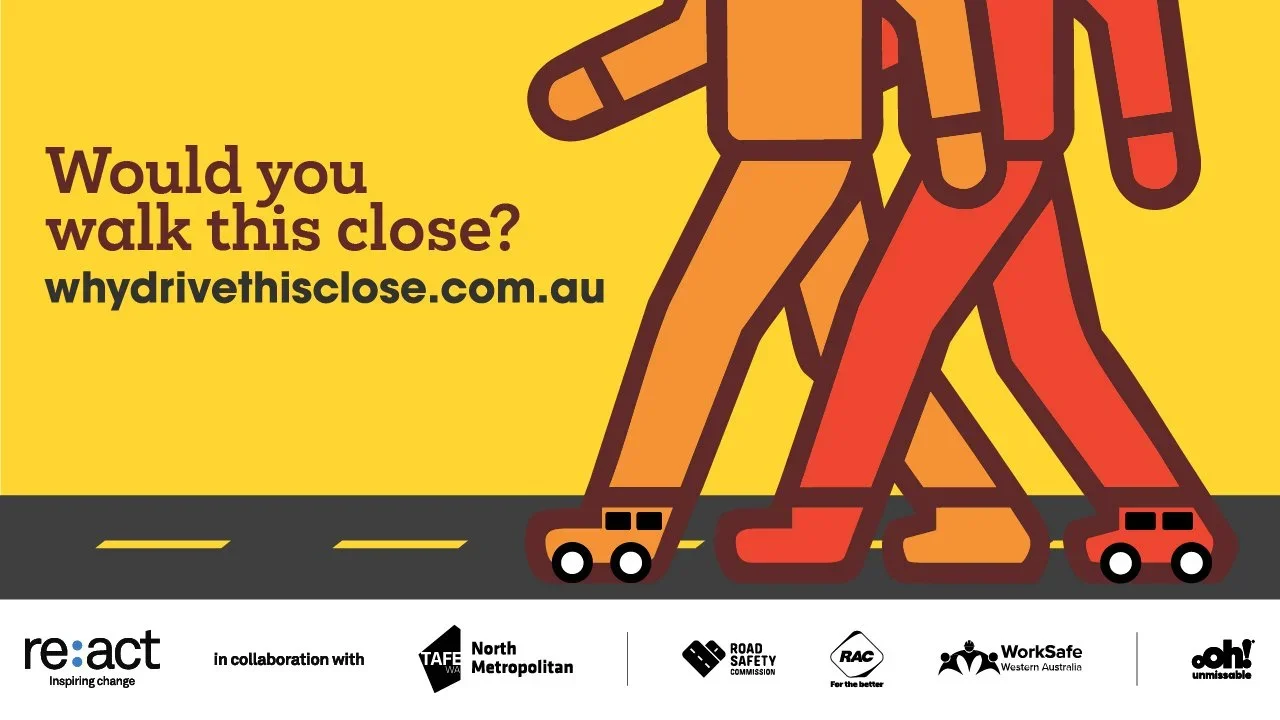
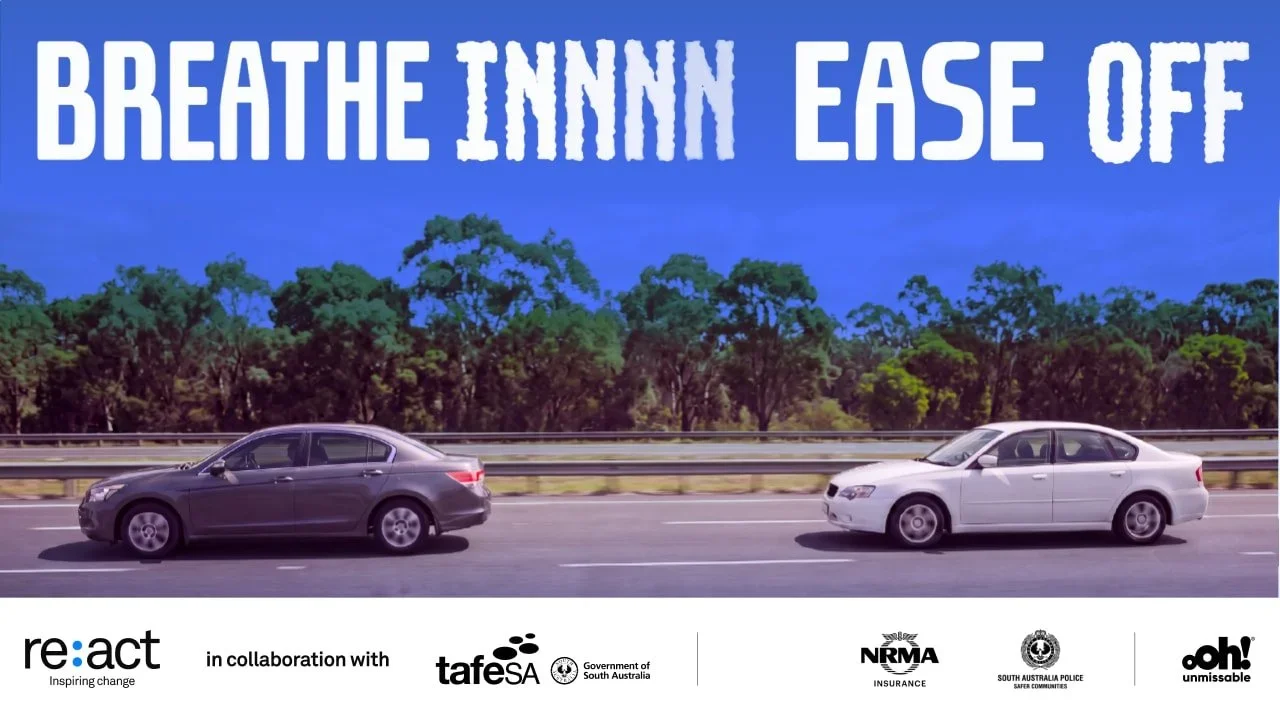
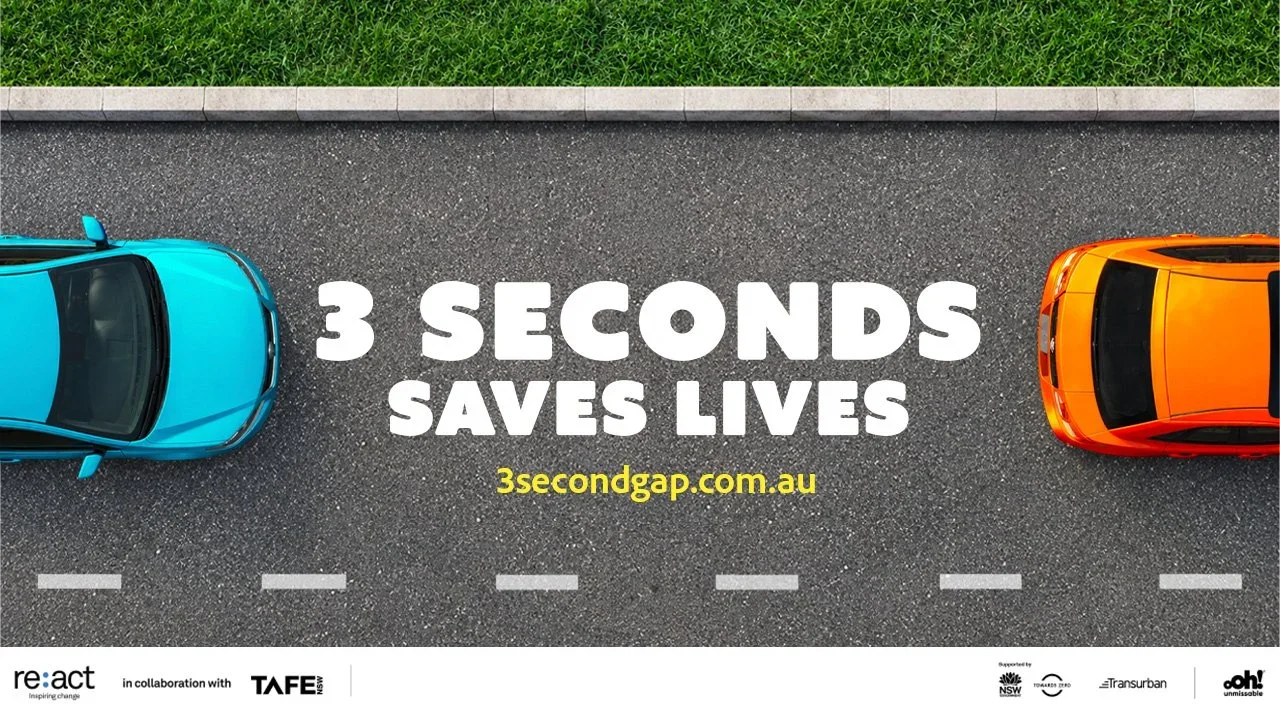
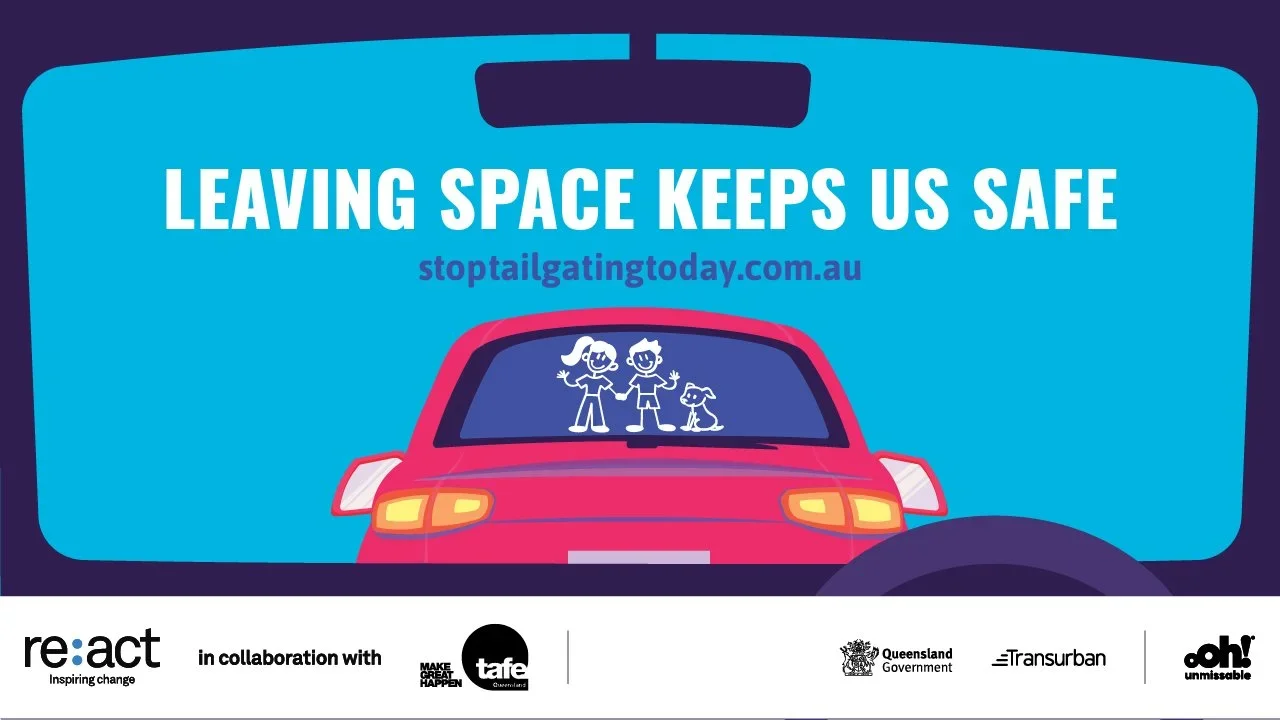
The 2026 Re:act program in Australia challenged Design Communication students from University and TAFE across nine locations nationally to create positive campaigns that raised awareness in their peers of safe following distance and ensure their future behaviours are safe.

Students were asked to focus on the benefits of maintaining a safe following distance to the vehicle in front, with campaigns aiming to promote safe behaviours around a serious road safety risk for our 17-25 year old target audience.


Institution Partners


Program Partners


2018

Safe interaction of 18-25 year old road users with trucks

Representing 4 per cent of vehicles on Australia’s roads, heavy vehicles are involved in more than 15 per cent of the nation’s road fatalities. Research shows most of these accidents are not the fault of the truck driver. With most people killed in heavy truck crashes being light vehicle occupants, and an increasing number of trucks on our roads, the 2018 brief focused on educating 18-25 year old road users on safe interaction with trucks.

 
Re-act_Partner_Logos-Negative-Melbourne_Blk_2018.png


2018-LR.jpg


"We believe this is the first time an education campaign about vulnerable road users around trucks has been specifically targeted at the 18-25 year old segment."

– Andrew Hardwick, Hard Edge


inspire change


Each year the Re:act program challenges design students to develop creative solutions to serious road safety issues. In 2018 the focus was on sharing the road safely with trucks. We spoke to some of the participants about the journey they’ve been on with Re:act, and how it’s shifted their attitudes and behaviour towards trucks and truck drivers.


the pitch


In 2018, thirty Swinburne communication design students gathered at Hard Edge to pitch their creative concepts to a very impressed Re:act panel of judges.  


selected campaign


Charlotte Hicks, Grace Kirby and Caitlyn Preyser were the winners of re:act 2018
with their hard hitting ‘Don't Truck Around’ campaign. 


2018+Winning+CampaignLR.jpg


resources


The following resources from our partners provide valuable insight into the issue of Safe Interaction of 18-25 Year Old Road Users With Trucks and formed an important part of the creative brief.  


media releases


2026

Mexico


Helmet Use

The 2026 Re:act program in Chile challenges university students to create positive campaigns that raise awareness among 17-25 year old motorcyclists of wearing compliant helmets and ensuring their future behaviours are safe.


2026

Chile


Helmet Use

The 2026 Re:act program in Chile challenges university students to create positive campaigns that raise awareness among 17-25 year old motorcyclists of wearing compliant helmets and ensuring their future behaviours are safe.


Institution Partner


Program Partners


National Media Partner

 
JCDecaux


2024

Mobile phones and distraction

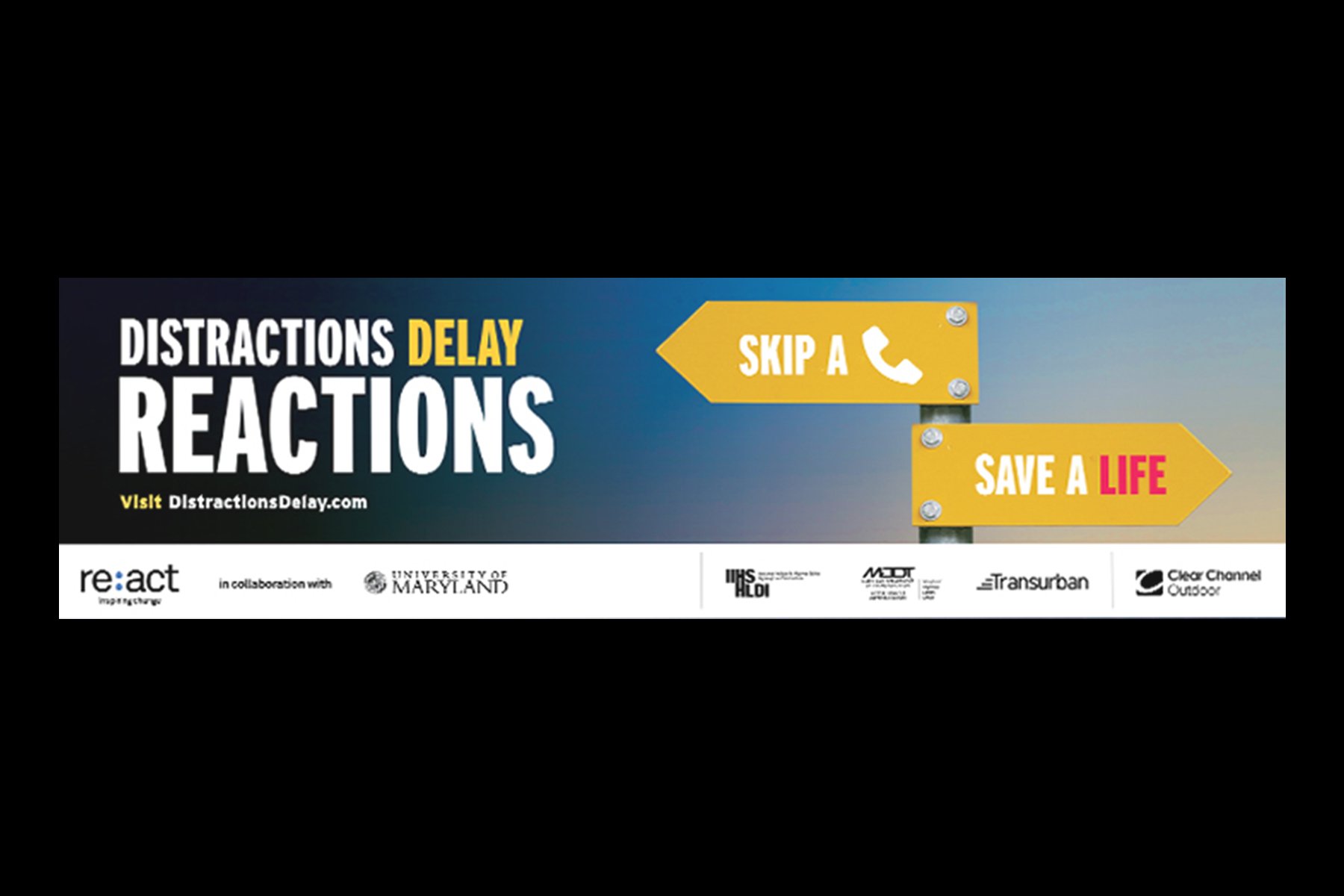
The 2024 Re:act program in Australia challenges University communication and TAFE graphic design students at nine tertiary institutions to create positive campaigns that educate their peers about not being distracted by mobile phones. 

Students can focus on distraction as a driver or a pedestrian within the road environment, with campaigns aiming to change behaviour around a serious road safety risk for our 17-25 year old target audience.


Institution Partners


Program Partners


National Media Partner


2025


Seatbelt Use

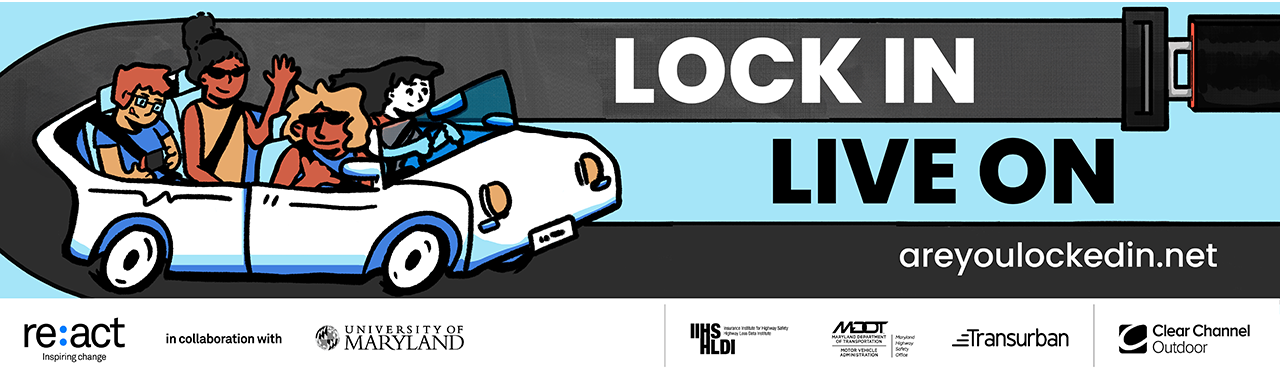
The 2025 Re:act program in the United States challenged Design Communication students to create positive campaigns that raise awareness in their peers of wearing seatbelts, and wearing them correctly, as a driver or passenger.

Students were asked to focus on why it’s important all vehicle occupants wear a seatbelt, and wear it correctly, at all times, with campaigns aiming to promote safe behaviors around a serious road safety risk for our 17-25 year old target audience.


Institution Partner


Program Partners


National Media Partner


2020

Distraction

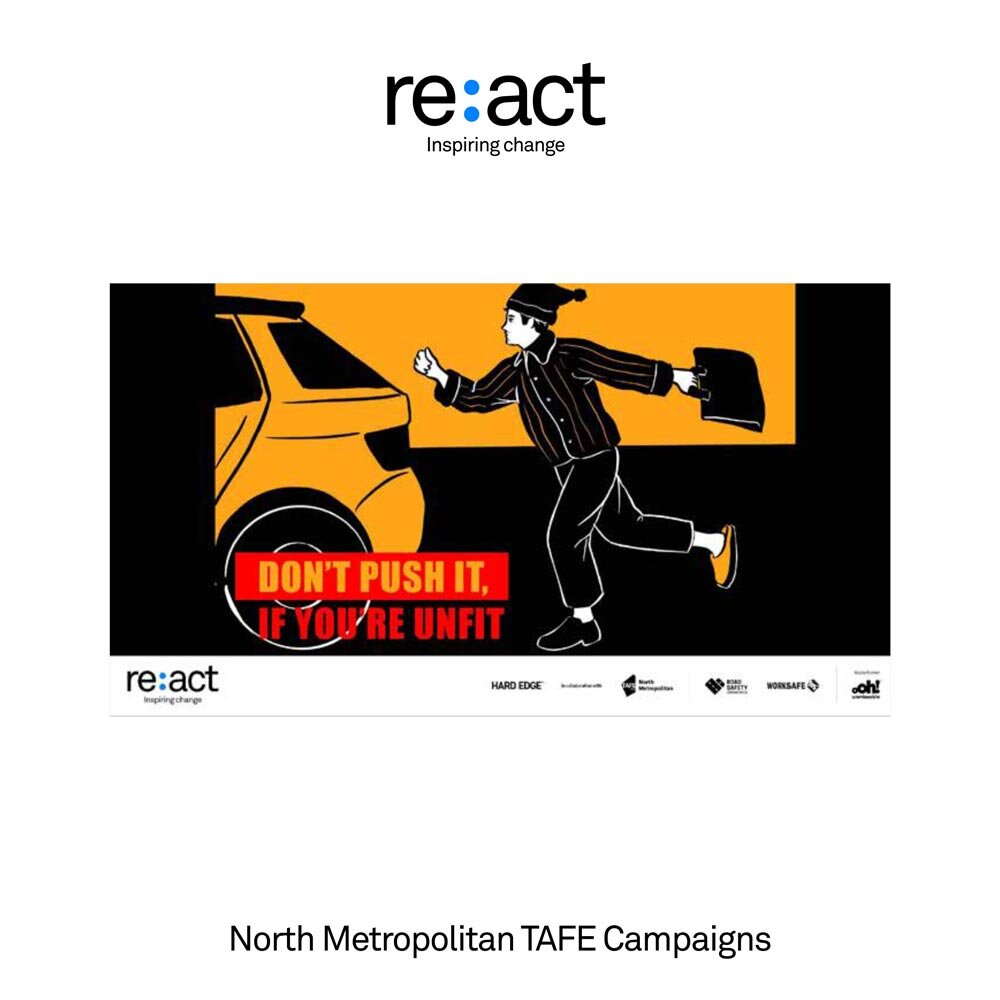
Whether you’re a driver or a vulnerable road user (VRU), distraction on our roads is a serious road safety issue that can end in injury or death. As a driver, distraction increases reaction time and stopping distances. For pedestrians, cyclists or motorcyclists (VRUs), using a mobile phone or wearing headphones can lead to disaster. Re:act 2020 aims to educate road users about the dangers of distraction.


ReAct2020.gif


At 100kmh, taking your eyes off the road for two seconds means you’re driving blind for 55 metres.


'Distractions' (2020) Documentary


See the insights and creativity as you watch 4 students from 4 universities and 2 countries develop road safety campaigns for 18-25 year olds.


universities

The universities supporting Re:act 2020.


resources


These resources, shared by re:act 2020 partners, helped shape the creative brief. They provide valuable insights into the issue of distraction among all road user groups.


media releases


media

AdNews

Oct, 2020

Swinburne students launch road safety campaign via oOh!media

DailyDooh

Sep, 2020

Student’s Powerful Road Safety Campaign

the times

Sep, 2020

Student’s powerful road safety campaign targeting young drivers goes live in Sydney

nrspp

Sep, 2020

‘Killer’ Re:act Road Safety Launches Sydney Student Campaign With OOh! Media

mumbrella

Sep, 2020
Student road safety campaign goes live across Sydney with Ooh Media

mirage news

Sep, 2020
Student’s powerful road safety campaign targeting young drivers goes live in Sydney

nrspp

August, 2020
Re:act Road Safety Launches Brisbane Student Campaign With OOh!Media

go auto

Mar, 2020
Re:act youth road safety campaign launches for 2020
The Re:act youth road safety campaign goes ahead despite COVID-19

FIA foundation

Feb, 2020
International road safety behaviour change program has UK launch

minister for infrastructure
deputy prime minister

Jan, 2020
Safety 'enablers' to help drive down road trauma


2019


SYDNEY.png
 
 
Re-act_Partner_Logos-Negative-Sydney_Blk_2019.png


the pitch


In 2019, UTS communication design students gathered to pitch
their creative concepts to a very impressed Re:act panel of judges. 


selected campaign


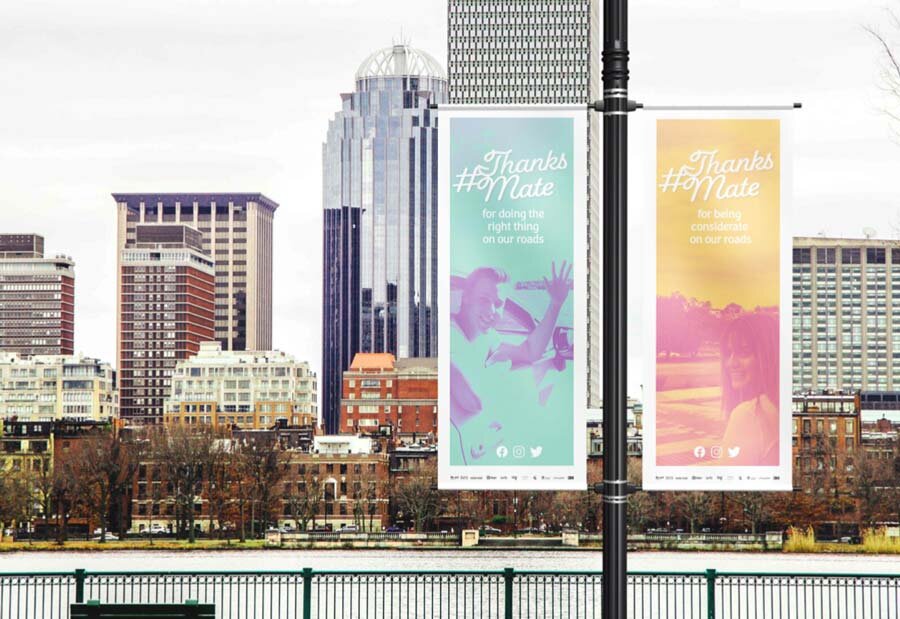
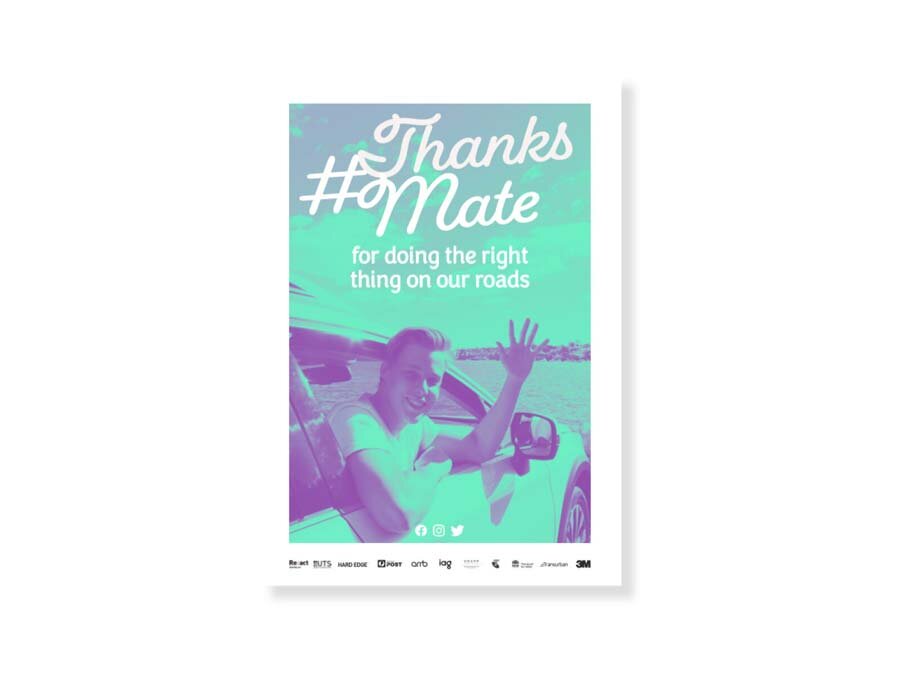
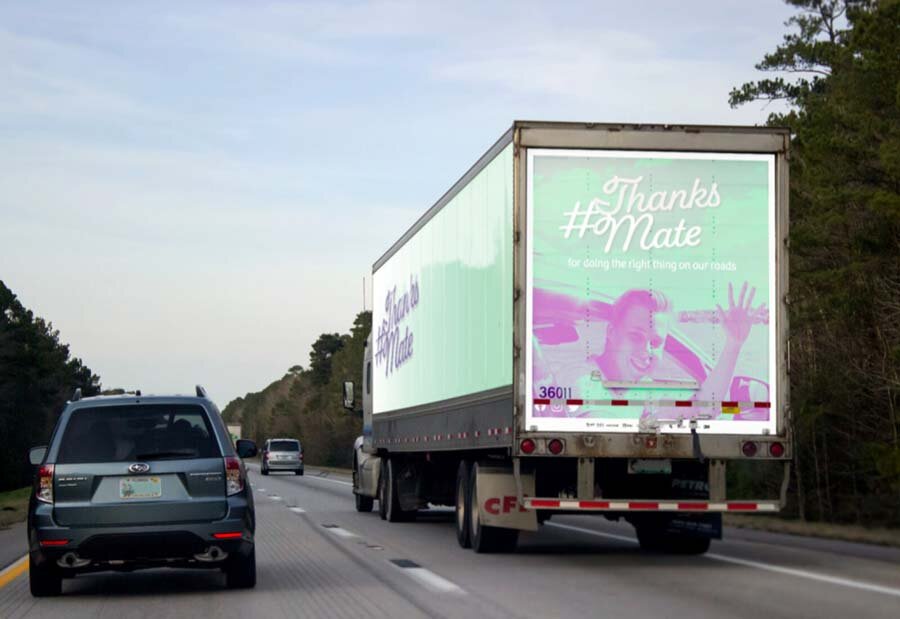
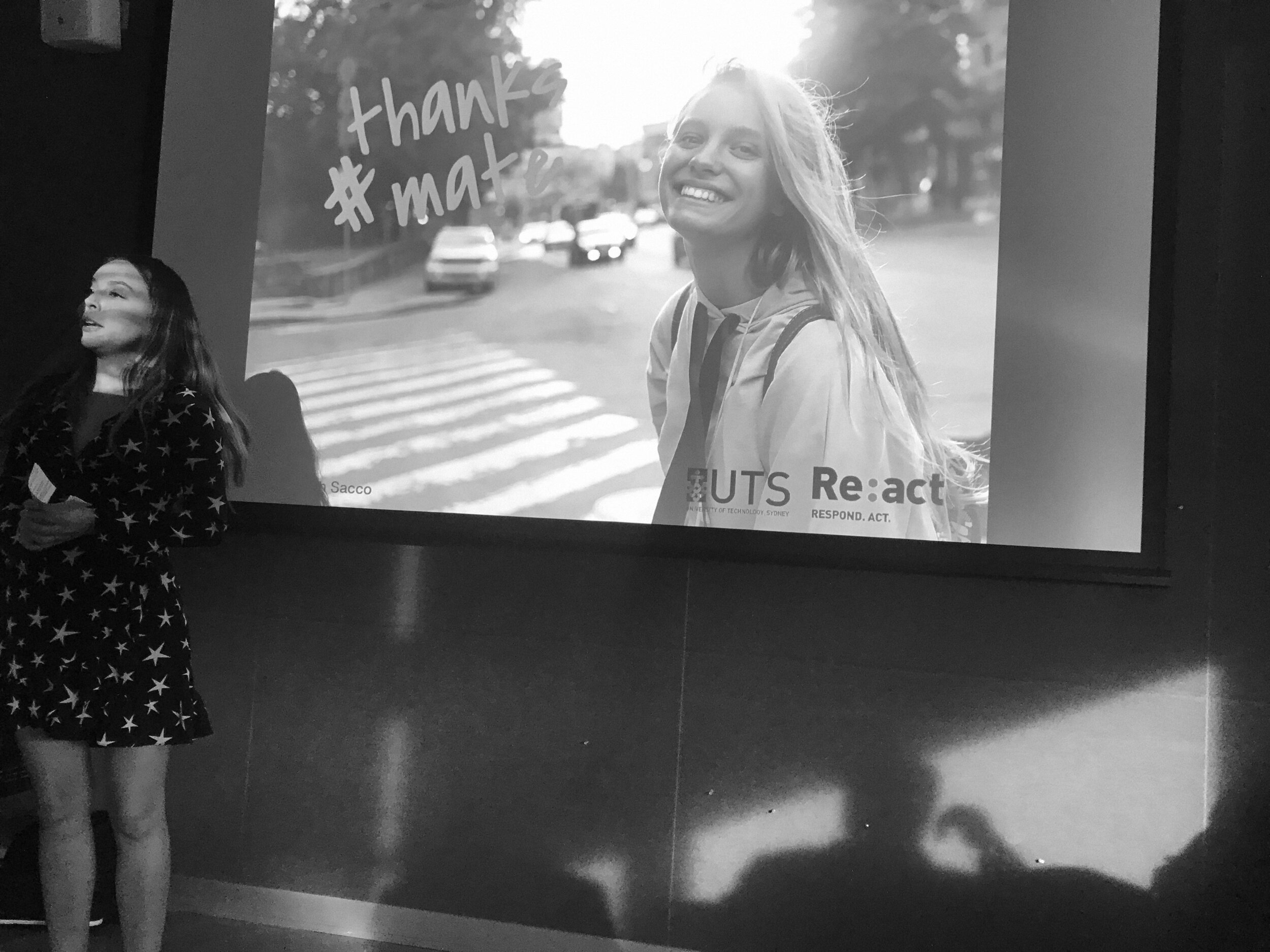
Communication Design student Elizabeth Sacco created the '#ThanksMate' road safety campaign.


check in


Professional guidance from program partners helps students turn ideas into real-world campaigns.


q&a session


Clarifying expectations for re:act participants and providing the chance to learn from industry experts.


digital assets